Tag: bookkeeping for small business

  • How Often Should a Small Business Update Its Bookkeeping in the UK?

    How Often Should a Small Business Update Its Bookkeeping in the UK?

    small business bookkeeping

    Posted by:

    Admin

    Date:

    June 17, 2026

    Category:

    blogs

    Error: Contact form not found.

    How Often Should a Small Business Update Its Bookkeeping in the UK?

    Every business keeps its records but how often should it be updated? Just like bookkeeping for large scale businesses, small business bookkeeping is about documenting all cash flows that enter and leave your business. It allows you to know your actual standing in terms of finances anytime you want. Most of the small businesses in the UK have challenges in maintaining accurate records and up-to-date documentation. This results in cash flow problems and poor financial management.

    Bookkeeping for small businesses is important to avoid cash flow issues and to keep the records aligned and updated. Timely updates will allow for reducing errors and making good decisions. Currently, there are 5.5 million businesses within the UK private sector in 2024. Among these, 5.45 million firms fall into the category of small businesses with no more than 49 employees. Small business bookkeeping becomes a major issue for UK firms.

    Key Takeaways

    • Small business bookkeeping should be updated regularly to stay accurate and useful.
    • Most UK businesses benefit from daily, weekly, or monthly updates.
    • Frequent updates help reduce errors and improve cash flow control.
    • Using small business bookkeeping software can save time and improve accuracy.
    • Good bookkeeping supports better decisions and long-term business stability.

    Why Is Small Business Bookkeeping Important for UK Businesses?

    Bookkeeping in the UK is an accounting technique used to document all money entering and leaving the company. Sales, expenses, invoices and salaries are some of the items that need to be recorded. It makes the accounting of the company easy and accurate. Bookkeeping simplifies the management of money.

    Small business bookkeeping in the UK is important as it enables you to record all the finances that go in and out of your company. This will allow you to have an overview of the financial state of your business. It will also enable you to make informed decisions to outgrow the business.

    What Happens If Bookkeeping Is Not Updated Regularly?

    If bookkeeping is not updated regularly, then these cash flow issues will build up quite rapidly. It may cause you to miss payments or ignore invoices. Incorrect record-keeping could lead to HMRC penalties. It also makes it more difficult to see the real performance of your business. Updating regularly not only ensures that there will be no problems. It will also enable your business to expand with confidence.

    • Bookkeeping Support Business Growth

    This allows you to plan with concrete figures. The profits and losses can be easily seen. It will also prepare you for the taxes that need to be filed at certain times. This way, no hassle will happen for you during busy times.

    How Often Should Small Business Bookkeeping Be Updated?

    Small business bookkeeping must be done according to a fixed timetable. This will help you avoid errors and lost accounts. Your cash flows will also remain clear at all times. The majority of firms in the UK conduct their updates either daily, weekly, or monthly. A right schedule would depend on the nature of your business and the level of data involved.

    1. Daily Bookkeeping Updates

    The use of daily updates works best for businesses with lots of transactions. These daily updates will enable you to monitor your cash flow. You will be able to document your expenses and sales on a regular basis. This will also minimise the risk of lost receipts.

    2. Weekly Bookkeeping Updates

    The weekly updates suit most small businesses in the UK. It ensures that their records are neat and up-to-date. Bank reconciliations are easy with weekly updates. It helps avoid a backlog of work.

    3. Monthly Bookkeeping Updates

    Monthly Bookkeeping is best for full performance analysis. This will enable you to analyse the profit and loss in a very clear way. It allows you to analyse your VAT and other reports. It enables you to understand cash flow trends.

    “What gets measured gets managed,”

    by Peter Drucker 

    What Is the Best Bookkeeping Schedule for Small Business Bookkeeping in the UK?

    A good schedule for small business bookkeeping should have tasks that occur on a daily, weekly and monthly basis. This makes accounting for your small business easier and more consistent. It also lowers the pressure you feel when tax season comes around. Breaking the activities down into daily, weekly and monthly actions will simplify bookkeeping.

    1. Daily Bookkeeping Task

    Make sure that all sales are recorded on the same day. Make sure you keep track of all your expenditures. You will make sure that there are no errors in your record-keeping.

    2. Weekly Bookkeeping Task

    Match bank statements every week. Look out for any unpaid accounts receivable. This will help keep your books reconciled. You will notice any mistakes early on.

    3. Monthly Bookkeeping Task

    Analyse profit and loss accounts. Check your status in terms of cash flow. This gives you an idea about the financial state of your business. You will be able to make plans for the following month.
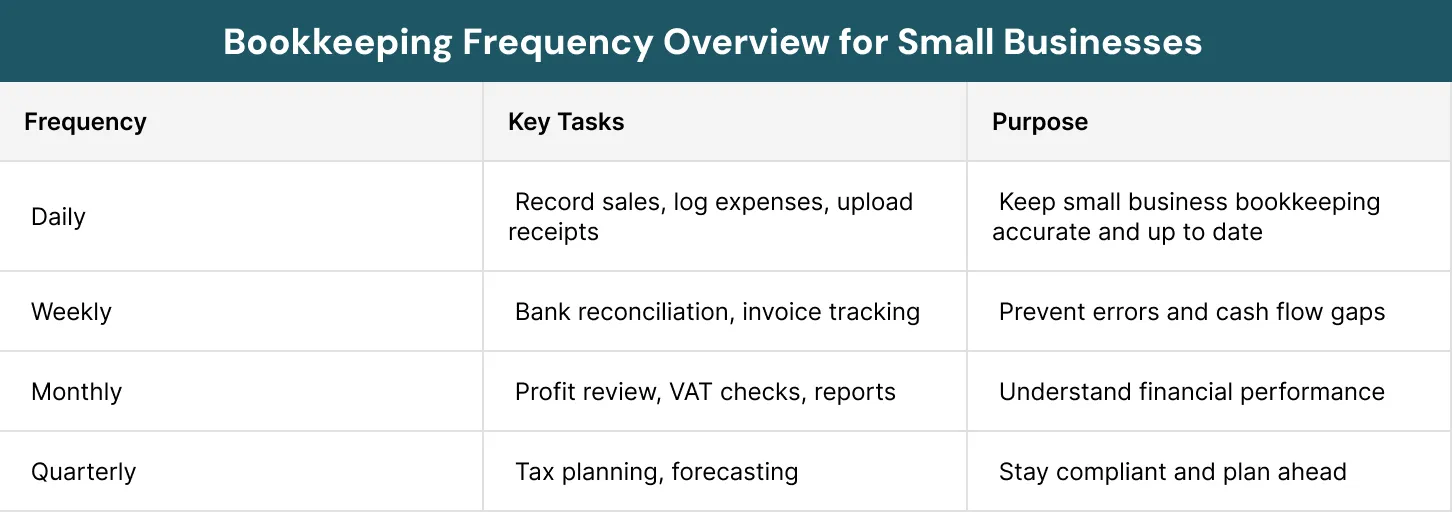
    Bookkeeping Frequency Overview for Small Businesses

    What Factors Affect How Often You Update Small Business Bookkeeping?

    The small business bookkeeping will be different from one business to another. This would depend on the size of the business and its growth. This would also be decided based on the number of daily transactions carried out by the business firm. Knowledge about these factors will help you choose the right bookkeeping schedule that is easier for you.

    1. Business Size and Bookkeeping Frequency

    Business size can affect how often record keeps updating. If a small company is involved, there may be updates done once a week or a month. But as the SME scales up, it will require frequent updates. Larger operations mean larger transactions to account for.

    2. Transaction Volume and Bookkeeping Needs

    The number of transactions matters a lot. Retail shops often need daily updates. Service businesses can update less often. More transactions mean more chances of mistakes. So, busy businesses need faster bookkeeping control.

    3. Industry Type and Bookkeeping Frequency

    The type of business also changes how often you do bookkeeping. Online shops need daily updates. Consultancy work can be updated less often. Trade businesses depend on cash flow timing. So, each business needs its own simple routine.

    Read More: Essential Bookkeeping Tips Every Small Business Should Follow

    What Are the Common Bookkeeping Mistakes Small Businesses Make?

    Many small businesses make bookkeeping mistakes when the records are not up-to-date. This results in inaccuracies and a lack of information. Small business bookkeeping can also impact cash flows and taxes. Errors are caused mostly by delays or bad procedures. Knowing about these common mistakes that small businesses make will help you ensure that your documents remain accurate and free from any major problems in the future. If these common mistakes can be avoided, small business bookkeeping will become much simpler and more reliable.

    1. Delayed Bookkeeping Updates

    Many businesses delay as they do not have enough time. Some even employ manual systems, which are more time-consuming. Owners who are busy tend to defer it until later. This results in delays in their record-keeping process.

    2. Lack of Regular Reconciliation

    Errors can go unnoticed for many years. The bank records do not match the books. There could be difficulties with cash flow. It could also cause problems with HMRC.

    3. Mixing Personal and Business Finances

    Using the same account for personal and business finances can confuse the record-keeping. You will not be able to capture the actual cost of running your business. It also means that the tax process becomes more difficult. Checking by HMRC becomes riskier.
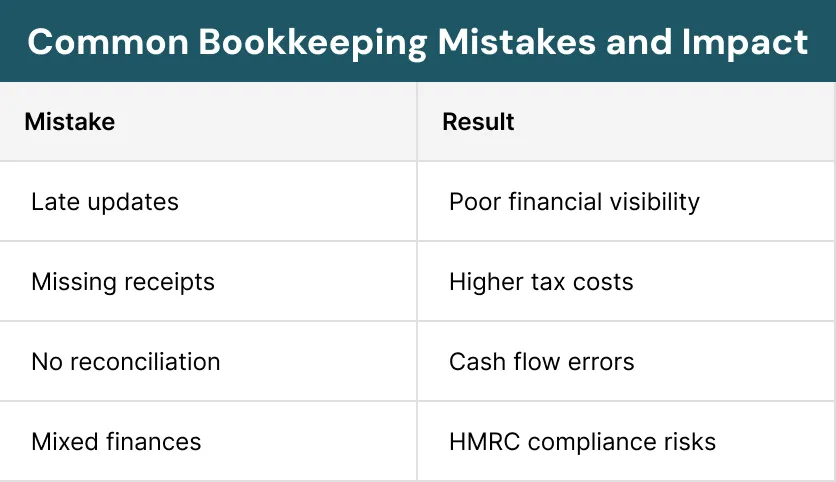
    Common Bookkeeping Mistakes and Impact

    How Can Small Business Bookkeeping Software Improve Update Frequency?

    With small business bookkeeping software, keeping records becomes easier, faster and more accurate. They help cut down on manual labor and save time daily. Moreover, all your records can be stored in one system easily. Thus, you will have no trouble keeping your books up to date.

    In order to have a better understanding of this concept, let us analyse the issue on the basis of update frequencies that can be achieved through bookkeeping software.

    1. Faster Daily Bookkeeping Updates Through Software

    The bookkeeping software enables companies to enter transactions as soon as they occur. Transactions for sales, purchases and receipts can all be added on the spot. This ensures that recording entries on a daily basis is easy and convenient.

    2. Automated Weekly Updates With Reduced Manual Work

    The process of automation will reduce the time spent on repetitive bookkeeping processes. Transaction information is updated through bank feeds. Expenses and invoices will be synced automatically into the system. As a result, weekly records are accurate and up to date.

    3. Real-Time Continuous Updates Using Cloud Access

    The cloud tools provide an option to access the information anytime and anywhere. Business owners can update their accounts on the go. This makes sure that there is no delay in accounting. As a result, there is an ongoing and instant monitoring of accounts.
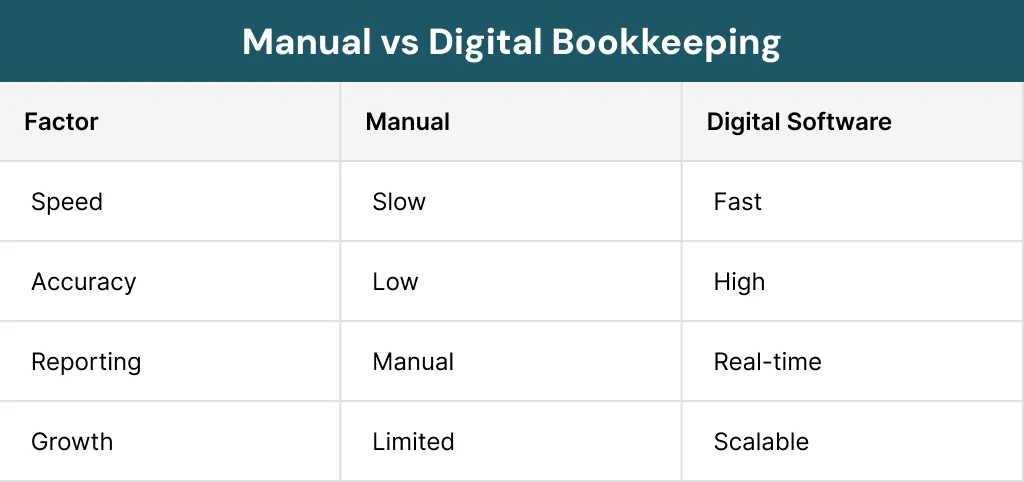
    Manual vs Digital Bookkeeping

    Case Study

    One of the mistakes that UK small firms make is updating their accounts at the end of every quarter to match HMRC VAT requirements. This implies that they use outdated information that may be several weeks or months old. 

    In an actual scenario, a London hospitality firm used quarterly bookkeeping. As such, they were unable to keep track of the rise in their cost of suppliers and the stock loss experienced. The effect was slow, but they were unaware of its impact on their cash flow.

    Once they started using weekly bookkeeping, everything changed for the better. It became easier to monitor weekly expenses and payments from suppliers. Also, it helped them detect any stock loss and manage the purchasing procedure. In addition, they were able to follow up on outstanding debts.

    What Are the Best Practices for Small Business Bookkeeping in the UK?

    Simple and consistent practices are essential for effective small business bookkeeping services. It is necessary to maintain it according to a certain schedule. In this way, the books will stay clean and well-organised, and the process of tax payments will cause less anxiety. To apply these practices in real life, it helps to break bookkeeping into key routine tasks.

    1. Weekly Bank Reconciliation for Accurate Records

    Accountants need to verify bank accounts each week. This ensures that the records coincide with actual business dealings. It also makes sure there are no discrepancies at an earlier stage. This makes bookkeeping more efficient.

    2. Easy Receipt and Expense Tracking Using Digital Tools

    Use software programs to keep track of the receipts. Applications allow you to do it fast and easily. The bills can be uploaded anywhere. It will ensure that the receipts are not missed.

    3. Monthly Financial Report Reviews for Better Control

    Financial reports must be checked every month. In some cases, companies check financial statements quarterly. This is useful for knowing your profit and money flow. Also, this will help plan your future steps properly.

    Read More: How Outsourced Bookkeeping Services Can Save You Time and Money

    How Often Should Small Businesses Update Bookkeeping Before HMRC Deadlines?

    Always update your bookkeeping before the tax deadline. It is best not to wait until the very end when panic sets in. This will make sure you have all the paperwork done in advance. To fully understand the impact of this, it is a must to know what role regular bookkeeping plays in HMRC compliance.

    1. UK Tax Deadlines That Need Updated Bookkeeping

    Quarterly VAT returns should be filed every quarter. The deadline for self-assessment is always set for January. PAYE has to be paid on time too. Failure to do this leads to penalty charges. Therefore, accurate record-keeping becomes very important.

    2. Impact of Up-to-Date Records on HMRC Compliance

    Updating the bookkeeping ensures that the data is always up to date. It prevents errors from occurring when filing taxes. In addition, deadlines are easily met through updating. This decreases the chances of HMRC penalties and fines.

    Conclusion

    Small business bookkeeping is much more than just a process. This is important for ensuring that your company remains stable in the UK. You can do this process at any frequency that you like, but the higher the frequency, the better it will be for your company. It can be done daily, weekly, or even monthly.

    At Sterling Cooper, we help you avoid errors and improve cash flow management. Our bookkeeping services for small businesses help you organise everything and save a few minutes each day.

    Struggling to keep your bookkeeping up to date?

    It can feel messy when records pile up.
    We help small businesses in the UK stay on top of their books with clear, simple support. No stress, no confusion, just steady and accurate records. Get in touch today and let’s make your bookkeeping easier to manage.
    +443300102526
    Book an Appointment

    FAQs


    What is small business bookkeeping software?


    It is a digital tool used to record and manage business finances. It helps track income, expenses, and invoices in one place. This makes bookkeeping faster and more accurate.


    Popular choices include Xero, Sage and QuickBooks. They help manage accounts, cash flow, and reports easily. The best option depends on your business size and needs.


    It brings all financial records into one system. It automates tasks like invoicing and expense tracking. This saves time and reduces manual errors.


    Yes, most tools are designed for non-accountants. They offer simple dashboards and guided features. This makes daily bookkeeping much easier.


    It helps keep finances organised and up to date. It improves accuracy and supports better decisions. It also makes tax filing and reporting simpler.

    Share This Article!

    Recent Posts

  • Essential Bookkeeping Tips Every Small Business Should Follow

    Essential Bookkeeping Tips Every Small Business Should Follow

    small business bookkeeping

    Posted by:

    Admin

    Date:

    April 9, 2026

    Category:

    blogs

    Error: Contact form not found.

    Essential Bookkeeping Tips Every Small Business Should Follow

    Struggling to track your business finances? Good bookkeeping brings clarity and control.

    It is exciting yet challenging to run a small business. You may deal with customers or offer products or services. There is always work to do. Bookkeeping needs your attention.

    Accounting is key to business stability and success. However, it often feels like a routine admin task. Small business bookkeeping practices are helpful in managing your finances. 

    Good bookkeeping is more than recording numbers. Understanding small business bookkeeping tips early can help you avoid costly mistakes. It helps you:

    • Stay clear about your money
    • Make better decisions
    • Keep your business healthy

    It turns confusion into clarity when done properly. This guide is all about practical bookkeeping for small business owners. It helps you feel confident now and plan ahead.

    In the United Kingdom, more than 99% of all businesses are small businesses. This means millions of owners rely on good money management.

    These tips help you manage your money. If you are wondering how to do accounting for a small business, this guide covers the essentials.

    Key Takeaways

    • Build consistent small business bookkeeping habits by recording transactions daily, reviewing weekly and generating monthly reports to stay accurate and stress free.
    • Separate business and personal finances and record every transaction to maintain clear, reliable financial data for better decision making.
    • Use accounting software to streamline small business bookkeeping, automate tasks and reduce errors while keeping real time visibility of your finances.
    • Track cash flow, expenses and invoices closely to ensure steady income, avoid missed payments and maintain financial stability.
    • Prepare for taxes early and review reports regularly to stay compliant, avoid penalties and use financial insights to grow your business.

    Understanding the Role of Bookkeeping

    Bookkeeping means recording and organising your money. This includes tracking:

    • Money coming in
    • Money going out
    • Accurate records for reporting

    Bookkeeping stores your financial data. Accounting uses this data to make decisions. You cannot have accurate accounts without good bookkeeping.

    It gives you a clear view of your finances. Small business bookkeeping ensures accuracy and control. You can see how much you earn and spend. It also tells whether you make a profit or a loss.

    This helps you make better decisions. That is why bookkeeping for small businesses is more than just record keeping.

    Why Bookkeeping Matters for Small Businesses

    Bookkeeping is key to financial health. A business runs in the dark without it. Effective small business bookkeeping keeps your business financially visible.

    Good bookkeeping helps you to:

    • Monitor cash flow
    • Make sure you have enough cash
    • Track profits and losses over time
    • Prepare for taxes and meet legal requirements
    • Identify trends and opportunities for growth
    • Find errors or fraud

    Following basic bookkeeping tips for small businesses helps avoid these risks. If you ignore your books, problems can grow quickly. You might miss bills or understate expenses. This could lead to an unforeseen tax liability. You may face fines for failing to file taxes.

    Good record keeping brings you relaxation. It lets you focus on your business. It keeps your records accurate and up to date.

    Keep Records Regularly and Consistently

    Consistency is one of the most important small business bookkeeping tips. If you delay entries, the work becomes harder. This leads to more errors.

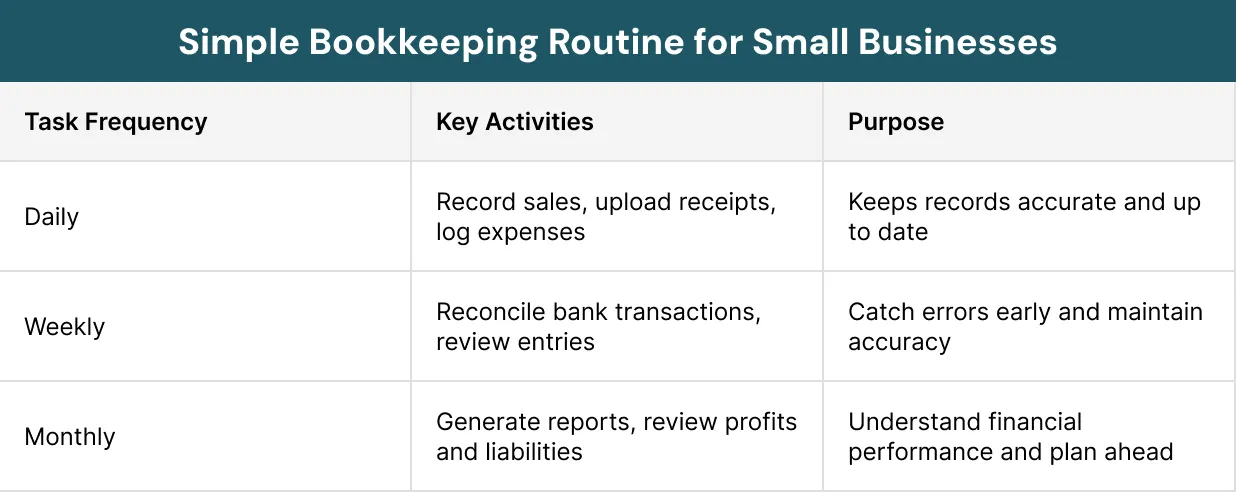
    A better approach is to form a routine:

    1. Daily tasks

    Record or upload receipts as they happen.

    2. Weekly tasks

    Review and reconcile bank transactions.

    3. Monthly tasks

    Generate reports and review financial performance.

    Spending a little time each week improves your bookkeeping. Give it the same attention as your clients.

    This keeps your records accurate and avoids last minute stress. Good bookkeeping for small businesses relies on regular updates.

    Simple Bookkeeping Routine for Small Businesses

    Record Every Transaction

    Record every transaction, no matter how small. This includes income, costs and transfers. Accuracy in small business bookkeeping depends on recording every detail.

    Each record should include:

    • The date of the transaction
    • The amount
    • The purpose or description

    Accurate records help you track your money and check past transactions. They also provide proof for tax claims and compliance.

    Small transactions may seem unimportant, but they add up over time. These can affect your overall financial position. Recording everything in detail will help avoid errors.

    Separate Business and Personal Finances

    Many small business owners make the mistake of using personal funds for business. It can cause confusion, errors and problems when you prepare financial reports or tax returns.

    Keep your accounts like your conscience: clear and honest

    – Benjamin Disraeli, former prime minister of the UK

    Open a dedicated business bank account. This is a basic rule of small business bookkeeping. This allows you to:

    • Clearly track business transactions
    • Make reconciliation easier
    • Keep accurate records
    • Present a more professional image

    If you use personal money, record it properly and pay yourself back. You should separate your personal and business finances to stay organised.

    Choose the Right Accounting Method

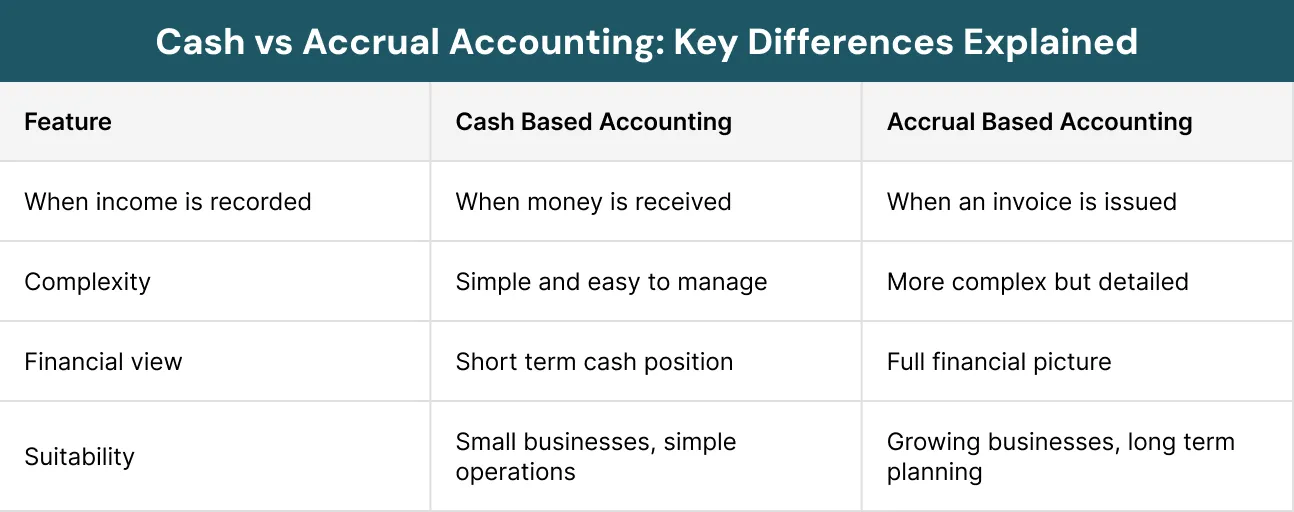
    The small business bookkeeping system depends on the method you choose. The two main methods are:

    1. Cash Based Accounting

    This approach involves recording income and expenses when they happen. This system is simple and shows your cash flow clearly. It suits small businesses.

    2. Accrual Based Accounting

    This method records income when you issue an invoice. It records expenses when they occur, even if you have not paid yet. It gives a complete picture of your finances but is more complex.

    The business size, structure and goals help in choosing the right accounting method. Choose early, as switching later may be challenging. This decision directly affects how well you manage bookkeeping for small businesses.

    Read more on accounting and bookkeeping: What is the difference between bookkeeping and accounting?

    Cash vs Accrual Accounting Key Differences Explained

    Use Accounting Software and Technology

    Technology makes modern bookkeeping much easier. Modern tools are transforming small business bookkeeping. Accounting software can automate tasks and reduce mistakes.

    The main benefits of using software include:

    • Automatic bank feeds
    • Real time financial updates
    • Invoice tracking
    • Expense classification
    • Financial reporting

    Cloud based systems let you access your data at any time. They also keep your records up to date.

    Software makes the process simple and even with tools, you still need to review your records. You should regularly review your records to make sure everything is correct.

    Stay on Top of Expenses and Invoices

    Managing invoices and expenses helps you maintain healthy cash flow. This is one of the most practical small business bookkeeping tips.

    1. Expense Tracking

    • Record all expenses as they occur
    • Keep receipts as proof for tax purposes
    • Sort expenses clearly
    • Track mileage and other claimable costs

    2. Invoice Management

    • Send invoices promptly
    • Include clear payment terms
    • Monitor due dates
    • Follow up on late payments

    Sending out invoices on time ensures that payments come in quickly. Timely follow ups save you from long delays in payment.

    Quick Fact:

    Small costs add up. Track every penny or lose profit.

    Reconcile Your Accounts Regularly

    Reconciliation means matching your records with your bank statements. Regular checks are essential in small business bookkeeping.

    Reconciliation should be done regularly; weekly or monthly is best. It helps you:

    • Identify errors or missing transactions
    • Detect duplicate entries
    • Ensure accuracy in your records

    Skipping reconciliation can cause errors and financial issues.

    Create Financial Reports

    Regular reports show how your business is doing. These are key outcomes of effective bookkeeping for small businesses. You need to have at least:

    • Profit and loss statement: Shows income, expenses and profit
    • Balance sheet: Shows assets, liabilities and overall financial position

    These reports help you understand how well your business is doing. They help identify areas that require improvement. Regular review of these reports helps you make good decisions for the future.

    Manage Cash Flow Effectively

    Cash flow is the lifeblood of any business. Poor cash flow can hurt even profitable companies.

    To maintain good cash flow:

    • Monitor incoming and outgoing payments
    • Chase overdue invoices promptly
    • Pay bills on time
    • Plan for upcoming expenses

    Understanding your cash flow helps you cover your expenses.

    Quick Tip:

    Cash flow matters more than profit. Your business needs cash to survive day to day.

    Prepare for Tax Obligations Early

    The most critical part of bookkeeping is tax compliance. Good small business bookkeeping makes tax work easier. There can be stress, errors and penalties if you leave tax preparation to the last minute.

    To stay prepared, you should:

    • Keep all records organised and up to date
    • Estimate your tax liabilities regularly
    • Set aside funds for tax payments
    • Be aware of deadlines

    UK small businesses spend about £25 billion per year on tax compliance. Each firm spends about 44 hours every year on tax related matters.

    Good bookkeeping makes it easier to fill out your tax forms and reduce errors. It also ensures that all available reliefs are claimed.

    Avoid Common Bookkeeping Mistakes

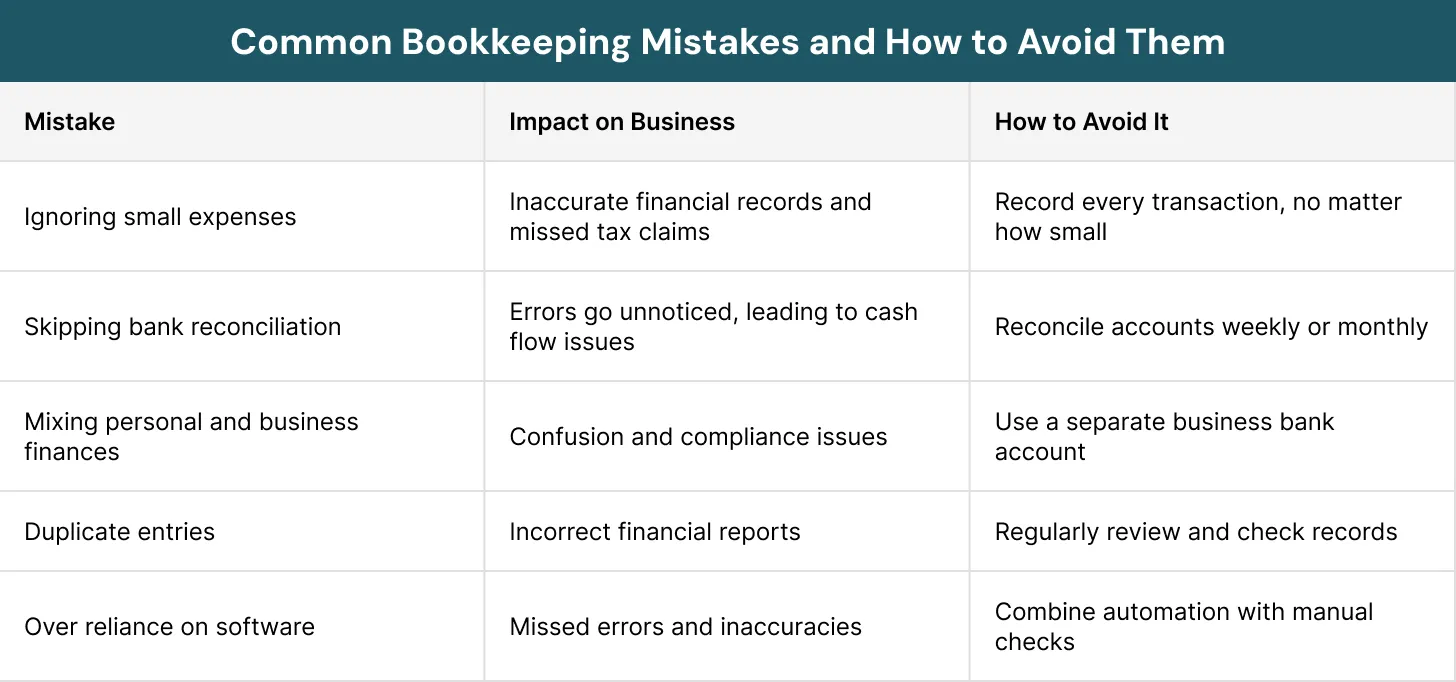
    The books may be inaccurate due to the following common errors:

    • Ignoring small transactions
    • Failing to reconcile accounts
    • Entering data incorrectly or twice
    • Mixing personal and business finances
    • Relying entirely on software without review

    Fix these errors early to keep your records accurate.

    Common Bookkeeping Mistakes and How to Avoid Them

    Build a Routine That Works for You

    Set up small business bookkeeping processes that suit you.

    Pro Tip

    Review your numbers weekly, not yearly. Small checks prevent big problems.

    A good routine should:

    • Fit into your schedule
    • Be easy to maintain
    • Cover all essential tasks

    Consistency is better than complexity. The record keeping process can remain simple even if a small amount of time is allocated weekly.

    Know When to Outsource

    Bookkeeping can become complex as your business grows. You may need to outsource at this point.

    A professional can:

    • Save time
    • Reduce errors
    • Provide expert insights
    • Ensure compliance

    Outsourcing allows you to focus on your work while experts manage your finances.

    Use Financial Data to Make Decisions

    Small business bookkeeping is not just about recording transactions. It is about using that information to improve your business.

    Your data helps you:

    • Identify profitable areas
    • Spot underperforming activities
    • Plan investments
    • Set realistic goals

    Study your records to make better decisions. This supports growth and long term success.

    Real Life Example

    A small retail business in the United Kingdom struggled to manage its money. The business had several credit cards and one bank account. It also used PayPal. The company’s books were mixed up. 

    Some invoices were missing or entered incorrectly. This made VAT returns inaccurate. Supplier files had many duplicate entries. Poor organisation made the data unreliable.

    The business hired a bookkeeping service for the daily management of accounting tasks. All bank accounts were reconciled and the team corrected supplier mistakes. They also properly added PayPal into the system.

    They also developed an automatic tool that captures supplier invoices and expenses. This greatly reduces errors and saves time. This means the firm can now:

    • Regain proper financial visibility
    • Prepare VAT returns accurately
    • Make better decisions based on accurate data

    This enables the business owner to focus on growth, instead of searching for invoices or fixing errors.

    Conclusion

    Small business bookkeeping may not be exciting, but it is essential for long term success. It supports stability and growth.

    You can make bookkeeping a powerful asset by ensuring that:

    • You keep proper records
    • You have a regular schedule
    • You have appropriate tools
    • You audit your records periodically

    Good bookkeeping gives you control, less stress and more time to grow your business.

    Good bookkeeping is more than a task. It supports your decisions and helps your business grow with confidence. 

    Using these small business bookkeeping tips will help you stay organised and ready to grow.

    At Sterling Cooper Consultants, we know it can be hard for small firms to manage their accounts. Get in touch with us for advice.

    Struggling to manage your bookkeeping?

    Sterling Cooper Consultants help you stay organised, compliant and in control with expert support. Contact us today for reliable and accurate financial management.
    +443300102526
    Book an Appointment

    FAQs


    What is the best way to do bookkeeping for a small business?


    The best way is to stay organised and consistent, using cloud accounting software like Xero or QuickBooks. Keep personal and business finances separate, reconcile regularly and track income and expenses in real time. This ensures accurate records and informed business decisions.


    Common mistakes include mixing personal and business finances, failing to record every transaction, missing tax deadlines and neglecting regular reconciliations. These errors can lead to cash flow issues and inaccurate financial reporting.


    The golden rule of bookkeeping is to always record every transaction accurately and on time, ensuring your books reflect the true financial position of your business. This helps in making informed decisions and staying compliant with tax regulations.


    For small business bookkeeping, keep personal and business accounts separate, track every transaction and reconcile accounts regularly. Use suitable accounting software and set a weekly routine. Outsource or consult an accountant when needed to ensure accuracy and make informed financial decisions.


    To do accounting for a small business, start by recording all income and expenses accurately using accounting software or spreadsheets. Choose a suitable accounting method, cash or accrual and reconcile your accounts regularly. Generate monthly reports to track cash flow, profits and liabilities and seek professional advice when needed to ensure compliance and informed decision making.

    Share This Article!

    Recent Posts