Posted by:
Admin
Date:
July 27, 2026
Category:
blogs
Error: Contact form not found.
Management Reporting Mistakes That Hurt Business Growth
Running a business means making decisions every day. Some decisions help your business grow, while others can slow it down. Good decisions depend on good information.
That is where management reporting becomes important.
Research involving more than 600 senior finance professionals found that 73% believe management reports lead to more insightful discussions during leadership meetings.
Many business owners look only at sales or bank balances. These numbers are useful, but they do not tell you the full story. Without clear management reports, it becomes harder to spot issues before they become serious.
In this guide, you will learn the most common management reporting mistakes that hurt your business growth. You will also discover simple ways to avoid them and make better decisions for business growth.
Key Takeaways
- Management reporting supports better business decisions. It gives managers clear and accurate information to track performance, monitor cash flow and measure progress towards business goals.
- Avoid common reporting mistakes. Overloading reports with data, focusing only on past results, delaying reports and using inaccurate data can slow business growth and lead to poor decisions.
- Track the right KPIs and review reports regularly. Choose KPIs that match your business goals and update your reports on time to keep them relevant and useful.
- Turn data into action. Reports should explain trends, highlight risks and recommend practical next steps instead of only presenting numbers.
- Keep reports simple, accurate and tailored to the audience. Clear, focused reports help managers understand key information quickly and make informed decisions.
What Is Management Reporting?
Management reporting is the process of collecting, organising and presenting the business details that help managers to make better decisions.
It turns numbers into useful information that shows how your business is performing.
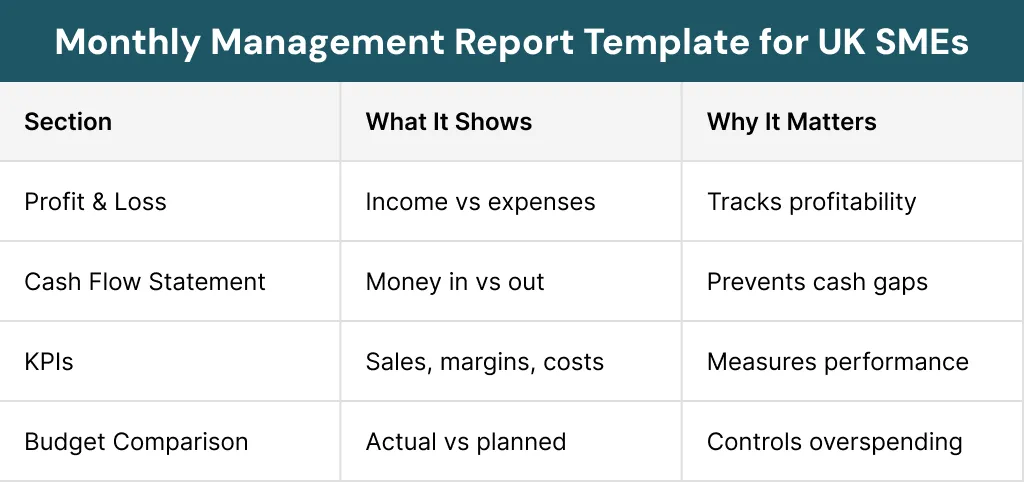
These reports can include sales, expenses, profits, cash flow and key performance indicators (KPIs).
“Without data, you’re just another person with an opinion.”
— W. Edwards Deming
Top Management Reporting Mistakes
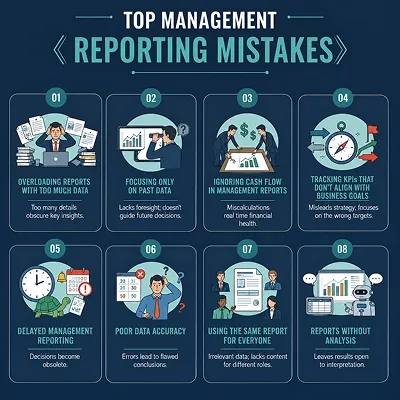
Here are some management reporting mistakes that hurt your business growth:
Mistake #1: Overloading Reports with Too Much Data
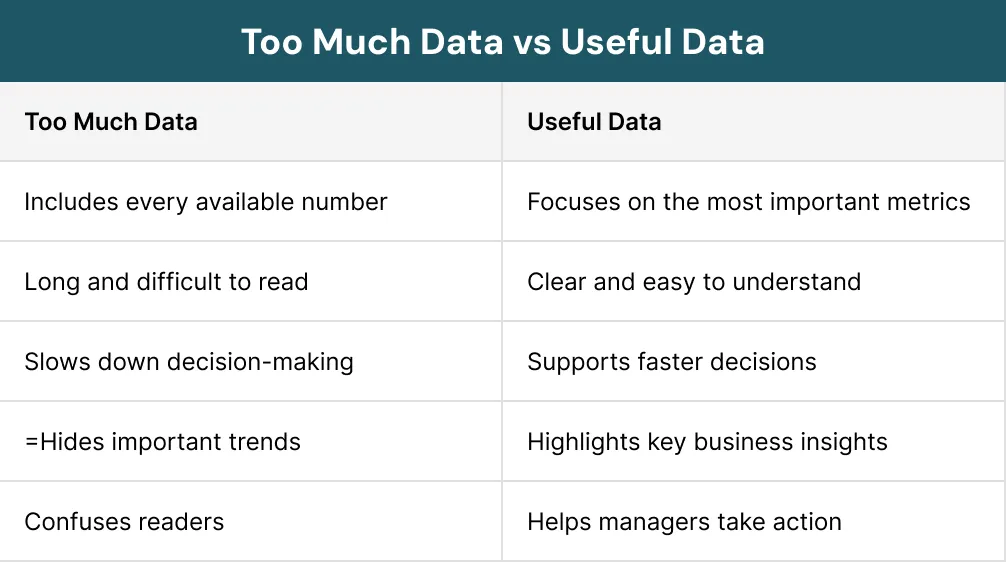
Many businesses believe that adding more details makes a report better. In reality, too much data can make reports confusing. When reports are full of numbers, it becomes difficult to find the information that really matters.
Managers often have limited time to review the reports. If they must search through pages of figures, they may miss warning signs.
Another common problem is including data that does not support the goals of business. Every number in management reports should have a clear purpose.
Simple and focused reports are easier to read and understand.
Pro Tip:
Ask yourself one simple question before adding a chart or figure: “Will this help someone make a better business decision?” If the answer is no, leave it out.
How to Avoid This Mistake
You can improve management reporting by keeping reports simple and focused. Start with the KPIs that matter most to your business goals. Group similar information together and remove figures that do not support decision-making.
Review your management reports on a regular basis to make sure they still meet the needs of managers.
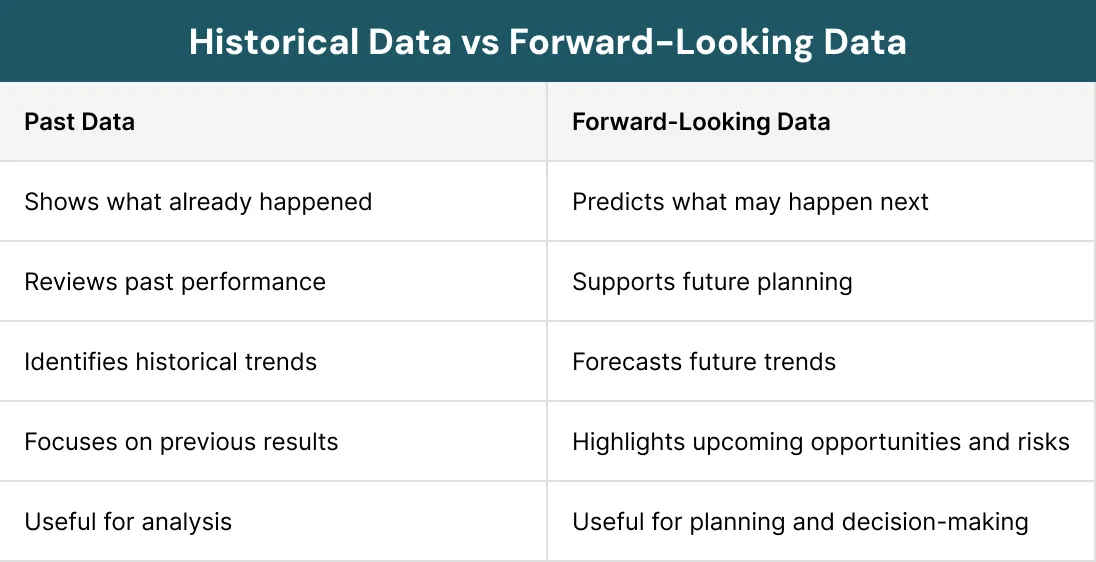
Mistake #2: Focusing Only on Past Data
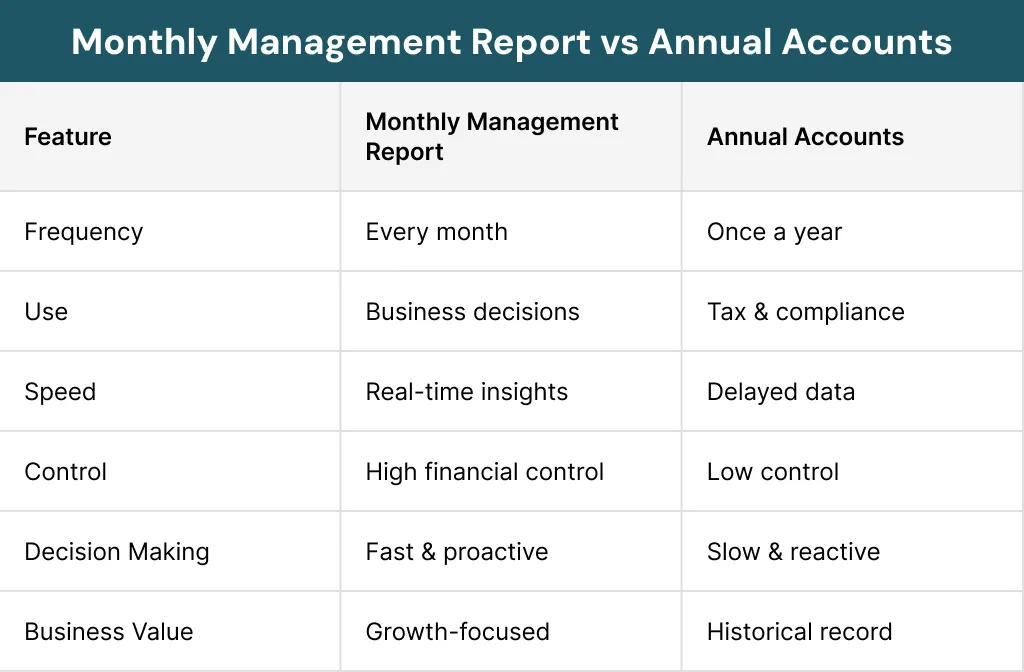
Looking at past results is important, but it is not enough. Good management reporting should explain what happened and help to predict what could happen next.
Past data shows previous sales, costs and profits. While this detail is useful, it cannot prepare your business for future challenges on its own. You also need reports that highlight the trends, forecasts and possible risks.
For example, sales may have increased over the last six months. However, customer demand could be falling now. If you only look at old figures, you may miss this change and make poor decisions.
Why Looking Only at the Past Is a Problem
When you rely only on past data, you may:
- Miss changes in customer behaviour.
- Fail to prepare for future costs.
- React to issues too late.
- Miss new growth opportunities.
- Make decisions based on outdated information.
Did You Know?
Many successful businesses use forecasting alongside past data to prepare for changes in sales, expenses and customer demand.
How to Avoid This Mistake
Review past performance, but always look ahead as well. Compare past figures with budgets, forecasts and current market conditions. This helps you to understand where your business is heading, not just where it has been.
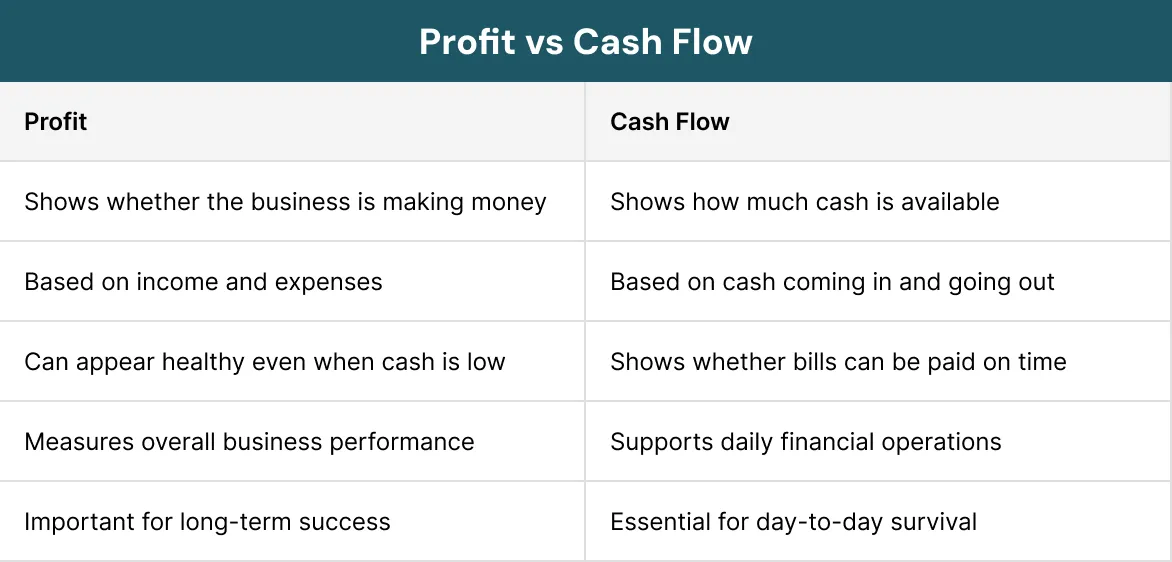
Mistake #3: Ignoring Cash Flow in Management Reports
Many businesses focus on sales and profits, but they forget about cash flow. This is a common mistake.
Your business can make a profit and still run into financial trouble if it does not have enough cash to pay its own bills on time.
Cash flow shows you how money moves in and out of a business. It helps you to see whether there is enough cash to cover wages, rent, supplier payments and other daily costs.
Some businesses only review their cash flow at the end of the month or quarter. By then, it may be too late to fix an issue. Regular cash flow reporting helps you to take action before small issues become serious.
Pro Tip:
Include a simple cash flow summary in every reporting cycle. Tracking expected income and upcoming payments helps you spot shortages early and avoid unexpected financial pressure.
How to Avoid This Mistake
Review your cash flow on a regular basis instead of waiting until problems appear.
Compare expected cash inflows with planned expenses so you can identify shortages early. This gives you time to reduce costs, follow up on unpaid invoices or adjust spending.
Pro Tip:
Set clear cash flow targets and monitor them consistently.
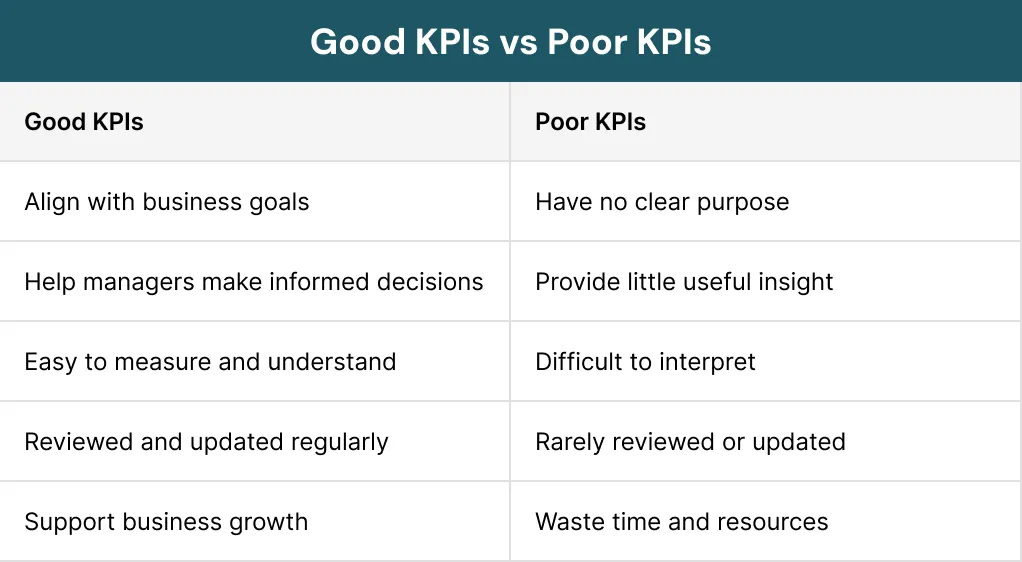
Mistake #4: Tracking KPIs That Don’t Align with Business Goals
Key Performance Indicators (KPIs) help you to measure the success of a business. However, tracking the wrong KPIs can lead to poor decisions.
Many businesses continue tracking old KPIs even when their goals have changed. As a result, managers focus on numbers that no longer matter. Reviewing KPIs on a regular basis helps to keep reports useful and relevant.
Good management reporting focuses on useful KPIs. It highlights the measures that show whether your business is moving towards its goals instead of simply collecting data.
“If you can’t measure it, you can’t improve it.”
— Peter Drucker
How to Avoid This Mistake
Choose KPIs that directly support your business goals. Review KPIs regularly as your business grows.
Mistake #5: Delayed Management Reporting
Reports lose their value when they arrive too late. Conditions of your business can change quickly, so you need current information to make good decisions. Delayed reports often mean missed opportunities and slower responses to issues.
Some businesses prepare their reports only at the end of each quarter. By that time, small issues may have become much bigger.
Regular reporting allows you to identify the problems early and take action before they affect the performance of your business.
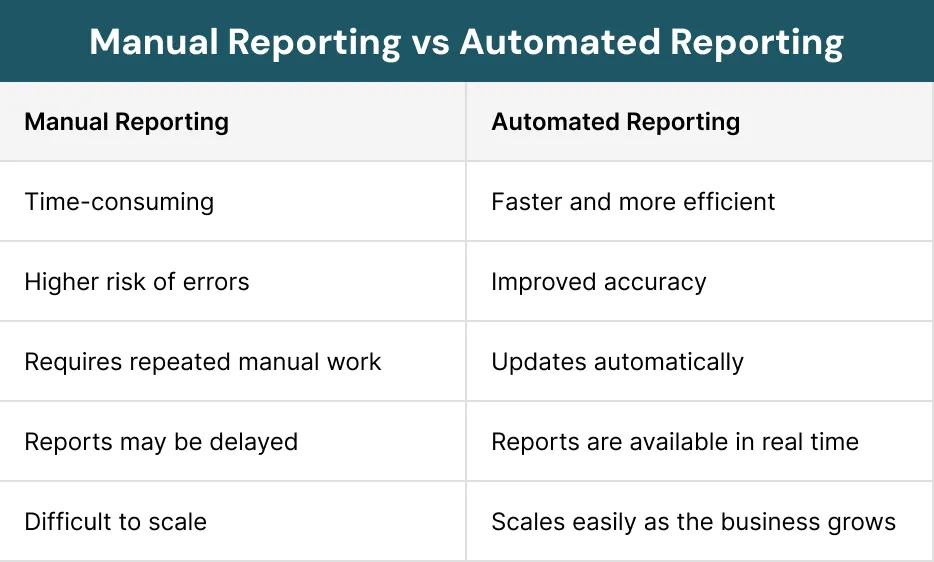
Manual reporting is one of the main causes of delays. Collecting data from multiple sheets takes time and increases the chance of errors. Automating routine tasks can speed up the reporting and improve accuracy.
Did You Know?
Businesses that automate routine reporting tasks often spend less time on preparing reports and more time analysing business performance.
How to Avoid This Mistake
Prepare reports on a regular schedule, such as weekly or monthly. Decide who is responsible for collecting, reviewing and sharing the details.
Mistake #6: Poor Data Accuracy
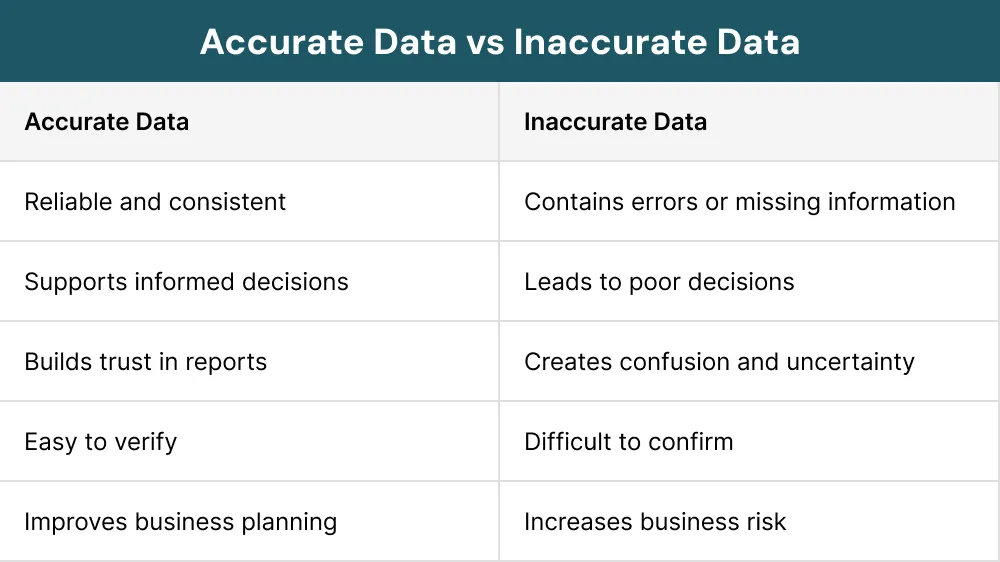
A report is only as good as the data it contains. If the data is incorrect, you may make poor decisions. Even small errors can lead to financial losses or incorrect planning.
Data errors can happen for many reasons. Staff may enter figures incorrectly, duplicate records may exist or data may not be updated on time.
Accurate data builds the trust in reports. When you know the figures are reliable, you can make decisions with confidence. Good management reporting depends on accurate and consistent data.
How to Avoid This Mistake
Create a clear process for collecting and checking the business data. Encourage staff to report the errors quickly so they can be corrected.
Use reliable accounting software and keep records updated.
Mistake #7: Using the Same Report for Everyone
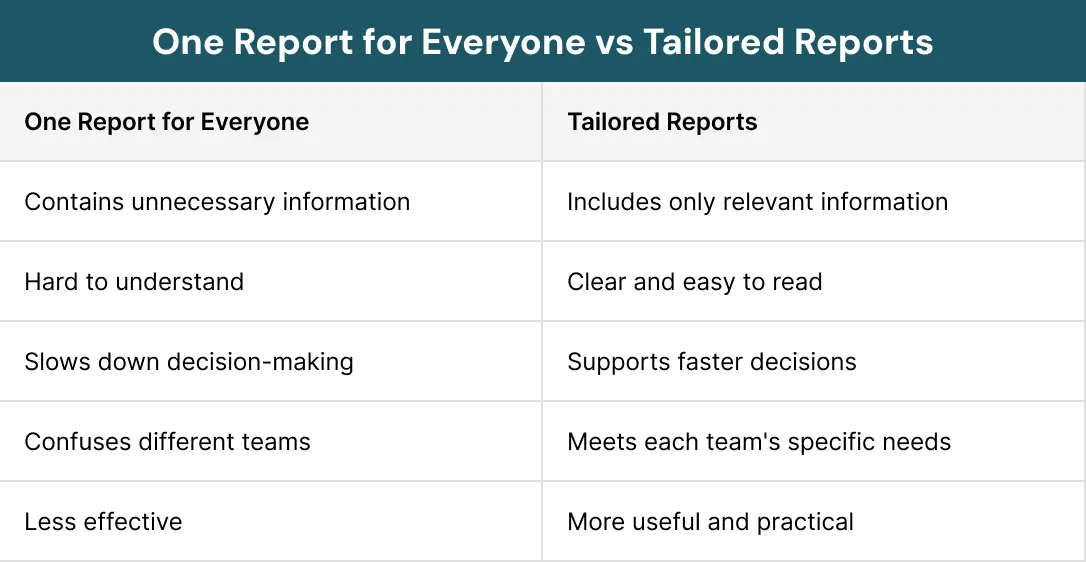
Not every manager needs the same detail. A sales manager, finance manager and business owner all have different roles. Giving everyone the same report can make it difficult to find the information they need.
For example, the finance team may need detailed cash flow figures, while the sales team wants to track customer orders and revenue. A single report filled with every metric can confuse the readers instead of helping them.
Effective management reporting delivers the right information to the right people. Clear and focused reports help managers to understand the performance of the business.
Pro Tip:
Ask each department what information they use most often. Design reports around those needs instead of sending one report to everyone.
How to Avoid This Mistake
Identify who will use each report before creating it. Focus on the detail that helps a person to perform their job better. Keep reports short, relevant and easy to understand.
Mistake #8: Reports Without Analysis
Numbers alone do not improve your business. Managers need to understand what the numbers mean and what action they should take. Reports that only present data without any explanation often create more questions than answers.
For example, a report may show that sales have fallen by 10%. Without analysis, managers do not know why this happened or what they should do next.
Strong management reporting does more than just present figures. It explains trends, highlights risks and also recommends practical actions that support your business growth.
How to Avoid This Mistake
Do not stop at presenting numbers. Explain why changes have happened and how they may affect the business. Add short comments that help readers to understand the results.
Use charts and graphs carefully. Keep them simple, label them clearly and make sure they support the main message.
How to Fix These Management Reporting Mistakes?
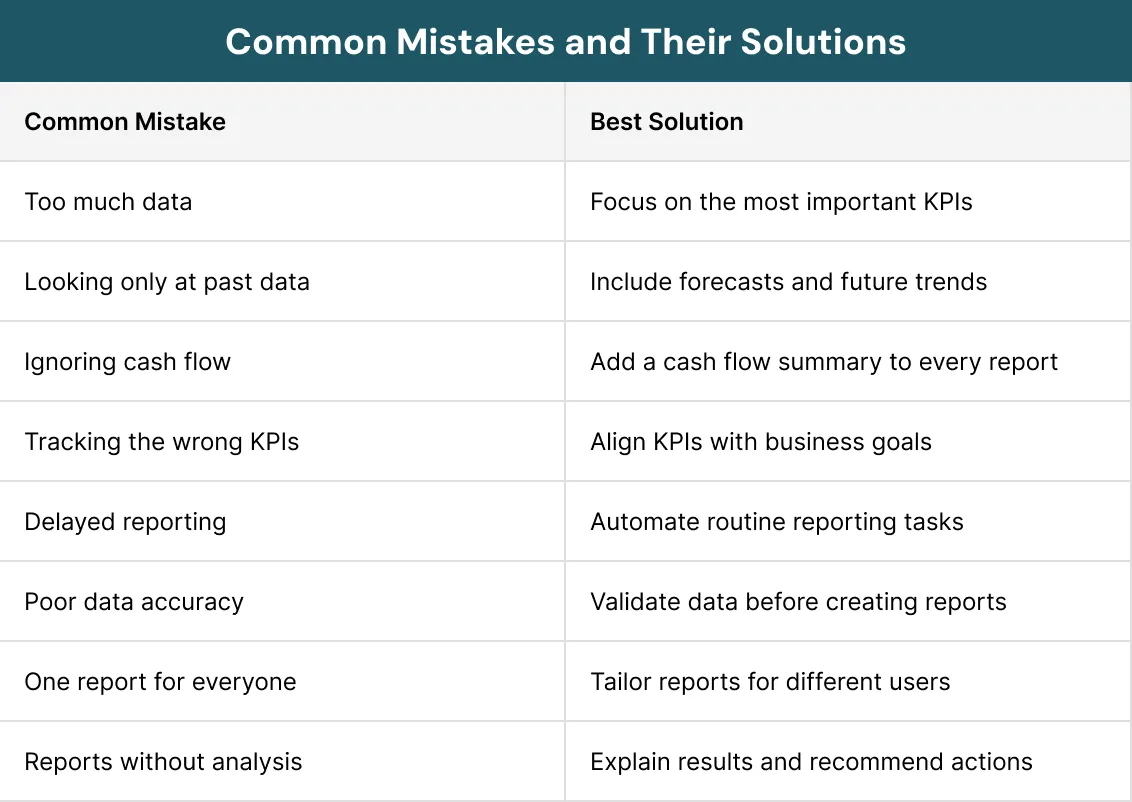
Avoiding reporting mistakes does not have to be difficult. The goal is to create reports that are clear, accurate and useful for the decision-making process.
Start by reviewing your current reporting process. Ask yourself whether your reports help managers to make better decisions.
You should use simple dashboards and focus on the most important KPIs. Check your data on a regular basis and update the reports on a set schedule.
Most importantly, turn every report into a decision-making tool. Reports should not only explain what happened but also suggest what should happen next.
Practical Ways to Improve Management Reporting
- Keep reports short and easy to read.
- Track KPIs that support business goals.
- Include cash flow in every reporting cycle.
- Check data for accuracy before sharing reports.
- Prepare reports on a regular basis.
- Use automation to reduce manual work.
- Create reports for different users and departments.
- Add clear analysis and recommended actions.
Case Study
A UK-based manufacturing company was facing falling profits even as their sales grew. Managers relied on outdated data and received reports several weeks late.
As a result, rising costs of production and cash flow issues were not identified at the right time.
The company decides to improve its management reporting by introducing monthly dashboards, tracking relevant KPIs and reviewing cash flow.
Within six months, the business reduced its unnecessary costs, improved cash flow and made faster decisions based on reliable data. This helped the company to perform better and support business growth.
Conclusion
Good reporting helps you to make better decisions. Clear reports show what is working well and where improvements are needed. They also help managers to respond quickly to new challenges.
Many reporting problems can be avoided with simple changes. Focusing on the right KPIs, checking data accuracy, monitoring cash flow and providing useful analysis all improve the value of business reports.
Remember that reports should support action, not just collect details. At Sterling Cooper, we help businesses to create clear and accurate management reports that support smarter decisions and sustainable growth.
Looking for accurate management reports that help you make smarter business decisions?
Feel free to contact us today and let our experts help you create reports that matter.
+443300102526
Book an Appointment
FAQs
What are the most common management reporting mistakes?
The most common mistakes include using too much data, focusing only on past information, ignoring cash flow, tracking the wrong KPIs, delayed reporting, poor data accuracy, using the same report for everyone and presenting data without analysis.
Why is management reporting important for business growth?
It provides managers with reliable information to make informed decisions. It also helps identify risks, monitor performance, improve planning and support long-term business growth.
What is a business management report template?
A business management report template is a ready-made format used to organise and present important business information, such as sales, expenses, cash flow and KPIs.
What should a good management report include?
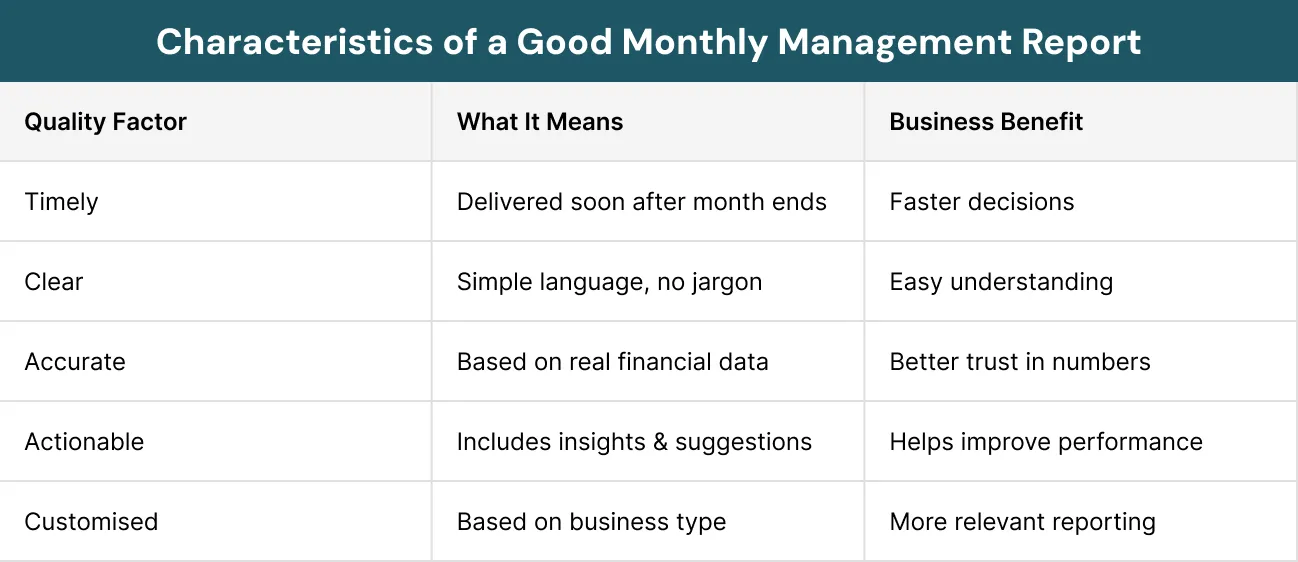
A good report should include key KPIs, cash flow information, financial performance, business trends, clear analysis and practical recommendations for action.
How can businesses improve their reporting process?
Businesses can improve reporting by using accurate data, automating routine tasks, focusing on relevant KPIs, preparing reports on time and adding clear explanations instead of only presenting numbers.
Share This Article!
Recent Posts
edit post

What Expenses Can be Claimed for a Limited Company?
July 28, 2026
edit post
Common Bookkeeping Mistakes That Trigger HMRC Problems
July 23, 2026
edit post

The Role of Financial Forecasting in Business Growth
July 22, 2026