Posted by:
Admin
Date:
April 1, 2026
Category:
blogs
Error: Contact form not found.
The Complete Guide to Payroll Management
For any business, payroll is a crucial part of managing employees and meeting tax and reporting obligations. Employees expect accurate, on-time pay, while employers need to calculate wages correctly, manage PAYE and National Insurance and meet HMRC requirements.
However, payroll can become more complex as a business grows. A 2026 UK payroll efficiency report found that 9 in 10 payroll professionals had experienced payroll errors in 2025, while 68% reported payment delays. Errors and delays can affect employees and may also lead to compliance issues, including penalties where PAYE reporting requirements are not met. This makes an effective payroll management process essential for UK businesses.
This guide explains what payroll management is, how the process works and what businesses can do to manage payroll accurately, efficiently and in line with UK requirements.
Key Information
- Compliance risk focuses on following laws, regulations and internal rules, while operational risk relates to failures that disrupt daily business activities.
- The difference between compliance risk and operational risk can affect how a business spots, controls and responds to threats.
- Operational risk management helps businesses spot weaknesses in people, processes, systems and external events before they cause problems.
- Compliance risk is often more tactical and prescriptive, while operational risk management takes a broader, more strategic and predictive approach.
- Both risks can overlap, so businesses should manage compliance risk and operational risk together to reduce losses, meet legal duties and improve resilience.
- Effective risk management includes clear policies, employee training, regular reviews, strong controls and collaboration across teams.
What Is Payroll Management?
Payroll management is the process of calculating employees’ pay, applying the correct deductions, paying employees and reporting payroll information to HMRC. It involves more than calculating salaries. Employers also need to account for changes such as overtime and bonuses, process deductions and maintain accurate payroll records. Effective payroll management helps businesses meet their payroll and reporting obligations while keeping employee pay accurate and on time.
The table below explains the main areas of payroll management:As HMRC states: “As an employer running payroll, you need to report your employee’s pay, any payrolled benefits and deductions in a Full Payment Submission (FPS) on or before their payday.”
Key Payroll Terms You Should Know
Before exploring the payroll process, it is useful to understand the key terms commonly used in payroll management: 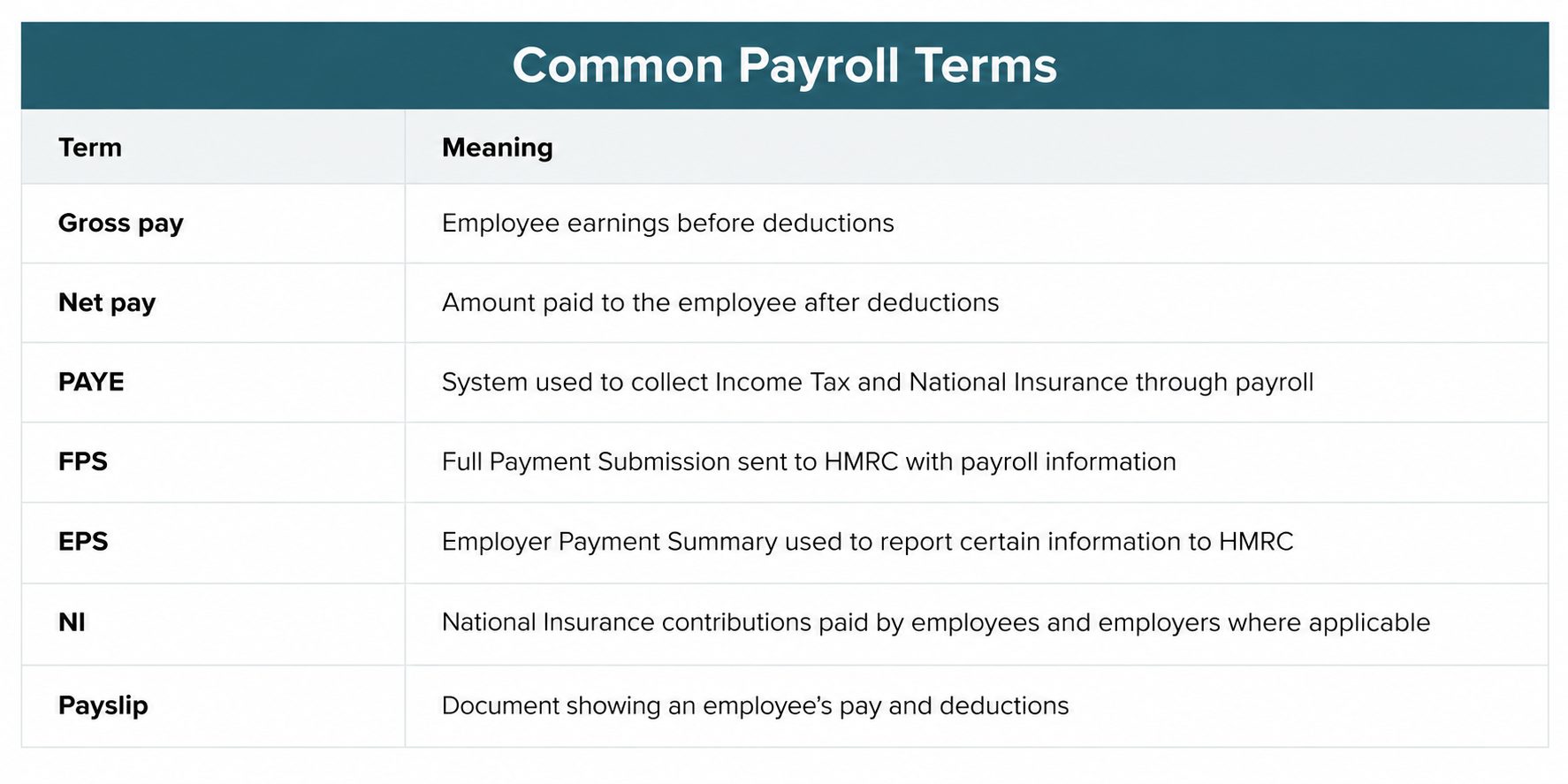
How Does the Payroll Management Process Work? A Step-by-Step Guide
Payroll follows a regular cycle, which may be weekly, fortnightly, four-weekly or monthly, depending on the employer. Although the exact process can vary between businesses, the main stages generally remain the same.
Step 1: Collect Employee Information
The payroll management process begins with collecting and verifying each employee’s information. This may include:
- Full name and address
- National Insurance number
- Tax code
- Salary or hourly rate
- Bank details
- Pension information
- Relevant starter information or P45 details
Employers should keep this information up to date and amend it when an employee’s circumstances change. Accurate records help reduce payroll errors and support compliance with reporting and tax requirements.
Step 2: Record Hours, Salary and Additional Pay
The next step is to determine how much each employee should receive before deductions. Depending on the employee’s pay arrangement, this may include:
- Basic salary
- Hourly wages
- Overtime
- Bonuses
- Commission
- Allowances
- Applicable statutory payments
Employers may also check attendance, working hours and approved leave before payroll is processed.
Did You know?
Finity’s 2026 UK Payroll Efficiency Report found that 77% of payroll professionals lose up to 11 hours per week to inefficient technology or processes, while 68% experience payment delays.
Step 3: Calculate Gross Pay
Once the relevant hours, rates and additional payments have been confirmed, the employer calculates each employee’s gross pay before deductions.
For salaried employees, gross pay is generally based on their regular salary, adjusted where necessary for factors such as unpaid leave or changes in pay. For hourly workers, it is calculated using the hours worked and the agreed rate. Overtime, bonuses and commission may also form part of gross pay where applicable.
Step 4: Apply Tax, National Insurance, Pension and Other Deductions
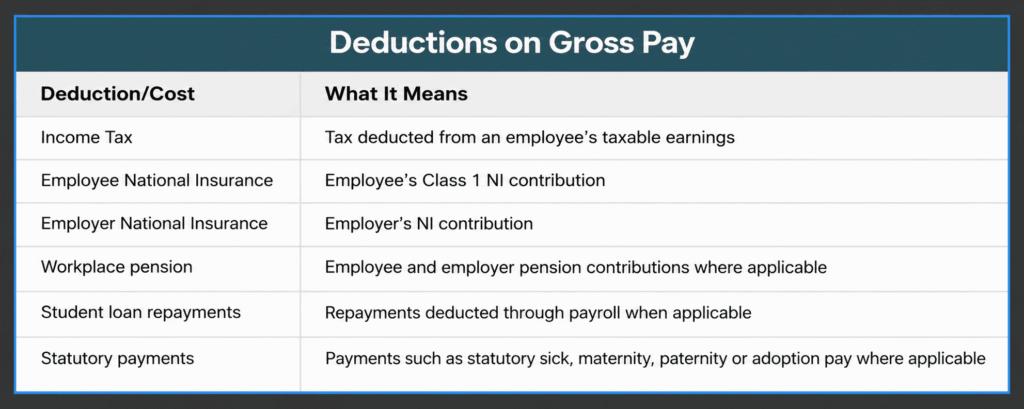
After calculating gross pay, the employer applies the relevant deductions. The employee’s tax code and payroll information are important at this stage because errors can affect the amount deducted. The table below explains the types of deductions applied to the gross pay:
Step 5: Calculate and Check Net Pay
After the applicable deductions have been calculated, the remaining amount is the employee’s net pay. This is the amount the employee receives after deductions.
Before finalising payroll, the employer should review the results for unusual changes, missing information or calculation errors. This helps ensure employees receive the correct amount and payroll records are accurate.
Step 6: Pay Employees
Once the payroll has been reviewed and approved, the employer pays employees their net wages using the agreed payment method.
Payments should be made on the agreed payday, and the payment amounts should match the finalised payroll records. This helps maintain accurate payment records and supports a reliable payroll process.
Step 7: Issue Payslips
Employers must provide employees and eligible workers with a payslip on or before payday. A payslip helps employees understand how their pay was calculated and what deductions have been made. A payslip may include:
- Gross pay
- Net pay
- Income Tax
- National Insurance
- Other deductions
- Pay period
- Hours worked, where pay varies according to hours
Step 8: Submit Required Reports to HMRC
Employers operating PAYE must report payroll information to HMRC through Real Time Information (RTI). The Full Payment Submission (FPS) is normally sent on or before payday. An FPS includes information such as:
- Employee pay
- Income Tax
- National Insurance
- Other relevant deductions
- Payrolled benefits, where applicable
Late or inaccurate payroll reporting can result in HMRC penalties, depending on the circumstances.
Step 9: Pay HMRC and Other Relevant Bodies
After payroll has been processed, the employer must pay amounts owed to HMRC and other relevant recipients. This may include:
- PAYE and National Insurance to HMRC
- Employee and employer pension contributions to the relevant pension provider
- Other applicable deductions or payments to the relevant recipient
Payroll management monitors every deadline closely to avoid penalties or compliance problems.
Step 10: Review and Reconcile Payroll Records
The final stage is to review and reconcile payroll records to make sure the figures are complete and accurate. Often, these records are compared with:
- Bank payments
- HMRC liabilities
- Pension contributions
- Accounting records
- Previous payroll periods
Regular reconciliation helps employers identify discrepancies and correct errors before they become more costly problems.
Did You know?
Employers must keep PAYE records for at least three years from the end of the tax year they relate to. These records can include details of employee pay, deductions, payroll reports submitted to HMRC and payments made to HMRC.
How Can Outsourcing Improve Payroll Management?
As businesses grow, managing payroll can become more complex. Hiring more employees, introducing different pay arrangements and keeping up with changing compliance requirements can increase the workload for internal teams. This can also increase the risk of payroll errors and missed deadlines.
Payroll outsourcing can help businesses manage this complexity by giving them access to specialist payroll professionals. Depending on their needs, a company can outsource part or all of its payroll management process while retaining oversight of key decisions.
For example, Sterling Cooper Consultants provides payroll management services that include:
- Payroll processing
- Tax and pension calculations and submissions
- Payslips
- Payroll reporting and compliance support
Businesses can also choose from fully managed, partially managed or payroll processing-only options, depending on the level of support they require.
Payroll Management Checklist
Use this checklist to make sure each key stage of the payroll management process is completed accurately and on time:
Conclusion
Payroll management involves much more than paying employees. It involves maintaining accurate employee information, calculating pay and deductions, issuing payslips, reporting to HMRC and keeping payroll records up to date. A well-managed payroll process helps businesses pay employees accurately and on time while reducing the risk of errors, compliance issues and avoidable penalties.
As payroll requirements become more complex, businesses can use payroll software or outsource some or all of their payroll activities to specialist providers. The right approach depends on the size of the business, the complexity of its payroll and the level of support available internally.
Need Payroll Support?
Keep your payroll accurate and compliant with specialist support from Sterling Cooper Consultants, covering payroll processing, payslips, tax, pensions and reporting. Get in touch to discuss your payroll needs.
FAQs
Payroll management is the process of calculating employee pay, applying deductions, paying employees and completing the required payroll reporting and record-keeping.
What does payroll management include?
Payroll management can include maintaining employee information, calculating wages and salaries, managing PAYE and National Insurance, processing pension contributions, issuing payslips, submitting reports to HMRC and reconciling payroll records.
How often is payroll processed?
Payroll can be processed weekly, fortnightly, four-weekly or monthly, depending on the employer’s chosen pay schedule.
A Full Payment Submission (FPS) is a report sent to HMRC containing information about employees’ pay, deductions and other required details. Employers generally submit an FPS on or before payday.
Can payroll management be outsourced?
Yes. Businesses can outsource some or all of their payroll activities to a specialist provider. Services can range from payroll processing and payslips to fully managed payroll, depending on the provider and the business’s requirements.
What are the benefits of outsourcing payroll?
Outsourcing payroll can reduce administrative workload and give businesses access to specialist support for payroll calculations, payslips, deductions, pension administration, reporting and compliance.
What happens if payroll information is reported late?
HMRC can apply penalties for late or missing PAYE reports, depending on the type of submission and the circumstances. Businesses should follow the relevant reporting deadlines to reduce the risk of penalties and compliance issues.
Share This Article!
Recent Posts
edit post

Compliance Risk vs Operational Risk: What’s the Difference?
August 13, 2026
edit post

How to Build a Cash Reserve for Business Stability
August 11, 2026
edit post

How to Forecast Cash Flow During Economic Uncertainty
August 6, 2026