Posted by:
Admin
Date:
August 5, 2026
Category:
blogs
Error: Contact form not found.
How AI Is Changing Bookkeeping for Small Businesses
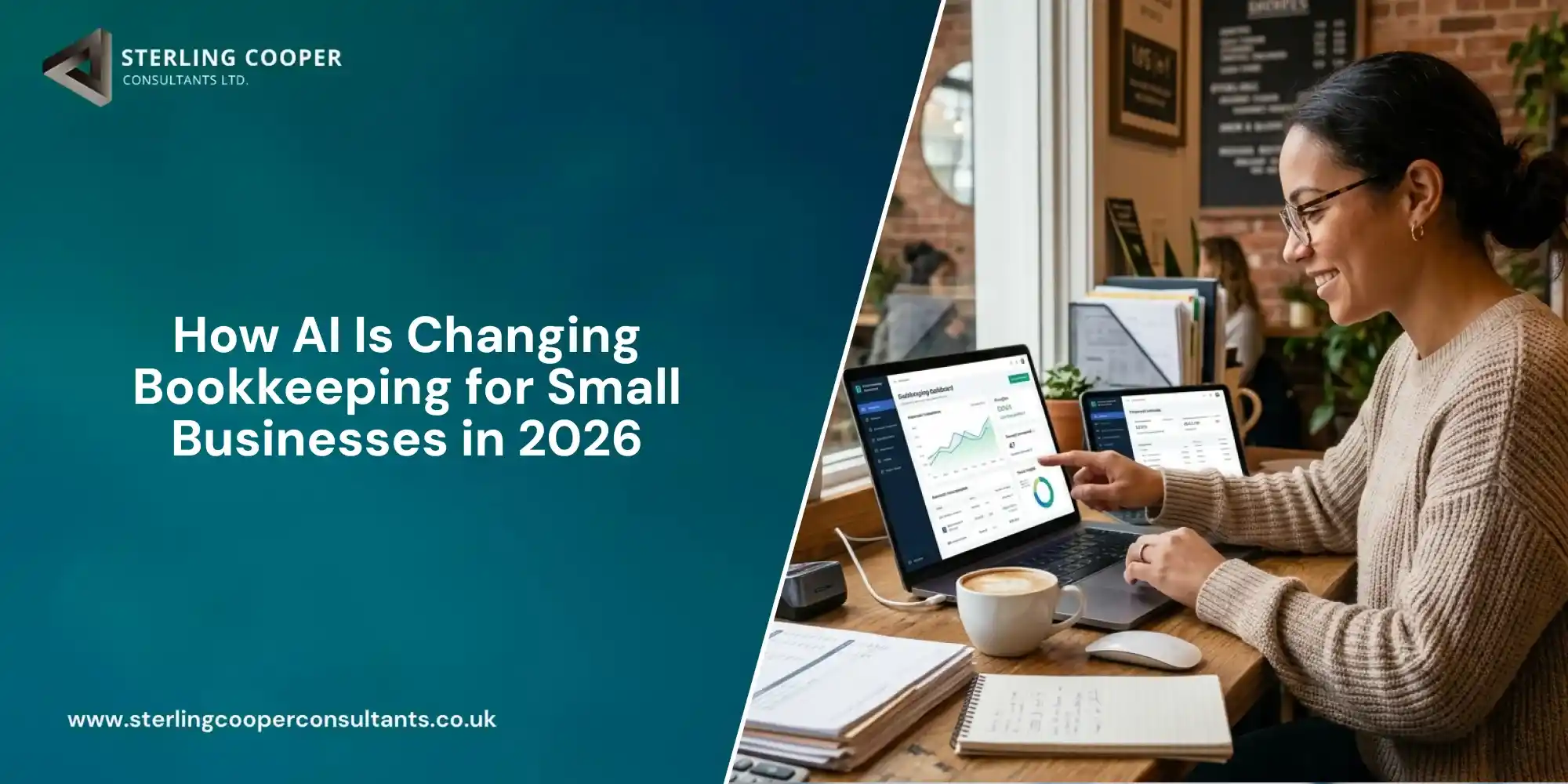
What if your bookkeeping took less time and required less effort, but maintained accuracy? This is no longer a dream, but a reality with AI.
Many small businesses still spend hours entering data, tracking expenses and checking bank records. These repetitive tasks increase costs and reduce the time available to grow your business. By using AI bookkeeping bots, this automates your task and you can focus more on growing your business. That is why there is a rise in the use of AI bookkeeping.
According to research, 78% of small firms make use of AI for bookkeeping. AI can perform routine bookkeeping tasks easily and save time and cost for your business. It can also help keep the financial records up to date and correct. Small businesses are starting to learn how AI is changing bookkeeping for them and improving their business operations.
In this guide, you will learn how AI is changing bookkeeping for small businesses, the tasks it can automate, its benefits and limitations.
Key Takeaways
- AI bookkeeping automates routine tasks such as data entry and expense tracking.
- AI bookkeeping bots can help with bank reconciliation, invoicing and reporting.
- Many AI bookkeeping tools offer free plans for small businesses.
- AI bookkeeping UK adoption is growing as businesses look for faster and more accurate financial management.
- AI supports bookkeepers by reducing manual work rather than replacing them.
What Is AI Bookkeeping?
AI bookkeeping involves the use of smart tools to help with bookkeeping. The system can read receipts, sort expenses and match bank records to maintain accurate financial records. This reduces the need for manual work.
AI bookkeeping for small businesses can be seen as a digital bookkeeping helper that takes care of all your everyday financial tasks. It helps keep financial data organised, updated and ready to use. This saves time by automating bookkeeping and saves costs of labour and prevents penalties. AI makes bookkeeping simpler and more effective for you. Paul Roetzer talks about the emerging role of AI in accounting:
‘AI will not replace accountants, but accountants who use AI will replace those who do not.’
Paul Roetzer
Did You Know?
AI bookkeeping tools can process receipts, sort transactions and update records in seconds. This helps small businesses spend less time on admin work.
How Is AI Changing Bookkeeping for Small Businesses?
AI bookkeeping has become an essential component for small businesses in the UK. It makes it easy for you to handle your daily bookkeeping tasks in an efficient way. It results in various bookkeeping advantages in terms of cost, time and efficiency. There are some tools where AI bookkeeping is free to some extent.
Below are some ways in which AI can improve everyday bookkeeping tasks:
1. Matching Bank Records
AI can automatically match the payments in a bank account with the invoice and other related records. This reduces the time spent checking the bank records. This helps spot missing or incorrect data more easily and quickly.
Best AI Tool
Booke AI is an excellent option. The AI system automatically reads receipts, extracts line items and matches them to your bank feed transactions for effortless reconciliation.
2. Expense Tracking
AI has made it easy for users to track their expenses. Users just have to upload a receipt and the tool is able to read all the information from it. This helps keep expense records accurate and up to date.
Best AI Tool
Dext Prepare (formerly Receipt Bank) is the industry standard. Its AI uses Optical Character Recognition (OCR) to extract VAT, suppliers and dates from photos or PDFs, pushing perfectly categorized data straight to your ledger.
3. Invoicing and Cash Flow
AI can be used to prepare invoices automatically and remind people about pending and future payments. This way, you can make timely payments and also have an overview of the cash flow.
Best AI Tool
JAX is a newer AI assistant built specifically to work with Xero. It automates bookkeeping and keeps your records completely Making Tax Digital (MTD) compliant for HMRC.
4. Anomaly Detection
AI bookkeeping bots can find anomalies within your financial data in no time. It can spot duplicate payments, unexpected costs or even missing data.
Best AI Tool
NetSuite is excellent for UK SMEs. It features built-in AI and a financial assurance agent that continuously compares live entries against historical patterns to flag unusual outgoings or journal entries.
5. Financial Reporting and Forecasting
AI can create financial reports in seconds. It shows key data such as revenue, expenses and cash flow. It can also assess business trends and forecast future income and costs. This helps business owners make better decisions and plan ahead easily.
Best AI Tool
For built-in AI forecasting and HMRC Making Tax Digital (MTD) compliance, Xero Analytics Plus is the top choice. For deep, Excel-based financial reporting, Datarails offers superior AI-driven predictive modeling and scenario planning.
6. Integrated Workflows
AI tools seamlessly connect payment processors (like Stripe or PayPal) directly to popular accounting software such as QuickBooks or Xero.
Best AI Tool
Zapier is best for practices or high-volume businesses. It serves as a dedicated AI automation layer that codes complex transactions and connects across Xero, Sage and QuickBooks.
Quick Tip
Start with a free AI bookkeeping tool before investing in a paid plan. This helps you understand which features your business needs most.
Actual Growth with AI: Case Study
Armstrong Watson, a UK accounting firm, worked with more than 2,000 bookkeeping clients. Every year, the firm received over 30,000 pages of bank statements, invoices and receipts. Staff spent many hours entering this data manually. This made bookkeeping slow and took time away from client work.
To solve this problem, the firm started using AI bookkeeping software to automate data entry. The Ai tool scanned and captured information from invoices, receipts and bank statements. It also stored documents online, making them easier to access and manage.
The results were impressive. Armstrong Watson increased bookkeeping productivity by almost 90%. Staff spent less time on manual data entry and more time helping clients. The AI tool also improved accuracy by reducing human errors. This shows how bookkeeping via AI can save time, reduce labour, maintain accurate records and help businesses work more efficiently.
Conclusion
AI bookkeeping is making things easier for small businesses. It helps them save time, avoid mistakes and automates bookkeeping for them. Moreover, it provides the owner with clear insight into their financial status.
At Sterling Cooper, we help businesses keep their bookkeeping correct and updated. If you are facing any difficulties with your bookkeeping, reach out to us today. We can help you keep your financial matters organised.
Ready to spend less time on bookkeeping?
Explore AI bookkeeping tools that can automate routine tasks and improve accuracy. Reach out to us and we will give you a clearer view of your business finances.
+443300102526
Book an Appointment
FAQs
What is AI bookkeeping in the UK?
AI bookkeeping uses smart software to handle bookkeeping tasks. It can sort expenses, read receipts, match transactions and create reports automatically.
How does AI bookkeeping for small business save time?
AI reduces manual work by automating routine tasks. This allows business owners to spend more time on running and growing their business.
Are there any AI bookkeeping free tools available?
Yes. Some platforms offer free plans with basic bookkeeping features. These tools can be a good starting point for freelancers and small businesses.
How is AI bookkeeping UK adoption growing?
More UK businesses are using AI bookkeeping tools to save time, improve accuracy and manage financial records more efficiently. Many tools also help with tax and compliance tasks.
Will AI replace bookkeeping professionals?
No. While AI can automate routine bookkeeping work, businesses still need bookkeepers to review records, provide advice and handle complex financial decisions.
Share This Article!
Recent Posts
edit post

Audit Exemption UK: Rules Explained for Companies
August 4, 2026
edit post

HMRC Penalties Small Businesses Often Overlook
August 3, 2026
edit post
Why More SMEs Are Outsourcing Their Finance Function
July 30, 2026