
Posted by:
Admin
Date:
November 25, 2025
Category:
blogs
Error: Contact form not found.
Top Tax Saving Tips to Reduce Your Bill Legally
You have to strategically plan your way around tax paying. Else, it is going to cost you thousands of pounds annually. There are schemes, tips and ways that can legally reduce your bill. Here are some of the tax saving tips that can help you.
1. Tax allowances and reliefs
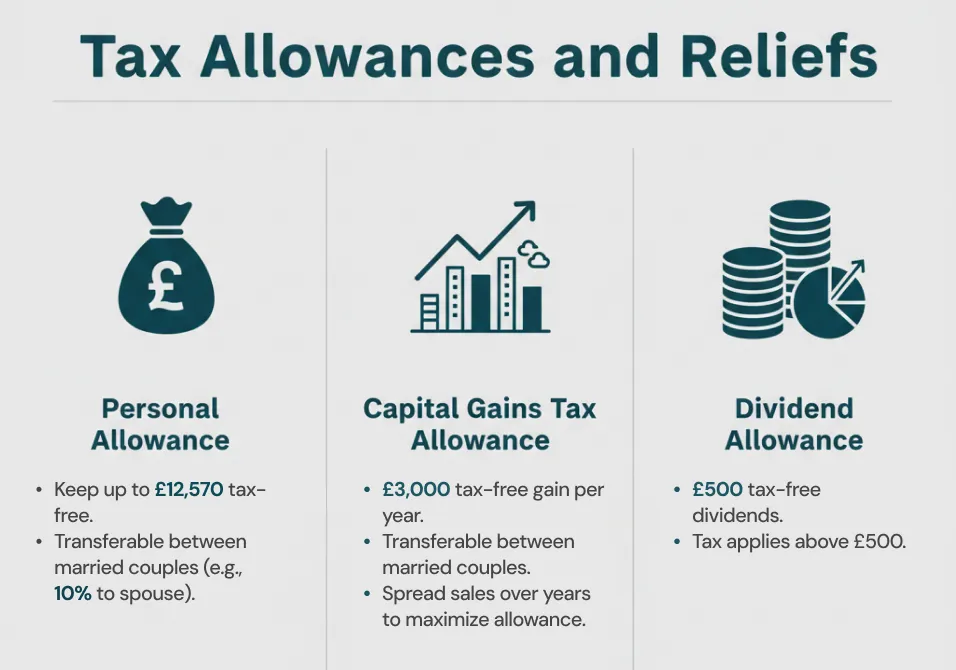
One of the best tax saving tips is to avail the tax allowances and reliefs available to you.
Personal allowance:
You can keep up to £12,570 of your salary tax-free. It can be transferred among married couples. For instance, you earn £50000 and your spouse earns £40000. You can transfer your personal allowance (10%) to your spouse. This can be one of your key income tax saving tips.
Capital Gains Tax allowance
Selling any investments, properties, or assets can make you liable to capital gains tax. This can be reduced by availing capital gains allowance. This allowance allows £3000 gain every year. Married couples can transfer assets among each other to avail both of their allowance. Sales should be distributed over a number of tax years in order to maximise the tax-free allowance..
Dividend allowance
Owning a share in a company can let you have a dividend if the company performs well. Dividend allowance is £500. You have to pay tax over this amount but any dividend below it is tax free.
Learn more about Tax Planning & Compliance with us.
2. Investment in ISA
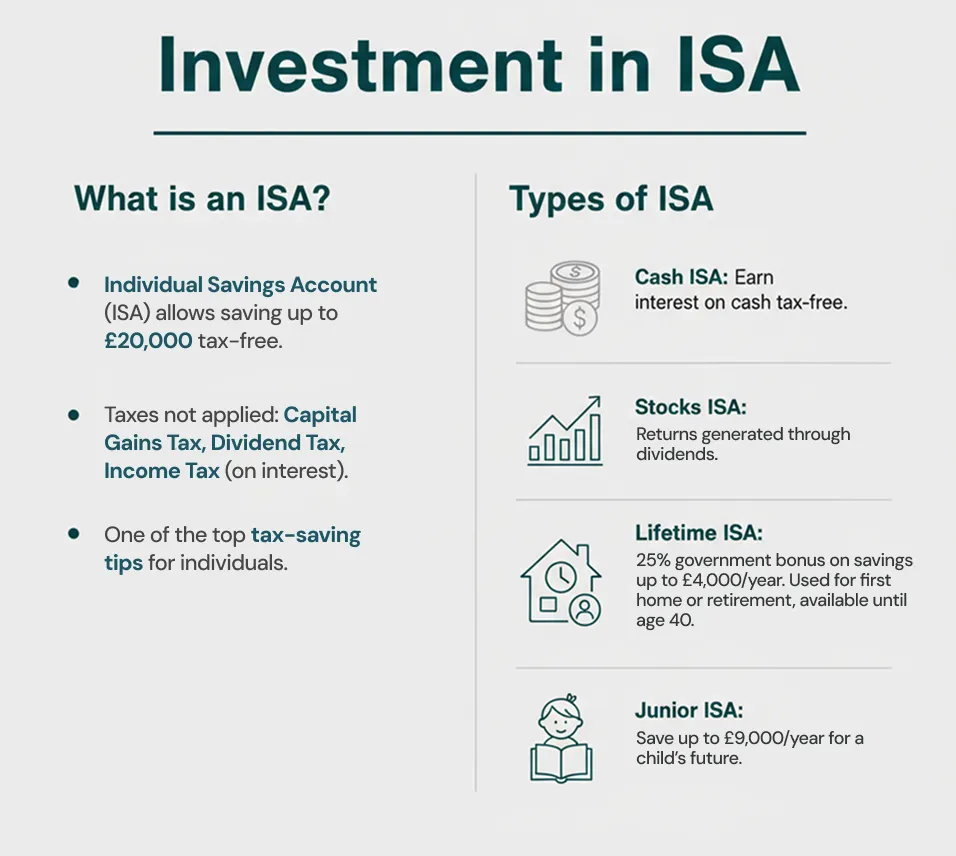
An account type known as an Individual Savings Account (ISA) allows you to save up to £20000 tax-free.So, investing in it is one of the best tax saving tips.
The following taxes do not apply on ISA:
- Capital gains tax
- Dividend tax
- Income tax (on interest)
This makes ISA one of the key tax saving tips for individuals.
Types of ISA
The main types of ISA are :
Cash ISA:
This type of ISA allows you interest on your cash that isn’t taxed.
Stocks ISA:
In stocks ISA, returns are generated through dividends.
Lifetime ISA
In this case, a 25% government bonus is given on savings of up to £4,000 per tax year. This can be used to save for your first home or retirement. It can be opened at the age of 40.
Junior ISA
In junior ISA, up to £9,000 per tax year can be saved by a parent or guardian for a child’s future.
3. Tax relief on pension funds
Tax saving tips also include investing in pension funds. Pension saving allows you a significant tax relief, boosting your contributions as a result.
Contributions at different tax rates:
Different taxpayers receive different tax reliefs.

4. Tax planning for self employment and business
Planning your taxes is crucial when you are self employed or managing a business. This is due to the fact that tax planning can maximise your earnings.
Tax saving tips for small businesses:
“If you run a business, you need to navigate corporation tax and VAT efficiently. For the UK to remain internationally competitive for business, it needs a tax system that is sufficiently clear for business to be able to operate within with confidence.”
Tracey Bowler
Corporation tax:
It is one of the major business’ costs. Here is how it applies to profits.
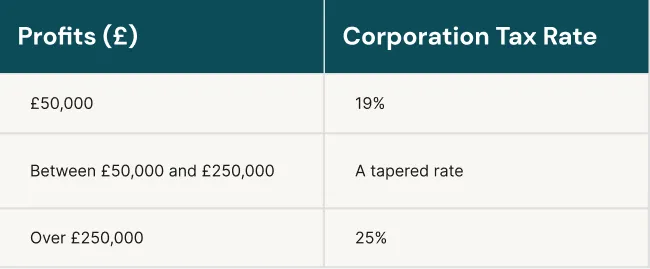
One of the best tax saving tips for businesses is reducing corporation tax. To minimize this:
- You should invest in business assets such as vehicles, software, etc.
- You should make pension contributions.
- You should make an efficient payment of dividends.
VAT:
Even though it only applies if your turnover is more than £85000, you should still need a good scheme.
Some of these schemes are:
- Cash accounting scheme
- Flat rate scheme
Learn more about How to get a VAT Certificate: A Complete Guide
Tax saving tips for self employed
If you are self employed, you can use the following tax saving tips:
Claim business expenses:
You can claim costs of home office, travel, training, etc.
Pension contributions:
You can make pension contributions since they allow you significant self relief.
Income spread
You can keep the tax rates lower by structuring income over multiple years.
Get detailed insights on 2025–26 Tax Year Updates.
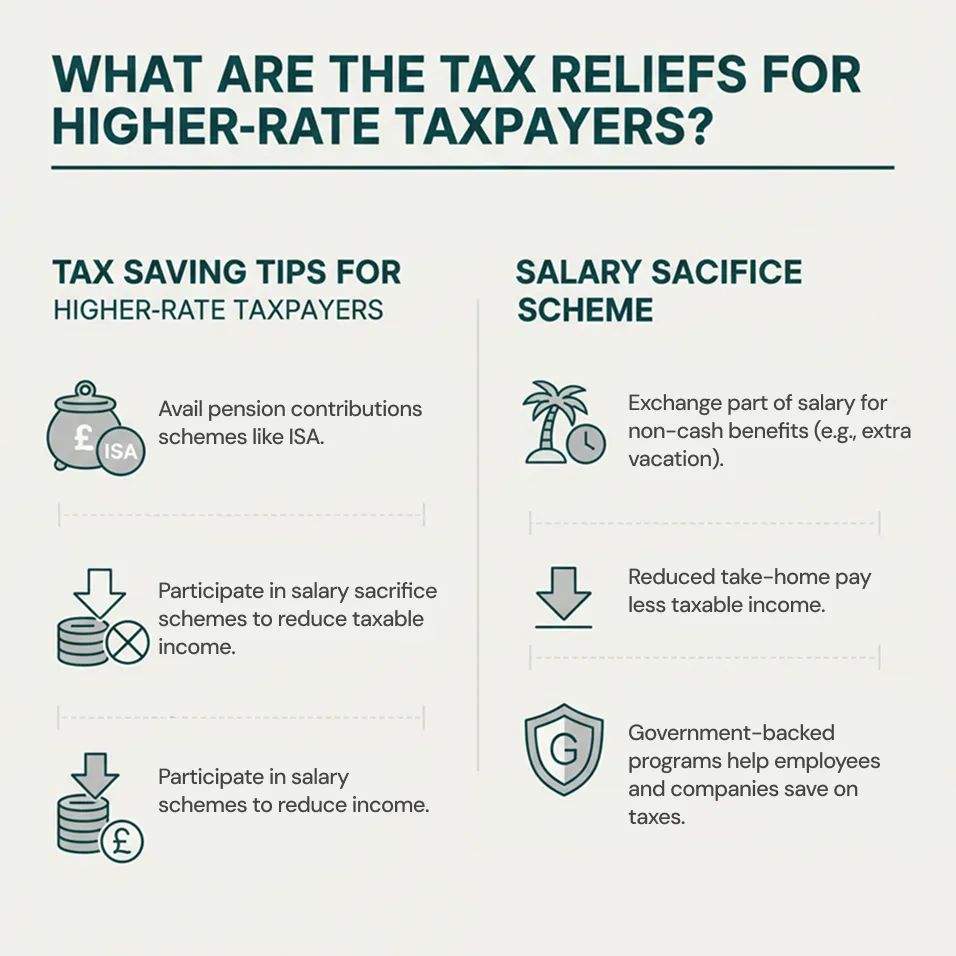
5. What are the tax reliefs for higher-rate taxpayers?
Some saving tips for higher-rate taxpayers include availing pension contributions and schemes like ISA. They can also take part in salary sacrifice schemes.
Salary sacrifice scheme
Through salary sacrifice schemes, individuals can buy non-cash benefits from their employers, such as more vacation time. The employee will receive less money from the employer in return.
Since reduced take-home pay translates into less income that needs to be taxed, government-backed salary sacrifice programs assist both companies and employees in saving money on taxes.
6. Part of charity contributions in tax relief
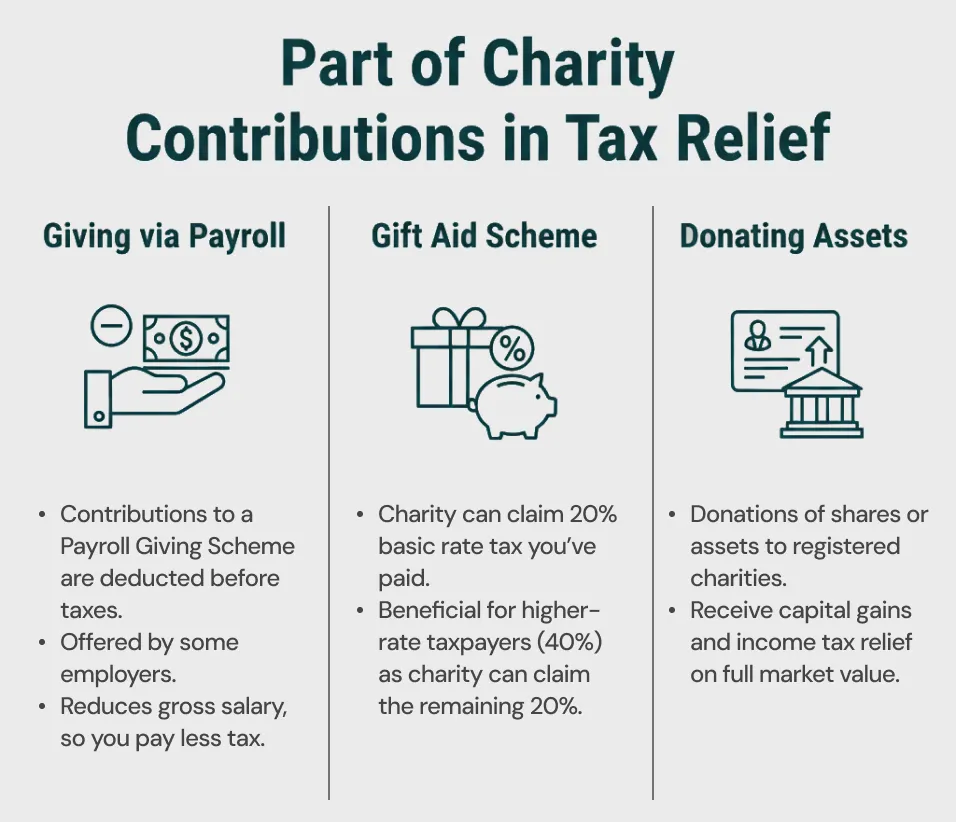
Another one of the best tax saving tips is charitable contribution. This is because you can get tax relief on charitable donations you make. Here is how it is done.
Giving payroll
Your contributions to a charitable Payroll Giving Scheme are subtracted before taxes. These schemes are offered by some employers through a payroll.
You can donate more money this way and your gross salary will be reduced. You’ll have to pay less tax on it.
Gift Aid scheme
When you donate through this scheme, the charity can claim the 20% basic rate tax that you have paid . This is especially beneficial for higher-rate taxpayers who pay 40% in taxes. This is because the charity has claimed 20%, they can claim the rest of 20%.
Donating assets to charity
While donating assets such as shares to a registered charity, you can get capital gains and income tax relief on full market value.
How to claim a tax refund
In case you have missed your tax reliefs, you can contact HMRC and claim them back. This tax relief can be backdated up to 4 years. Make sure to claim this tax directly with HMRC. If you use any tax refund agency, read their terms and conditions carefully because you may have to pay agents’ fee and other charges. You can claim back tax on the following:
- Expenses of job (fuel, work clothes, working for home, etc.)
- Pensions
- Interests from savings
- Interests from payment protection insurance (PPI)
- Redundancy payment
Contact Sterling Cooper Consultants for more tips
At Sterling Cooper Consultants, we provide you with the best tax saving tips. We assist you with minimizing tax returns while keeping it legal. Whether you’re an individual, a business, or a family, we provide you unique solutions to your overpaid tax problems.
So, for more such insights, contact us now.
Simplify taxes with expert planning, self-assessment, VAT returns & corporation tax services in the UK.
Ensure maximize savings today.
FAQs
Are there any tax saving tips for inheritance?
Yes, the 40% tax on £325,000 can be reduced. Tax saving tips for this include using the £3000 annual allowance gifts. Making larger gifts seven years before death can make the gifts tax-free.
Can the Enterprise Investment Scheme (EIS) be useful in saving tax?
Yes, schemes like EIS can help you get a variety of tax reliefs such as income tax relief, capital gains tax deferral and exemption and inheritance tax relief.
How can landlords get tax relief?
For landlords, there are a few options. They can get rent-a-room tax relief while renting a room. They can get £7500 a year without tax. They can also claim replacement of domestic items.
What kinds of loan payments allow tax relief on interest payments?
One such type of loan is taken out to purchase shares in the borrower’s company. The loan taken out for an investment in a partnership also qualifies. Loans for machinery or plants used in businesses(trading and professional/property partnership) are also subject to this exemption. If you take out a loan to pay inheritance tax, this may also be qualified for relief.
Can you claim tax relief on travel?
Yes, you can claim tax relief on travel on two conditions. The first is that your place of work is not permanent. The other is working for home and travelling to meet your clients.
Share This Article!
Recent Posts
edit post

What Disabilities Qualify for VAT Exemption?
May 21, 2026
edit post
Making Tax Digital for Income Tax: A Practical Guide for UK Taxpayers
May 20, 2026
edit post

The Impact of AI on Financial Reporting and Auditing
May 19, 2026