Author: admin

  • Understanding the 1263L Tax Code: A Simple Guide

    Understanding the 1263L Tax Code: A Simple Guide

    1263L Tax Code Explained

    Posted by:

    Admin

    Date:

    December 22, 2025

    Category:

    blogs

    Error: Contact form not found.

    Understanding the 1263L Tax Code: A Simple Guide

    If you keep seeing “1263L” on your payslip, it means you are entitled to more tax-free income than most UK employees and may not even realise it. Your tax code might seem like a random bunch of letters and numbers, but it is much more than this. It affects how much money you take home every month. This guide helps you understand the 1263L tax code. We’ll break down what it means and how it affects your pay. We’ll also explain how tax code 1263L differs from the standard 1257L code. This article will help you take charge of your wages and make sure you’re not losing money, regardless of whether you’re new to PAYE or just want to double-check your tax deductions.
    To learn more about tax codes and how they impact your pay check out our blog on Tax Code BR and how it impacts your pay.

    What is the 1263L Tax Code?

    HMRC (His Majesty’s Revenue and Customs) uses a combination of numbers and letters to define how much of your income should be tax-free. Tax code 1263L HMRC is one such combination. It plays a crucial role in determining the tax amount deducted from your income through the PAYE system. Here is everything you need to know about this.

    What is the definition of the 1263L tax code?

    As described earlier, the main constituents of a tax code are alphabetic and numerical components. In the present case, 1263L tax code displays the amount of Personal Allowance that you are entitled to. This amount is not taxed. HMRC multiplies this figure by 10. This implies that you don’t have to pay tax on £12,630 of your income in the current tax year. The letter ‘L’ is indicative of the fact that you are eligible for the standard tax-free Personal Allowance. You don’t have to make any complex measurements or adjustments to find your tax-free income. This is crucial for understanding the 1263L Tax Code.

    What is the purpose of the 1263L tax code?

    The main purpose of your HMRC 1263L tax code is to inform your employer’s payroll system of what amount of your salary should not be taxed. This serves to provide a fair and accrue amount that is to be deducted from your pay every month by the PAYE. To ensure that your tax deductions reflect your current financial situation, HMRC uses the 1263L tax code to indicate any adjustments, such as expense claims, allowances, or benefits. Without the correct tax code, you may end up paying too much tax or too little. It may lead to a tax bill or a refund later on.

    Breakdown of the 1263L Tax Code

    So, what does tax code 1263L mean in the UK? Well, firstly, the numeric part, i.e., 1263, indicates that you are subject to a higher tax allowance than the standard 1257. To be precise, you are getting an extra £60 of tax-free income. This might be a result of pre-approved finances, such as professional fees and work-related expenses. Over the years, you may receive a modest but meaningful increase in your take-home pay.
    The letter ‘L’, as described earlier, denotes a full standard Personal Allowance. This means that you do not have untaxed income or company benefits. It also denotes that you have only one stream of income.

    Key Features of the 1263L Tax Code

    There are certain key features of this tax code that reflect your particular employment circumstances. These features help you understand your differences from the standard 1257L as well as determine your tax-free income. Understanding these features helps you to be efficient and avoid overpaying taxes.

    Eligibility Criteria for the 1263L Tax Code

    The following is the main eligibility criterion for this tax code:

    • PAYE Employment Requirement

    This is the first prerequisite for eligibility for the 1263L tax code. You must be employed under the PAYE system. This system indicates that your employer deducts tax and National Insurance directly from your salary. After this, they forward it to the HMRC. So, if you are self-employed or have multiple channels for income, you are not likely to receive this tax code.

    • Entitlement to Job-Related Tax Reliefs

    This tax code is only assigned to you if you are an employee eligible for specific job-related tax reliefs. These reliefs tend to be fixed-rate expenses. Some of these expenses include the cost of maintaining a uniform or purchasing tools necessary for your job. The price of keeping up a uniform or buying equipment required for your work is a couple of these expenses. HMRC checks your occupation and approves these reliefs accordingly. They are then factored into your tax code.

    • Simple tax circumstances

    This tax code is given to you if your circumstances are simple, i.e., your financial situation is straightforward. The 1263L tax code allows just minor adjustments without further review. It does not involve complex scenarios like expensive corporate vehicles, private health insurance, or a sizable amount of untaxed income. In the case of these scenarios, you will be assessed by the HMRC in more detail and get tax codes like K or T by the HMRC.
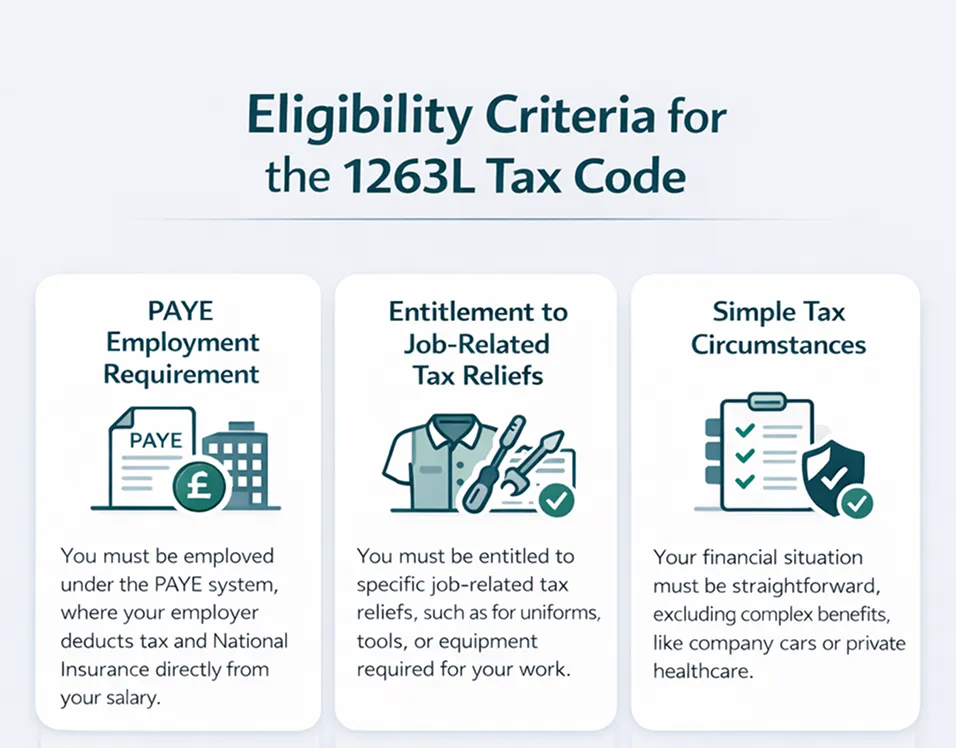
    Eligibility Criteria for the 1263L Tax Code

    Deductions & Credits That May Be Included in 1263L Tax Code

    The higher Personal Allowance that comes with the 1263L code is a result of approved deductions and credits. They allow your non-taxable income to increase. Here are a few such examples that can lead to an increase in the portion of your salary exempted from tax:

    • Uniform and Clothing Allowance

    Uniform upkeep is one of the most common adjustments. This means that your role at your workplace requires you to wear a specific uniform.  It can also be a protective gear, and you have to maintain or clean it on your own. HMRC will apply a flat-rate reduction. This is around £60 per year. It is added to your Personal Allowance and reflected in your tax code.

    • Work-Related Tools and Equipment

    If you buy tools or devices that are required for your job and your employer does not reimburse you for the amount, then you are eligible for tax relief. In trades such as building, engineering, and technical positions, these tool allowances are common. Once approved, HMRC adds these costs to your tax code.

    • Travel Between Work Locations

    Travel between different work locations or client sites may qualify as tax-deductible. However, commuting from home to your primary workplace is not included in this relief. For instance, you have a job that requires you to travel to multiple offices or sites. HMRC will grant you relief in this case, and you’ll get a higher tax code.

    • Union Fees and Professional Subscriptions

    If you are a part of a recognised professional body or trade union, you might have to pay a subscription fee. This fee can be included in your tax relief calculation. Take note that it is only considered in case your employer has not reimbursed you. In professions such as healthcare, finance, law, etc., i.e., the regulated professions, this is highly relevant.

    • Adjustments for Previous Overpayments

    If you have overpaid tax in a previous tax year, HMRC might compensate you by increasing your Personal Allowance. They do not issue a lump sum once and for all. Instead, the compensation amount is spread over the year via your tax code. This subtly increases your net pay each month.

    What are the Implications of the 1263L tax code for Taxpayers?

    The implications of the 1263L tax code span numerous aspects of your finances. You get certain benefits, and you have certain responsibilities. Here is a detailed insight into each:

    Benefits of the 1263L Tax Code

    Here are the key advantages of this tax code:

    1. Slightly Higher Take-Home Pay

    One of the key benefits of his tax code is a slight rise in your take-home pay that is still tangible. Compared to the standard tax-free allowance, you get an extra £60. This means an increase of an extra £12 per year. This may seem a minor amount on its own, but it adds up to approximately an extra £140 a year. You can pay a utility bill or cover any small expense using this amount.

    2. Reflects Approved Tax Reliefs

    The presence of this tax code indicates that tax reliefs have been recognised by the HMRC. This means that you don’t have to reclaim these benefits at the end of the tax year. You receive them in real-time. This is beneficial for you if you want to receive your full entitlement without having to go for a lengthy refund claim.

    Responsibilities You Have as a Taxpayer

    As a taxpayer, you have the following responsibilities to fulfil:

    Reviewing Your Tax Code Regularly

    As a taxpayer, you are responsible for verifying your tax code once HMRC has issued it. A tax code out of normal such as the 1263L, may have been assigned to you for a claim you made in the past. But if your circumstances have changed now, i.e., you no longer need a uniform. Now, the tax code is not correct since it does not represent your present situation. So, you should review your tax code periodically, especially at the beginning of a new tax year in April, to avoid overpaying or underpaying taxes.

    Tracking Job and Benefit Changes

    Your present tax code shows your present employment conditions. If you change your job, start a second job, receive a company car, or get medical insurance from the company, your tax obligations can be affected. It is necessary to inform HMRC about all these changes promptly. Failure to do so would result in the wrong tax code. This can change your tax bill, and you’ll have to pay a refund in the long run.

    Correcting Errors with HMRC

    Mistakes in tax codes are a common occurrence. It is your job to get these mistakes corrected by contacting the HMRC. You can contact them directly in several ways. One way is to use your Personal Tax Account on the HMRC website. You can also call their helpline. In some cases, you can contact them using your employer’s payroll department. Usually, you get a correction in 30 days. A revised code is issued to both you and your employer. When you get discrepancies fixed at once, they have a lesser chance of affecting your future returns.
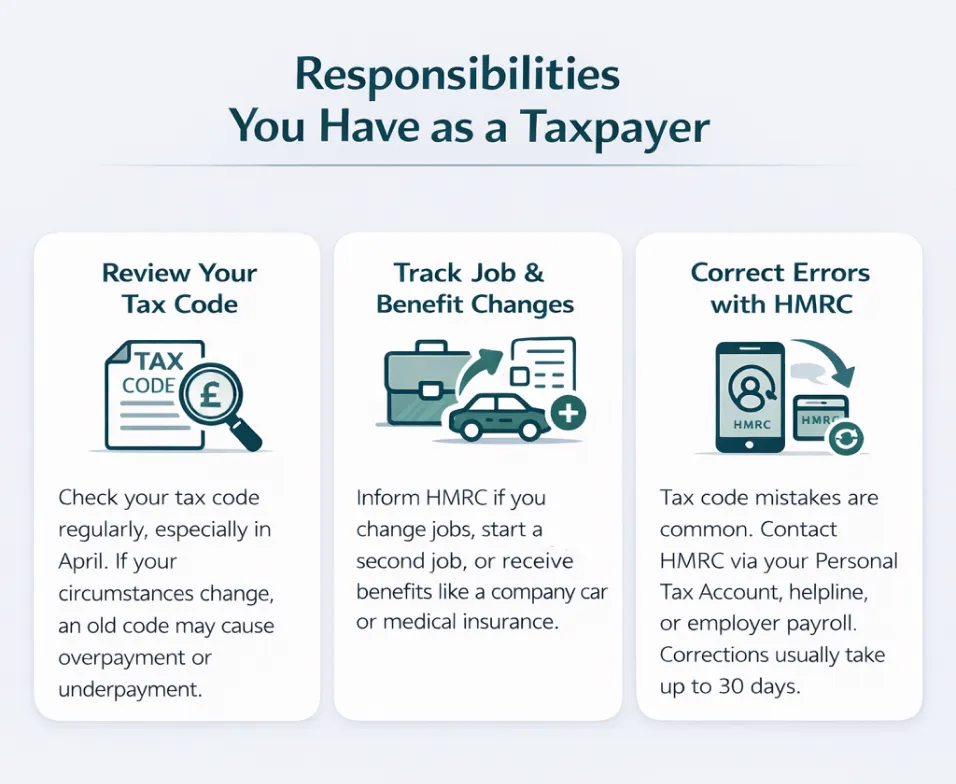
    Responsibilities You Have as a Taxpayer

    How the 1263L Tax Code Works in Practice

    Your tax code plays a key role within the PAYE system. It ensures employees are taxed based on their individual circumstances. Here is a breakdown of how it works in a real-world setting and how HMRC calculates your code.

    How the PAYE System Uses Your Tax Code

    Taxpayer Information Review

    To begin, HMRC uses the information they have about your income and benefits. They further consider your previous claims and your job situation. They then use this information to calculate your tax code. Some other information that they use is as follows:

    • Employer notifications (via P45 or P46) when you begin or end a job
    • Claims for expenses like uniforms or travel reimbursements
    • Self-assessment submissions
    • Third-party data, like pension providers or investment income platforms

    Automation and AI in Tax Code Adjustments

    HMRC has implemented automated procedures for issuing and modifying tax codes in recent years. Their real-time information system can be used by employers to inform them about the tax and income of an employee every time they are paid. This allows HMRC to spot inconsistencies more accurately than before. They can also make adjustments faster than ever in this regard. However, if the employers submit the wrong information, there is a higher chance of mistakes than ever before.

    Employers and Payroll Deductions

    Your company uses the 1263L tax code that HMRC has assigned you to determine your monthly tax deductions using payroll software. Every time you receive your payslip, your tax code determines your tax-free income. This provides the threshold over which your income is taxable. Employers must use the most recent HMRC tax code as required by law. The application of wrong code is either due to wrong information or a delay in communication.

    Yearly and Long-Term Considerations for Your Tax Code

    Tax codes never remain static. They not only evolve with your changing circumstances but also with the government policies. Being proactive guarantees that you always pay the right amount of taxes. Here are some aspects that you should pay attention to:

    Annual Tax Code Changes

    Each year in April, HMRC changes tax codes. This is done to align with the start of the UK tax year. These changes can show the following:

    • Updates on Personal Allowance considering inflation
    • Reforms prompted by the budget that impact tax bands and thresholds
    • Modifications based on expired tax relief or benefit entitlements

    For instance, if the amount of standard allowance changes in the future due to inflation, the tax code 1257L is going to change. This means, by extension, that the 1263L tax code and other enhanced tax codes won’t remain the same as well.

    Upcoming Changes: Shift to Payrolling Benefits by 2026
    HMRC plans to phase out P11D forms at the end of the 2025/26 tax year. This is one of the most significant reforms that the HMRC is planning. For now, benefits-in-kind are reported by the employers using the P11D. These forms are submitted annually, and the benefits included in them are company cars, fuel, and health insurance. Retrospectively, these benefits are considered in tax codes.
    By April 2026, HMRC intends to integrate these benefits directly into the payroll. This allows real-time adjustments to tax codes. It also reduces reliance on the end-of-the-year forms. It is anticipated that this change will decrease error margins and increase transparency. However, you’ll have to monitor your tax codes more frequently. They can change mid-year, too.
    Check out for more updates: 2025–26 Tax Year Updates: Understanding the Latest Changes
    Consult Sterling Cooper Consultants for Detailed Guidance

    Understanding your payslip and all the information on it is crucial. Not only does wrong information have repercussions, but you also need the right information to plan for the future accordingly. At Sterling Cooper Consultants, we reduce your hassle by providing you with all the information you need in this regard. We find out your taxes and liabilities, file on your behalf and contact HMRC in case you need to. We make sure that you never overpay or underpay your taxes.
    To get help, contact us now.

    Need help understanding your payslip?

    Sterling Cooper Consultants will handle it all, from explaining your tax code to contacting HMRC on your behalf. We make sure you don’t overpay, underpay, or stay confused. Contact us today and get expert support with zero hassle.

    FAQs


    How can I get a tax code 1263L from HMRC?


    You can apply using an HMRC P87 form if you think you qualify for a uniform washing allowance under tax code 1263L.


    This question can only be answered by closely examining your tax information because your tax code is unique to your particular situation.


    You can request a review from HMRC if you think your tax code is off. A new tax code may also result from changes in your situation, such as getting a larger personal allowance because of your age or disability.


    You can check your payslip and pension documents. You can also check any other documents from the HMRC. You can check your Personal Tax Account with the HMRC if you have one.


    The cost of conducting your job on a daily basis is probably the reason you have a 1263L tax code. For example, HMRC allows you to claim a portion of your tax back when you pay for the cost of washing your work uniform out of pocket.

    Share This Article!

    Recent Posts

  • Your Guide to VAT Accounting Schemes: What They Are and How They Work

    Your Guide to VAT Accounting Schemes: What They Are and How They Work

    vat accounting schemes

    Posted by:

    Admin

    Date:

    December 18, 2025

    Category:

    blogs

    Error: Contact form not found.

    Your Guide to VAT Accounting Schemes: What They Are and How They Work

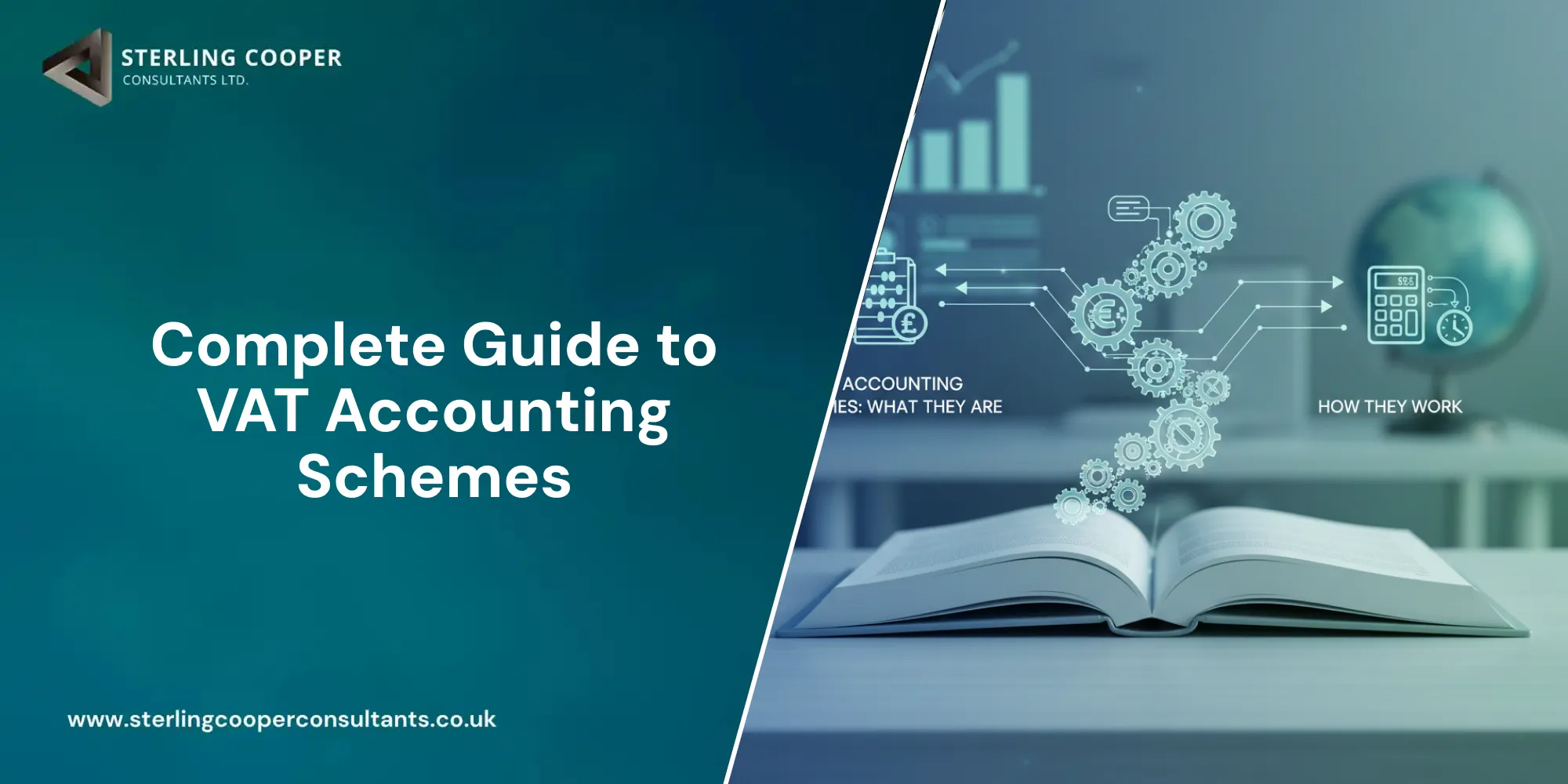
    VAT (Value Added Tax) is a consumption tax that is levied on goods and services offered by most of the UK-owned companies. It is one of the largest generators of revenue for the government. Some of the goods and services imported from outside the UK also have VAT levied on them. VAT has a huge impact on businesses since they have to collect it from the customers and remit it to the tax authorities. If you are a business owner, you can look into VAT accounting schemes. A VAT accounting scheme is a way of working out how much tax you need to pay to HMRC and when to pay it. You can choose these schemes based on your needs. Here is everything you need to know about it. 

    When Should You Register for VAT?

    Registering for VAT can be compulsory or optional for your business based on your situation. Before you register for VAT accounting schemes, you need to know if you are eligible for it or not. Here is a detailed insight into the prerequisites for compulsory and optional registration:

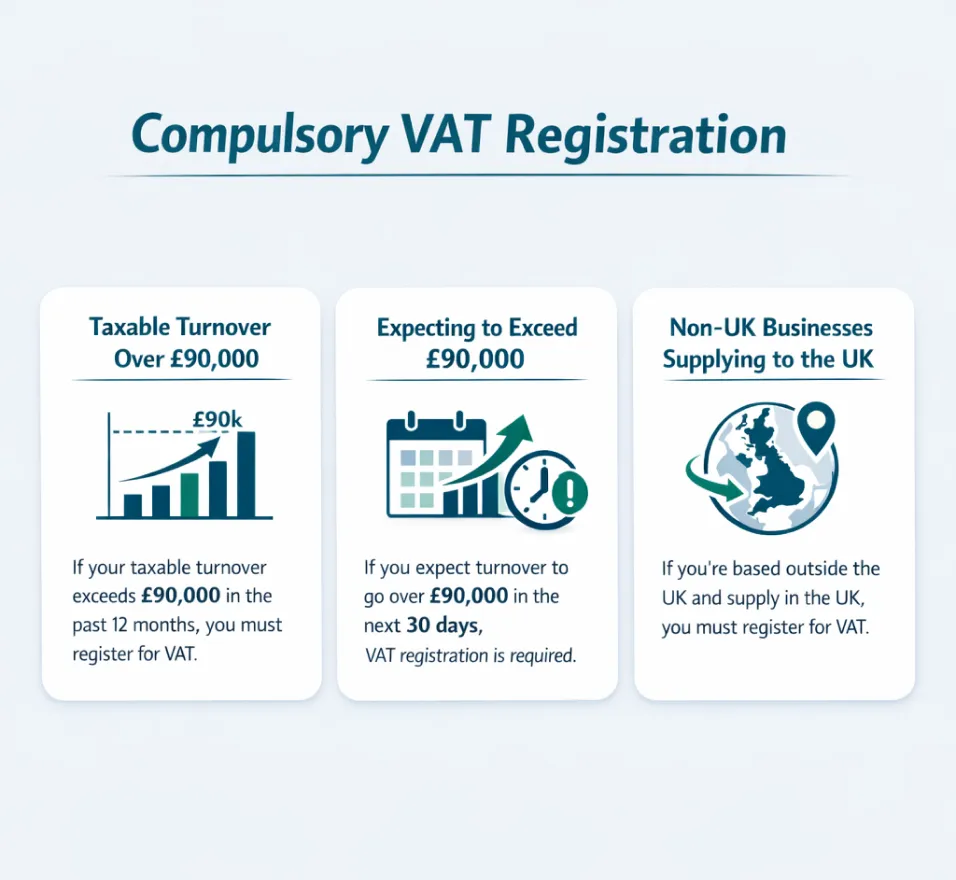
    Compulsory VAT registration:

    Your registration for VAT is compulsory if either of the following applies to you:

    • Your taxable turnover is more than £90,000

    Your total taxable turnover being over £90,000 makes it compulsory for you to register for VAT. This is the threshold for VAT registration, and it is checked on a rolling basis. This means that HMRC won’t just check you have crossed the threshold at the year end. You have to check every month if your taxable sales of the past 12 months have gone over £90,000. There are VAT accounting schemes that can cater to these checks.

    • You expect taxable turnover to exceed £90,000

    If you expect your taxable turnover to go over £90,000 in the next 30 days, it is compulsory for you to register for VAT. This might be your case if you sign a large contract. Another example is that you are about to make a major sale that will push you over the limit. You have to register for VAT as soon as you realise you are about to go over the limit. 

    • Non-UK Businesses Supplying to the UK

    If your business is based outside the UK but you supply goods or services in the UK, you are obligated to pay VAT. It does not matter how much your turnover is, you’ll have to pay VAT. If you are expected to make sales in the UK in the next 30 days, you have to pay VAT too. Some VAT accounting schemes cater strictly to such problems.

    Voluntary VAT Registration

    You can choose to register for VAT voluntarily, even if your turnover is below the £90,000 threshold. It can be beneficial to you in many ways. You can reclaim VAT on purchases. You can also improve how professional your business appears to clients. It also helps you avoid missing the threshold unexpectedly.
    Compulsory VAT registration

    Overview: What Are VAT Accounting Schemes?

    VAT accounting schemes are offered by HMRC so that you know how much VAT you have to pay and how much is left. These schemes simplify the calculation process. Here is a breakdown of the few common ones. Based on your business type or size, you may be eligible for any of these accounting schemes.

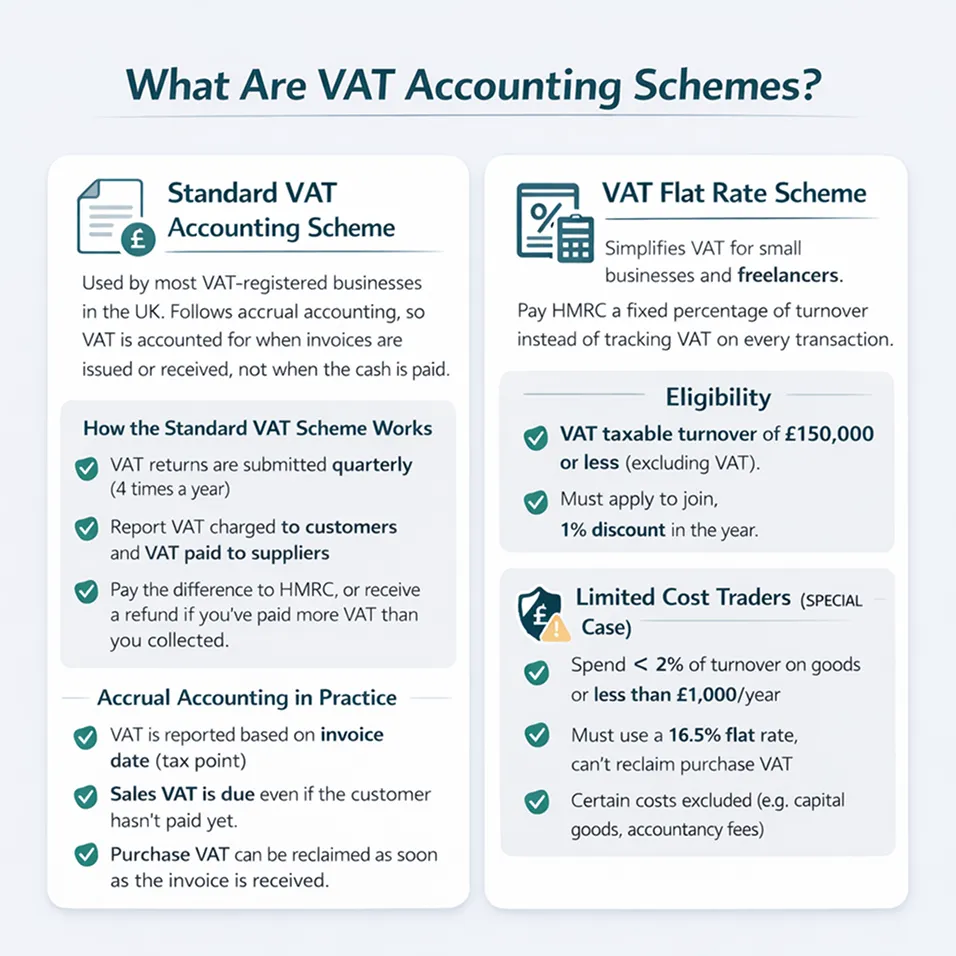
    1. Standard VAT Accounting Scheme

    The Standard VAT Scheme is the method through which most registered businesses in the UK pay VAT. This VAT accounting scheme is based on the accrual accounting method. This means that you account for VAT when raising or receiving an invoice. It is not accounted for when money is actually in hand.

    How the Standard VAT Accounting Scheme works

    Your standard VAT accounting scheme will require you to file a VAT return under this plan four times a year, or every quarter. This return includes the details of the VAT you have charged your customers when selling. It also contains the details of VAT you have paid on goods and services from suppliers.
    If you collect more VAT from your customers and pay less to your suppliers, you have to pay the difference between the two to the HMRC. Furthermore, if you have paid more VAT to the suppliers but you have received less from the customers, HMRC will pay the difference to you.
    Regardless of whether you have paid your supplier yet, this method enables you to claim VAT on your purchases as soon as you receive the invoice. However, it also implies that even if your customer hasn’t paid you, you will still be required to pay VAT on your sales invoices as soon as they are issued. This VAT accounting scheme is, thus, not ideal for you if your clients don’t pay on time.

    Accrual Accounting in Practice

    Transaction time under the Standard VAT Scheme is linked to the invoice date, which is also referred to as the tax point. For example, you send an invoice to your client on March 29th. The client does not make the payment till the mid of April. You still have to report the VAT in your January to March return. The same goes for your expenses. You claim VAT in the quarter you receive the invoice, not when you pay it.
    If you are in the retail business or your clients pay you quickly, this is a good VAT accounting scheme for you. Since this scheme is based on invoices, it is important to keep a track of documents.

    2. VAT Flat Rate Scheme

    This VAT accounting scheme makes VAT accounting easier for small businesses and freelancers. In the Flat Rate Scheme, you pay a fixed percentage of your total turnover to the HMRC. This percentage varies based on what industry you work in. If you want to reduce admin time and paperwork, this VAT accounting scheme suits you really well. You won’t have to track VAT on every single purchase.

    How does the VAT Flat Rate Scheme Work

    You continue to charge VAT on your invoices at the standard rate, which is typically 20%, under the Flat Rate Scheme. However, instead of determining the actual VAT you owe based on sales and purchases, you pay HMRC a fixed percentage of your gross (VAT-inclusive) revenue. The fixed rate of VAT depends on what industry you work in. Check the VAT Flat Rate Scheme for these percentages.
    One advantage is that if the VAT you collect from clients exceeds the flat amount you are due, you retain the difference. However, there is a catch: you cannot normally refund VAT on purchases unless you are purchasing capital assets worth more than £2,000.

    Eligibility for Flat Tax Rate Scheme

    To be eligible, your VAT taxable turnover must be £150,000 or less (minus VAT). You have to apply to join this VAT accounting scheme. If you are accepted, you can start using it from your next tax period. You also get a 1% discount in your first year.

    Limited Cost Traders: A Special Case

    Some businesses are classified as limited cost traders. This means they are spending very little on goods. If you spend the following amount on your goods, HMRC requires you to pay a flat rate of 16.5% no matter what your industry is:

    • You spend less than 2 % of your total turnover on goods
    • You spend more than 2% but it is still less than £1,000 per year

    This ensures that businesses do not benefit too much while contributing very little.
    Another important point here is that if you are a limited-cost trader, some of your costs don’t count when calculating. These costs are capital goods, accountancy and vehicle expenses.
    What are VAT Accounting Schemes

    3. What is the VAT Cash Accounting Scheme?

    The VAT Cash Accounting Scheme aims to assist businesses in improving cash flow by modifying when they report and pay VAT. In this VAT accounting scheme, you have to pay VAT only after you are paid by the customer. VAT Cash Accounting Scheme UK is a huge relief to you if your clients make late payments regularly.

    How does the VAT Cash Accounting Scheme Work

    Unlike most VAT accounting schemes, where you have to pay VAT based on invoice date (tax point), this scheme works differently. You only have to pay HMRC once your clients have paid you. This means you can only reclaim once you pay your suppliers. This approach is more indicative of your actual cash flow than other VAT accounting schemes.
    The VAT Cash Accounting Scheme is beneficial for you if you are a small business trading on credit. It is also ideal for you if you often experience late payments. It reduces financial strain on you since it helps you avoid paying VAT before you get actual payment.
    This scheme might not be good for you if your business buys a lot on credit. Because you cannot reclaim VAT until you have paid your suppliers, this may delay your ability to collect VAT on purchases.

    Eligibility for VAT Cash Accounting Scheme

    To use this VAT accounting scheme, you must follow the criteria given below:

    • Be VAT-registered
    • Have an expected VAT taxable turnover of £1.35 million or less over the next 12 months
    • Stay under £1.6 million to remain eligible

    You are not eligible for it in the following cases:

    • You already use VAT Flat Rate Scheme
    • You are behind on VAT returns
    • You have a VAT-related offence on your records in the past 12 months

    4. VAT Annual Accounting Scheme

    The VAT Annual Accounting Scheme makes it simple for small businesses to manage VAT. Through this VAT accounting scheme, you only have to submit one VAT return annually instead of filing four. This is beneficial in a number of ways. It reduces paperwork. It also gives you a clearer picture of tax obligations over the year.
    If you are looking to improve your budgeting and cash flow, this scheme is ideal for you. Especially if you want to reduce the burden of quarterly filing and spread out your VAT payments, this scheme is useful. However, if you reclaim VAT, this scheme is not ideal for you. This is because refunds are only processed once a year.

    How does it work

    Based on your prior return (or an estimate if this is your first time utilising the system), you will make advance VAT payments throughout the year. These can be made as either 9 monthly instalments or 3 quarterly instalments.
    Once the annual 12-month period ends, you’ll submit your annual VAT return. If you had paid more in advance payments, HMRC will return the difference. If your advance payments were too low, you’ll have to pay more.

    Eligibility for VAT Annual Accounting Scheme

    You can join this scheme if you fulfil the following criteria:

    • You are VAT registered
    • You make a maximum of £1.35 million in taxable turnover.
    • Your turnover stays below £1.6 million

    5. VAT Margin Scheme

    The VAT Margin Scheme is intended for companies that sell collectables, antiques, art, or secondhand products. Businesses only pay VAT on the profit margin, which is the difference between the item’s purchase price and sale price, rather than the whole selling price.
    This scheme is especially helpful in the resale industry. Antique stores, art galleries, and other businesses that deal in used goods can find this scheme particularly helpful. It helps lower the VAT burden on goods that have already had VAT paid on them at some stage in their lifespan. It also simplifies VAT calculations. VAT costs can be reduced in sectors where goods are often resold.

    How does the VAT Margin Scheme Work

    VAT is not calculated on total sales. Instead, it is only applied to the margin, which is the selling price minus the purchase price. The margin is then multiplied by the applicable VAT rate. The standard rate is 16.67%. The answer you get from this calculation is the amount you owe to HMRC. To use this scheme, businesses must keep detailed records of each item (e.g., invoices and a stockbook). ility for VAT Margin Scheme
    You are eligible for the VAT Margin Scheme if you fall under the following conditions:

    • You are VAT registered
    • Your trade is based on qualifying goods (art, second-hand items, collectables, antiques, etc.)
    • You bought these goods in the UK or the EU without VAT
    • VAT couldn’t be reclaimed on these goods when they were bought.

    However, it cannot be used in the following cases:

    • VAT was charged and reclaimed on the items
    • The trade items include gold, stones, or precious metals
    • You are involved in the trade of second-hand vehicles, horses and ponies, auctions, or pawnbroker items (there are separate rules for these)

    6. VAT Retail Schemes

    VAT Retail Schemes are intended only for UK retail companies with less than £130 million in annual VAT-exclusive retail sales. These schemes simplify calculations. They also simplify record-keeping since retailers can report VAT as a whole instead of each individual sale. This can reduce the complexities of managing VAT.

    How VAT Retail Schemes Work

    You must still include your VAT on your VAT return, which is typically due every quarter, if you are using the VAT Retail Scheme. But rather than computing VAT on each transaction separately, you do it all at once using a method that works for you. This makes your records more organised and eliminates the need to send out separate VAT invoices for every transaction.
    You still need to figure out how much VAT is included in your retail prices and record it accordingly. For goods that have VAT included, subtract the VAT portion. For goods that are sold exclusive of VAT, you have to add the VAT based on the applicable rate. Here are the three standard VAT retail schemes to choose from:

    • Point of Sale Scheme

    This is great for businesses that can identify and record VAT right at the time of making a sale. For instance, using a till system that separates VAT automatically. This scheme is ideal for you if you sell different products with different VAT rates. If you need to track your products’ VAT rate in real time, then this also works for you.

    • Apportionment Scheme

    This is great for you if you buy a large amount of goods for resale, but you are unaware of their VAT rate at the time of sale. By this scheme, you can calculate your sales that are related to zero-rated goods and standard-rated goods. You have to do this at the end of each VAT period and apportion the VAT to the goods accordingly.

    • Direct Calculation Scheme

    This scheme works right for you if most of your sales are at one rate and a small number at a different VAT rate. For instance, 90% of your sales are zero-rated and 10% of your sales are standard-rated. Through this scheme, you can directly calculate VAT at 10% without tracking everything.
    These schemes can be used with the Cash Accounting Scheme and the Annual Accounting Scheme as well. This offers you further flexibility.

    Eligibility for VAT Retail Schemes

    To use a VAT Retail Scheme, you don’t need permission from HMRC. As long as your turnover is below £130 million, you can keep using it. But if your turnover surpasses this threshold, you’ll have to stop using these and work with HMRC for a custom scheme.

     7. Capital Goods Scheme

    This VAT Accounting scheme is designed for businesses that acquire assets of high value. This scheme allows VAT recovery on these assets over several years based on how the asset is used. This reflects the fair usage of the asset, especially if it changes over time.

    How does the Capital Goods Scheme Work

    A business may not forever keep using an expensive asset for taxable business purposes after purchasing and reclaiming VAT. If the asset’s usage changes, the CGS permits modifications to the initial amount of VAT reclaimed. This change can mean going towards a non-business or exempt use. In this case, VAT needs to be recalculated annually. The adjustment period for land and property is 10 years, while it is 5 years for qualifying assets.
    For example, if you are using your asset entirely for your taxable business, you can reclaim 100% of the VAT. However, if you are using it partially for business only, then you have to work out the partial exemption calculation. In this case, you can only claim a part.
    VAT adjustments are made over a set adjustment period. This means VAT can be broken into intervals. This allows businesses to reclaim more or repay VAT based on how the use of the asset has changed. For more specific scenarios, businesses should refer to HMRC Notice 706/2.

    Assets Covered Under the Scheme

    To be included in this VAT Accounting Scheme, the assets must follow the following criteria:

    • Any civil engineering work, including land and buildings, is valued at £250,000 or more (excluding VAT).
    • Computers and computer-related equipment cost £50,000 or more.
    • Vessels such as aircraft or boats where purchase, upgrade or construction costs more than £50,000.

    CGS does not apply to assets that are solely used for non-business or resale purposes.
    Consult Sterling Cooper Consultants for further guidance
    Choosing the right VAT Accounting Scheme is crucial to paying VAT and managing your finances efficiently. It might be a hassle for you to choose which scheme is better for your business. We, at Sterling Cooper Consultants, are there to take your worries away. Our VAT preparation services will look at your particular conditions and choose the right VAT Accounting Scheme for you accordingly. We further ensure that we follow up on this scheme so you are never at odds with the HMRC.

    Tired of VAT noncompliance? We will make sure that is never the case for you.

    With us your VAT accounting scheme delivers. To get help, contact us now.

    FAQs


    What are the advantages of registering for VAT?


    Once you are registered for VAT, you can reclaim it. You can also charge your customers for the VAT you pay. Furthermore, your business looks professional. You can hide the fact that your turnover is lower than the VAT threshold.


    You’ll have to charge your customers more. You will also have to do more accounting since you have to work out your quarterly returns and submit them to the HMRC.


    The right VAT scheme for you would be the one that suits your annual turnover, industry partners, trading patterns and level of record-keeping.


    Beginning in April 2022, companies that are registered for VAT are required to maintain digital records and file their VAT returns using compliant Making Tax Digital (MTD) software, or a bridging tool if they record VAT sales and purchases using a spreadsheet.


    Certain companies using the Flat Rate Scheme (FRS) are required to utilise a special rate of 16.5%. We refer to them as limited-cost traders.

    Share This Article!

    Recent Posts

  • What is the difference between bookkeeping and accounting?

    What is the difference between bookkeeping and accounting?

    bookkeeping and accounting

    Posted by:

    Admin

    Date:

    December 16, 2025

    Category:

    blogs

    Error: Contact form not found.

    What is the difference between bookkeeping and accounting?

    When you think of who manages the finances of the business, you may think either bookkeepers or accountants can do the job. However, they both perform different roles, even though they both need financial information to work with. Bookkeepers simply record all the transactions. It is more of an administrative role. Accounting, on the other hand, is more analytical. Accountants analyse the information that bookkeepers provide and maintain businesses’ financial health based on that. Here is everything you need to know about the differences between bookkeeping and accounting.

    Bookkeeping and Accounting: Required Credentials

    One of the key differences between bookkeeper and accountant is their education. The following are the credentials required to get each of these jobs.

    The Educational Record of a Bookkeeper

    To be a bookkeeper, you don’t need a formal degree. Just a high school diploma is enough. Many bookkeepers learn on the job, take short courses, or get certified by training programs (but it’s not mandatory). To do the job well, the bookkeepers need to:

    • Be very accurate since even small mistakes cause a huge impact in finance.
    • Know basic financial topics like tracking income and expenses and managing invoices

    The Educational Credentials of an Accountant

    To be an accountant, you need a bachelor’s degree in accounting. If you do not have that, then you must have one in finance. You can advance yourself with qualifications such as a Certified Public Accountant (CPA). It can increase your knowledge of the subject.
    It will also lead to better opportunities for you. Here is how you can get it.

    • Have a bachelor’s degree, preferably in accounting.
    • Gain real-world work experience as an accountant.
    • Pass the CPA Exam.

    Certifications:

    Bookkeeping and accounting, both skills, can be enhanced by certifications. If you want to be a bookkeeper, you can look into certificates by the Association of Accounting Technicians (AAT). Their certification has levels depending on whether you are a beginner or want a boost in your career.
    You can also get certification by the AAT if you are an accountant. This certificate also has levels based on how advanced you are in your career. Other certifications that you can get as an accountant are Chartered Accountant (CA) or Certified Management Accountant (CMA).
    Get in-depth financial reports for better decision-making.

    Bookkeeping and Accounting: Salaries and Benefits

    Salary is another difference between bookkeeper and accountant. Both accounting and bookkeeping offer decent salaries, but accountants usually make more, especially over time. Here is how much they earn.

    Salary of a bookkeeper

    Bookkeepers earn a salary of £18,000 to £35,000 annually while working 37 to 39 hours a week. Their benefits depend more on the employer and the job they’re in, and are often less comprehensive than what accountants receive at big firms.

    Salary of an accountant

    An accountant’s salary ranges from £23,500 to £148,000 a year, depending on the city, role, and company. Those just starting out are usually on the lower end of that range.

    Bookkeeping and accounting Software

    In the past, bookkeeping and accounting were done mostly by people. They used paper or spreadsheets to do this. Now, accounting software can do much of that work on its own. This has made things easier and faster. These tools offer the following benefits in bookkeeping and accounting.

    Bookkeeping tools

    Record and organise daily transactions like sales, expenses, and payroll.

    Accounting tools

    Create reports, analyse trends, and prepare for taxes or financial decisions.

    Examples:

    QuickBooks and Bench are two such software programs that can be useful to accountants and bookkeepers.

    Quickbooks:

    QuickBooks gives you a software platform and lets you choose how much help you want from live experts. It has both bookkeeping and accounting options.

    Bookkeeping Options

    1. Live Assisted Bookkeeping

    • You do the bookkeeping yourself using their software.
    • You get help from a live bookkeeper when you have questions or need guidance.

    2. Full-Service Bookkeeping

    • QuickBooks pairs you with a dedicated bookkeeper who does the bookkeeping for you.
    • They handle everything through the software, you just connect your business accounts.
    Accounting Options

    The software can pull reports (like income statements or cash flow reports). It helps you analyse your financial data. If you upgrade to QuickBooks Online Advanced, you get more features, like:

    • Deeper insights
    • Custom reports
    • Business performance tracking

    Bench

    Bench focuses on full-service bookkeeping, combining live human support with a user-friendly software platform.

    Bookkeeping Options

    Experts bookkeepers do all of it for you. You get a login to their software where you can:

    • Check your financial data anytime
    • See how much money is coming in or going out

    You can schedule calls with your bookkeeper to:

    • Ask questions
    • Get clarity on your numbers
    • Understand your business’s financial health

    Role of Accounting Vs Bookkeeping

    Bookkeeping and accounting both are valuable when judging the finances of your business, even though they play a different role each. You might wonder what does a bookkeeper do vs an accountant. Here are the roles they play and how it is different between bookkeeper and accountant.

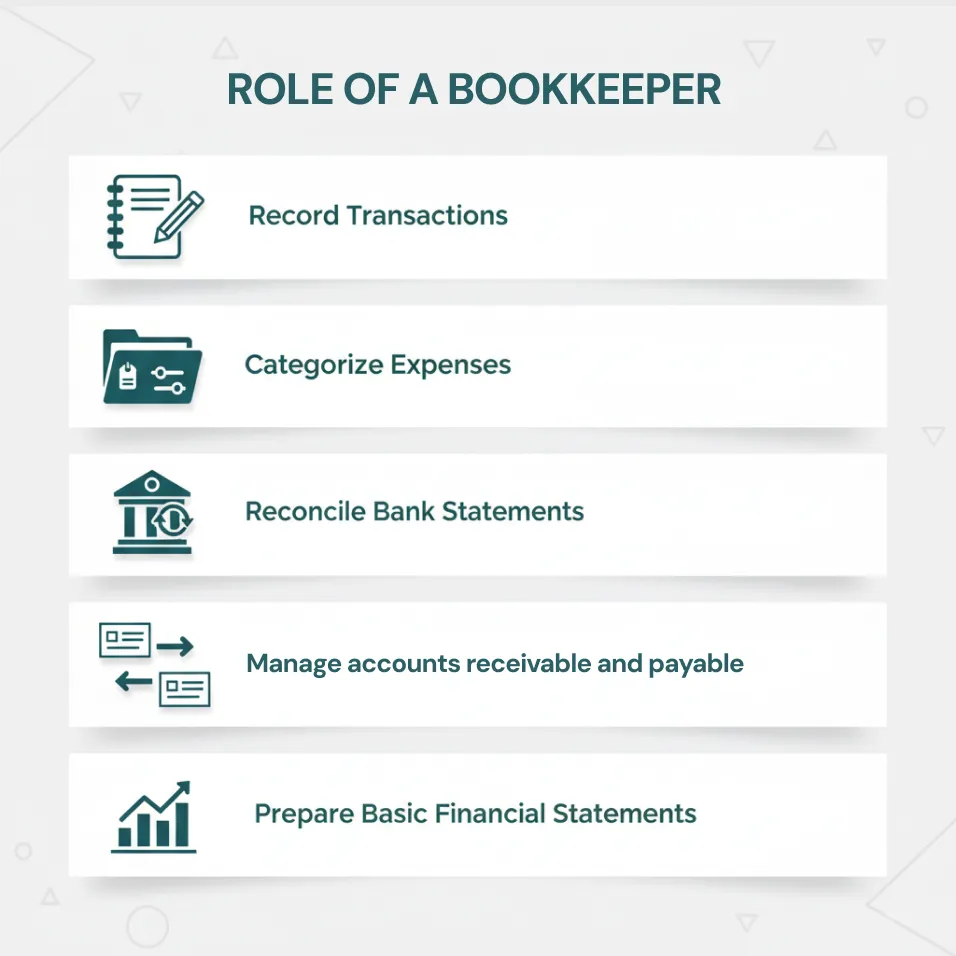
    Role of a bookkeeper

    A bookkeeper plays a key role in recording all the information that is required in running a successful business. They are the financial record keepers, and their job helps you get a picture of the running costs of your business. Their role is described in detail in the following points:

    1. Record transactions

    They write down every financial move you make in your business. This includes sales, expenses, invoices, payments, payrolls, etc..

    2. Categorize expenses

    They check the expenses on which the capital is being spent and then categorise them accordingly. For example, putting “rent” under “overhead” or “office supplies” under “administrative expenses.”

    3. Reconcile bank statements

    They make sure that the business records and the bank records match each other. This is beneficial while paying taxes and corresponding with the HMRC.

    4. Manage accounts receivable and payable

    They keep track of who owes money to your business and to whom you owe money.

    5. Prepare basic financial statements

    They prepare initial versions of financial statements and balance sheets.
    Role of Bookkeeper

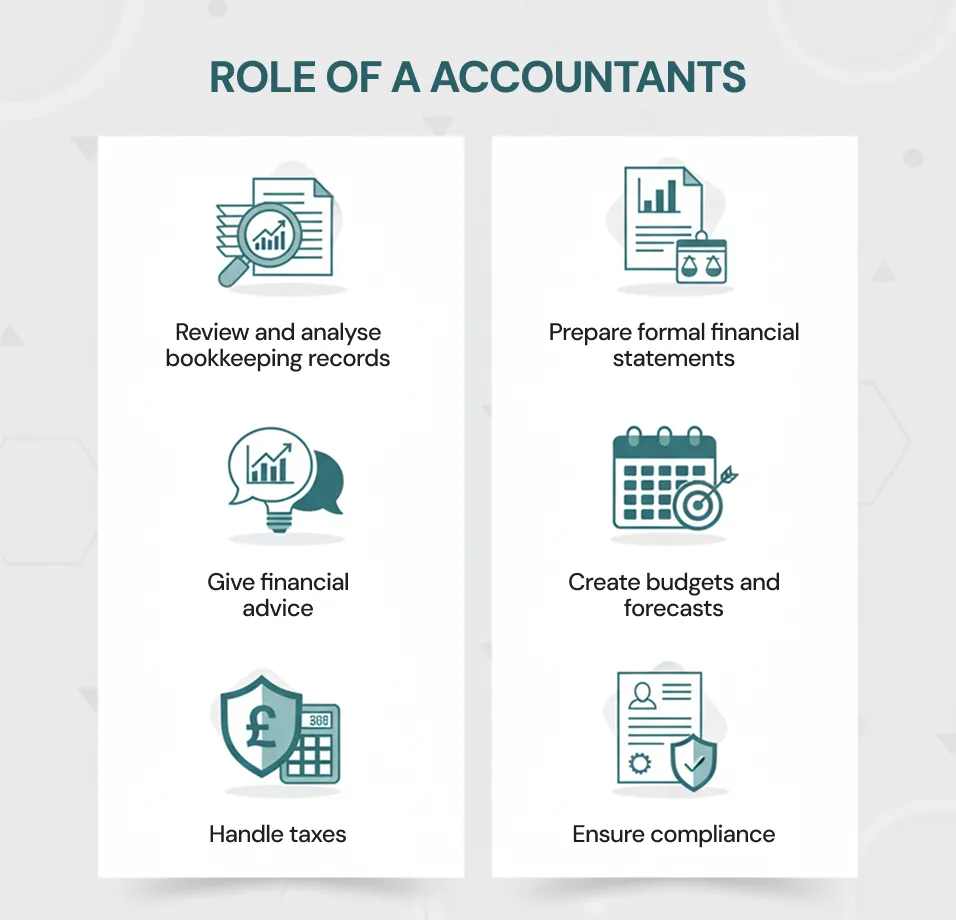
    Role of Accountants

    The accountants are the financial advisors of your business. They guide you to the financial growth of your business. Here is the roles they perform:

    1. Review and analyse bookkeeping records

    They ensure that all the records are complete and accurate.

    2. Prepare formal financial statements

    They use the recorded data and prepare profit & loss statements, balance sheets, and cash flow statements.

    3. Give financial advice

    They help you understand how your business is doing and what to improve.

    4. Create budgets and forecasts

    They predict future income and expenses based on trends.

    5. Handle taxes

    They prepare your entire tax return. They also plan your tax strategy so that you can reduce your taxes legally.

    6. Ensure compliance

    They make sure your business follows all the UK tax laws. This makes sure you never get in trouble with the HMRC.

    Maintain accurate financial records with our expert bookkeeping services.

    Role of Accountants

    Bookkeeping and Accounting: Scope

    Bookkeeping and accounting each work within its boundaries. Here is how their scope is limited.

    Scope of Bookkeeping

    It operates at the most basic level of financial data management. Its scope is:

    • Limited to raw data handling
    • Internally focused
    • Highly transactional
    • Defined by structure, not judgment

    Scope of Accounting

    Accountancy has a broader, more strategic reach than bookkeeping. Its scope includes:

    • The full financial lifecycle
    • External communication
    • Legal integration
    • Decision-support function
    • Dynamic and evaluative

    Hence, in bookkeeping vs. accounting, the entire financial cycle is covered.

    Accounting Vs Bookkeeping: The Golden Rule

    The golden rules are basic guidelines that help you decide how to record money going in and out of a business. In the double-entry accounting system, the golden rules are used to record financial transactions. This system requires that you should record every transaction in at least two accounts, one is debited and the other credited. These rules determine which should be credited and which should be debited. Here is the difference between bookkeeping and accounting based on the golden rules.

    The Golden Rule of Bookkeeping

    Since the bookkeeping focuses on the recording of regular transactions, it majorly works on the following rule:
    “Debit what comes in, Credit what goes out.”
    When dealing with cash flow and assets, this rule is very important. The account should be debited when something of value enters the business. This includes cash, equipment, or goods. The account should be credited when something of value (payment in cash) leaves the business.
    Suppose your business purchases office supplies for cash. The office supplies are coming into the business (an increase in assets), so you debit the Office Supplies account. The cash is going out (a decrease in assets), so you credit the Cash account.
    Your Journal Entry should be:

    • Debit Office Supplies
    • Credit Cash

    This ensures that both sides of the transaction are accurately recorded.

    The golden rule of accounting:

    Accounting furthers bookkeeping by introducing a more structured system of classifying transactions. There are three types of accounts on which all accounting falls: Personal, Real, and Nominal. Each of these has its own golden rule.

    1. Personal account:

    A personal account means the accounts that belong to people, companies, or organisations. These could include customers, suppliers, banks, or even the business owner. The golden rule for these accounts would be

    “Debit the receiver, Credit the giver.”

    When someone receives something from the business, their account is debited. When someone gives something to the business, their account is credited.
    For instance, if your business receives a loan from a bank. The business receives cash, which is recorded by debiting the Cash account. The bank is giving you the money, so you credit the Bank Loan account (a liability).
    The Journal Entry would be:

    • Debit Cash
    • Credit Bank Loan Account

    This entry reflects both the increase in your cash and the obligation to repay the bank.

    2. Real Account

    Real accounts deal with tangible and intangible assets. This means the things you own and use in your business operations, such as buildings, land, machinery, cash, and even patents or goodwill. The golden rule for these accounts is:
    “Debit what comes in, Credit what goes out.”
    An example of this would be if your business purchases a vehicle for cash. The Vehicle account is debited because a vehicle (an asset) is coming into the business. Since the cash leaves the business, this means the cash account would be credited
    The journal entry would be:

    • Debit Vehicle Account
    • Credit Cash Account

    This entry shows that the business has acquired a new vehicle and reduced its cash accordingly.

    3. Nominal Account

    Expenses, losses, revenues, and gains are all represented by nominal accounts. These short-term accounts are closed at the end of the accounting year. This is done once the profits or losses are determined.  The golden rule for these accounts is:

    “Debit all expenses and losses, Credit all incomes and gains.”

    This means any expense or loss incurred by the business is debited. Any income or gain earned by the business is credited.
    Suppose your business pays monthly rent. The Rent Expense account is debited because rent is an expense. The Cash account is credited because cash is going out of the business.
    The journal entry would be:

    • Debit Rent Expense Account
    • Credit Cash Account

    This entry reflects the cost of renting a business space and the payment made to cover it.
    Learn more about How to Become a Bookkeeper in 2025: A Step-by-Step Guide.

    Bookkeeping and Accounting: Summary of Differences

    The table below summarises all the differences between bookkeeping vs accounting.

    Feature / Aspect Bookkeeping Accounting
    Definition Recording day-to-day financial transactions Summarising, interpreting, and analysing financial data
    Education Required High school diploma; optional certification (AAT) Bachelor’s degree in accounting or finance; CPA/CA optional
    Primary Role Maintain financial records and transactions Provide insights, prepare reports, handle taxes
    Scope Narrow: focused on transactions Broad: covers full financial lifecycle
    Certifications AAT, NACPB (optional) CPA, CMA, CA, ACCA, AAT
    Salary (UK) £18,000–£35,000/year £23,500–£148,000/year
    Tools Used QuickBooks, Excel, Bench QuickBooks Advanced, Xero, Sage, FreshBooks
    Golden Rule Debit what comes in, Credit what goes out Three rules (Personal, Real, Nominal accounts)
    Decision-Making Does not support strategic decisions Provides decision-support and financial advice
    Compliance & Tax Filing Supports by keeping accurate records Ensures compliance, handles returns, and tax planning
    Focus Internal operations and data entry Internal and external reporting & regulatory adherence

    Conclusion: 

    Bookkeeping and accounting are both valuable roles for the finances of your business. They help you track your income and expenses. At Sterling Cooper Consultants, our expert accountants and bookkeepers help you in making informed decisions on planning budgets and managing cash flow. We also assist you in preparing financial reports, filing taxes correctly, and staying compliant with laws. We help you prevent business risks, financial errors, missed opportunities, and even legal trouble. 
    To get help, contact us now.

    Ready to take control of your business finances and stay compliant all year round?

    Speak to our expert accountants and bookkeepers at Sterling Cooper Consultants today, and make smarter financial decisions for a stronger, more secure future.

    FAQs


    Why should I become a Bookkeeper?


    You should become a bookkeeper if you are just starting your career in finance. It offers you job security and flexibility of work.


    You should become an accountant if you want to focus on the bigger financial picture. You can work in any industry and you’ll be paid well.


    Bookkeeping is the process of maintaining your company’s records. Accounting refers to the analysis of these records and making decisions based on them. Auditing is the process of verifying a company’s financial statements and records.


    If you are a bookkeeper and you want to become an accountant, you will have to pass the CPA exam. Some places require the accountant to complete a certain number of credit hours of a degree before they can be called as such.


    If you are good at maths and computing and possess the necessary skills, such as detail orientation and being organised, then it won’t be hard to learn.


    Accounting manager, accounts payable specialist, accounts receivable specialist, corporate controller, senior accountant, and staff accountant are some of the accounting jobs in demand.

    Share This Article!

    Recent Posts

  • Understanding K Tax Codes: A Complete Guide

    Understanding K Tax Codes: A Complete Guide

    k tax code

    Posted by:

    Admin

    Date:

    December 15, 2025

    Category:

    blogs

    Error: Contact form not found.

    Understanding K Tax Codes: A Complete Guide

    Seeing a K followed by a number on your tax code can be confusing, particularly when you notice more Income Tax being deducted from your payslip than expected.

    A K tax code does not mean you have been fined, and it does not automatically mean HMRC has made a mistake. It means HMRC has calculated that the deductions or untaxed income included in your tax code are greater than your available tax-free Personal Allowance. This can happen because of taxable workplace benefits, State Pension income, previous tax underpayments or other untaxed income.

    However, a K tax code can sometimes result from outdated or incorrect information. If your circumstances have changed, the information HMRC holds may no longer reflect your current income or benefits.

    In this guide, we explain what a K tax code means, why you may receive one, how it affects your payslip and what you can do if you think your tax code is incorrect.

    Important:

     This guide explains how K tax codes work under PAYE. It is general information rather than individual tax advice. If your circumstances are complex, check your position with HMRC or a qualified tax professional.

    Key Takeaways

    • A K tax code does not mean you have been fined. It means deductions or untaxed income taken into account by HMRC are greater than your available Personal Allowance.
    • The number in a K code shows the amount added to your taxable pay for PAYE calculations.
    • Common reasons include taxable company benefits, State Pension income or previous tax underpayments.
    • K tax codes are subject to a 50% PAYE deduction limit, which prevents employers or pension providers from deducting more than half of your pre-tax pay or pension income through PAYE for that period.
    • You should check your tax code if it changes unexpectedly or your income, benefits or pension arrangements change.
    • If your tax code appears incorrect, reviewing the information HMRC holds about you can help identify what needs to be corrected.

    What Is a K Tax Code?

    A K tax code means HMRC has calculated that the deductions or untaxed income included in your tax code are greater than your available tax-free Personal Allowance.

    For the 2026/27 tax year, the standard Personal Allowance is £12,570. This is the amount of income most people can receive before Income Tax is normally charged.

    You might have a K tax code because you:

    • receive a taxable company benefit, such as a company car
    • receive State Pension income alongside other taxable income
    • have an underpayment of tax from a previous year
    • receive other taxable income that is not taxed at source

    When these deductions or untaxed amounts exceed your available Personal Allowance, the allowance can effectively become negative for PAYE purposes.

    Instead of giving your employer an amount of pay that can be treated as tax-free, HMRC tells them to add an amount to your taxable pay when calculating PAYE.

    HMRC’s PAYE Manual confirms that K codes are used where deductions exceed allowances, including for benefits in kind and State Pension income.

    How Does a K Tax Code Work?

    A K tax code changes how your employer or pension provider calculates the Income Tax deducted from your pay.

    With a standard tax code, part of your income may be treated as tax-free through your Personal Allowance. With a K code, HMRC has calculated that your adjustments exceed that allowance, so an additional amount is treated as taxable when PAYE is calculated.

    This usually means more Income Tax is deducted from your pay than would be deducted under a standard tax code.

    How a K Code Affects Your Taxable Pay

    The number in your K tax code determines the size of the adjustment.

    HMRC uses the number in the code to calculate an annual amount that is added to your taxable pay for PAYE purposes. The number is multiplied by 10.

    For example:

    K300 × 10 = £3,000

    A K300 tax code therefore means £3,000 is added to your taxable pay for PAYE calculations.

    This does not mean you pay £3,000 in tax. It means your taxable pay is increased by £3,000 when PAYE is calculated. The amount of tax you actually pay depends on your total taxable income and the tax rates that apply to you.

    How the 50% Tax Deduction Limit Works

    Even with a K tax code, your employer or pension provider cannot deduct unlimited Income Tax from your pay.

    HMRC applies a 50% overriding limit. In general, the amount of PAYE tax deducted under the K code cannot exceed 50% of your pre-tax pay or pension income for that pay period. HMRC’s PAYE Manual specifically refers to this limit when explaining how K codes are applied.

    This means that if the tax calculated under your K code would otherwise exceed half of your pay for that period, the deduction is restricted.

    That does not necessarily mean the underlying tax has disappeared. Some tax may remain to be collected later.

    K Tax Code Example: Company Car Benefit

    One common reason for a K tax code is a taxable company car benefit.

    HMRC’s own PAYE Manual provides an example involving a £12,570 Personal Allowance and a £14,120 company car benefit. Because the benefit exceeds the Personal Allowance, the resulting adjustment is negative and HMRC calculates a K154 code.

    Cloud Accounting vs Traditional Accounting
    Feature Traditional Accounting Cloud Accounting
    Access Restricted to devices that are installed Access from any location
    Data Storing Private PCs or servers Remote cloud machines
    Revisions Manual updates were necessary Updates are automatic
    Teamwork Poor file sharing Continuous collaboration
    Backup Backups made by hand Backups that happen automatically
    Flexibility Complex and pricey Easily scalable
    Prices A greater first-time investment Based on subscriptions
    Automation Mostly manually performed processes Complete automation
    Security Control Managed by a business Managed by a provider
    Support for Remote Work Minimal Completely assisted

    The resulting tax code is K154.

    This means £1,540 is added to the employee’s taxable pay when PAYE is calculated.

    The 50% deduction limit still applies. If the tax calculated under the K code would otherwise result in PAYE deductions of 50% or more of the employee’s income for the pay period, the overriding limit applies.

    Why Have I Been Given a K Tax Code?

    HMRC may issue a K tax code when deductions or untaxed income included in your PAYE calculation exceed your available Personal Allowance.

    There are several common reasons this can happen.

    Company Benefits

    Taxable workplace benefits, such as a company car or private medical insurance, can affect your tax code.

    If the taxable value of your benefits is greater than your available Personal Allowance, HMRC may use a K code to collect the additional tax through your salary.

    The amount used by HMRC should reflect the information it holds about your benefits. If the value has changed or the benefit has ended, it is worth checking that HMRC has been updated.

    State Pension

    Your State Pension is taxable, but tax is not usually deducted directly from it.

    If you also receive employment income or another pension, HMRC may adjust your tax code so that the tax due on your State Pension is collected from your other income.

    This can result in a K tax code where the relevant adjustments exceed your available Personal Allowance.

    Previous-Year Tax Underpayments

    If you have paid too little tax in a previous year, HMRC may include the outstanding amount in your current tax code.

    This allows the amount to be collected through your PAYE deductions rather than requiring the full balance to be paid immediately.

    If you have already paid the underpayment, however, it is important to check that HMRC’s records have been updated. Otherwise, the adjustment could continue to affect your tax code.

    Other Taxable or Untaxed Income

    Other income that has not been taxed at source can also affect your tax code.

    Depending on your circumstances, this may include savings interest above your available Personal Savings Allowance or other taxable income.

    If HMRC’s information is outdated or incorrect, your K tax code may not accurately reflect your current circumstances.

    Is a K Tax Code Bad?

    Not necessarily.

    A K tax code does not automatically mean that you are paying the wrong amount of tax. If the information HMRC holds about your income, benefits and previous tax adjustments is correct, the code may be appropriate.

    However, it is worth checking your tax code if it appears unexpectedly or your circumstances have changed.

    For example, you may want to investigate if:

    • a company benefit has ended
    • the value of a benefit has changed
    • you have changed jobs
    • your pension arrangements have changed
    • you have already paid a previous tax underpayment
    • your income has changed significantly

    An incorrect benefit value, outdated income information or an adjustment that has already been settled could result in more tax being deducted than necessary.

    How to Check and Correct Your K Tax Code

    If your K tax code looks unexpected, check the information HMRC has used to calculate it before assuming that you owe additional tax.

    Your latest payslip and HMRC’s online records are useful starting points.

    Check Your Tax Code With HMRC

    Start by checking your HMRC Income Tax information through your Personal Tax Account.

    HMRC’s online service allows you to check your current tax code and Personal Allowance, view the income HMRC expects you to receive, see whether your tax code has changed and update information that affects your tax code.

    This is generally the best first step if you want to understand why your K code has been issued.

    Review the Details

    Check that the information HMRC holds is accurate and still applies to you.

    In particular, review:

    • your employment income
    • workplace benefits
    • pension income
    • previous tax adjustments
    • employer or pension provider details

    You should also compare the tax code shown by HMRC with the code on your latest payslip.

    If they differ, there may be a timing issue or your employer or pension provider may not yet have applied a newly issued code.

    Contact HMRC If Your Code Is Incorrect

    If you find outdated or incorrect information, contact HMRC with the relevant details.

    If HMRC agrees that your tax code needs changing, it can issue an updated code to your employer or pension provider.

    You can also update certain information through HMRC’s online Income Tax service.

    What Happens If You Have Overpaid Tax?

    If an incorrect tax code has caused you to pay too much tax, HMRC may adjust your future tax deductions or issue a refund, depending on when the mistake is identified and your circumstances.

    This is why checking an unexpected tax code can be worthwhile. Correcting the information behind the code may prevent an incorrect deduction from continuing.

    If you are unsure whether you have overpaid, check your HMRC Income Tax records and compare them with your payslips.

    What to Do If Your K Tax Code Seems Wrong

    A K tax code can look complicated, but the underlying principle is relatively straightforward: HMRC has calculated that the adjustments included in your tax code are greater than your available Personal Allowance.

    The important question is whether the information behind that calculation is correct.

    If your code has changed or you are unsure what it means:

    1. Check the tax code on your latest payslip.
    2. Review your Income Tax information through HMRC.
    3. Check your income, benefits, pensions and previous tax adjustments.
    4. Contact HMRC if anything is incorrect or out of date.
    5. Consider professional payroll or tax support if the situation is complex or affects multiple employees.

    For employers, reviewing payroll records and employee tax codes regularly can also help identify discrepancies before they result in ongoing incorrect deductions.

    For more complex situations, professional payroll support can help you review payroll information and understand what may need to be corrected.

    Need Help Reviewing Your Payroll and Tax Deductions?

    Sterling Cooper Consultants can help businesses review payroll information, understand tax deductions and address issues affecting employees’ pay.
    Get in touch to discuss your payroll requirements.
    +443300102526
    Book an Appointment

    FAQs


    How long do you stay on a K tax code?

    You stay on a K tax code until the information behind the adjustment changes or HMRC issues a new code.

    This can happen when your income, taxable benefits, pension arrangements or other tax details change.

    If the reason for the K code no longer applies, check your HMRC records and contact HMRC if the information needs to be updated.

    You do not normally ‘get rid of’ a K tax code simply because it begins with K. The code should change when the circumstances behind the adjustment change.

    First, check why HMRC has issued the code through your Income Tax information. If the information is incorrect or out of date, provide HMRC with the correct details so it can review your tax code.

    The number in a K tax code is multiplied by 10 to determine the annual amount added to your taxable pay for PAYE purposes.

    For example:

    K55 × 10 = £550

    So K55 means £550 is added to your taxable pay when PAYE is calculated.

    The tax you actually pay depends on your total taxable income and the tax rates that apply to you.

    Not necessarily.

    A K tax code does not by itself tell you whether you are a higher-rate taxpayer or whether you are paying too much tax.

    It means HMRC has calculated that the deductions or untaxed income included in your tax code are greater than your available Personal Allowance.

    The amount of tax you actually pay depends on your wider income and circumstances.

    A K tax code means HMRC has calculated that the deductions or untaxed income included in your PAYE calculation are greater than your available tax-free Personal Allowance.

    Your employer or pension provider will therefore treat an additional amount of your pay as taxable when calculating PAYE.

    It does not mean that you owe the amount shown in the tax code as tax.

    Yes. A K code can be appropriate when the information HMRC holds is correct, but it can also be based on information that is outdated or incorrect.

    If your code appears unexpectedly, check the income, benefits, pension details and previous tax adjustments shown in your HMRC records.

    No. A K tax code is not itself a penalty or fine. It is a PAYE tax code used when HMRC’s adjustments exceed your available Personal Allowance.

    The reason behind the adjustment could be taxable benefits, State Pension income, a previous tax underpayment or another type of untaxed income.

    Not necessarily. A K code means HMRC is collecting additional tax through PAYE based on the information it has about your income and adjustments.

    Whether you actually owe additional tax depends on your circumstances and whether HMRC’s information is correct.

    If you are unsure, check your HMRC Income Tax information rather than assuming the K code means you have a separate tax bill.

    Share This Article!

    Recent Posts

  • Paying Tax On Rental Income

    Paying Tax On Rental Income

    tax on rental income

    Posted by:

    Admin

    Date:

    December 12, 2025

    Category:

    blogs

    Error: Contact form not found.

    Paying Tax On Rental Income

    For many UK landlords, rental income is an important source of income. HMRC reports that 2.4 million landlords declared property income in the 2022/23 tax year. Rental income is generally taxed based on the profit from your property business rather than the total rent you receive. A basic calculation is:

    Rental income – allowable expenses = taxable rental profit

    The calculation can become more complex when you consider different types of expenses, mortgage finance costs, property allowances and your other taxable income. This guide explains how rental income is taxed, which expenses you may be able to claim, how to report and pay the tax and what landlords need to know about Making Tax Digital.

    Key Takeaways

    • Rental income is taxable, but tax is calculated on your rental profit, not your total rent received.
    • Allowable expenses can reduce your taxable property profit.
    • Property income is considered alongside your other taxable income.
    • The £1,000 Property Allowance may benefit those with small amounts of qualifying property income.
    • Residential landlords generally cannot deduct mortgage interest as an ordinary expense, but qualifying finance costs may provide a basic-rate tax reduction.
    • Making Tax Digital for Income Tax is being introduced in stages based on qualifying income.

    Do You Have to Pay Tax on Rental Income?

    Yes. You may have to pay tax on rental income if you receive taxable income from letting out property. The amount you pay depends on your property income, allowable expenses, other taxable income and the tax allowances that apply to you. Your rental profit is considered alongside other taxable income, such as employment income, pension income or self-employment profits. This can affect the Income Tax band that applies to some or all of your rental profit.

    Different rules may apply depending on your circumstances, including:

    • renting out a room in your home
    • jointly owned property
    • property owned through a company
    • small amounts of property income
    • UK and overseas property

    What Counts as Rental Income?

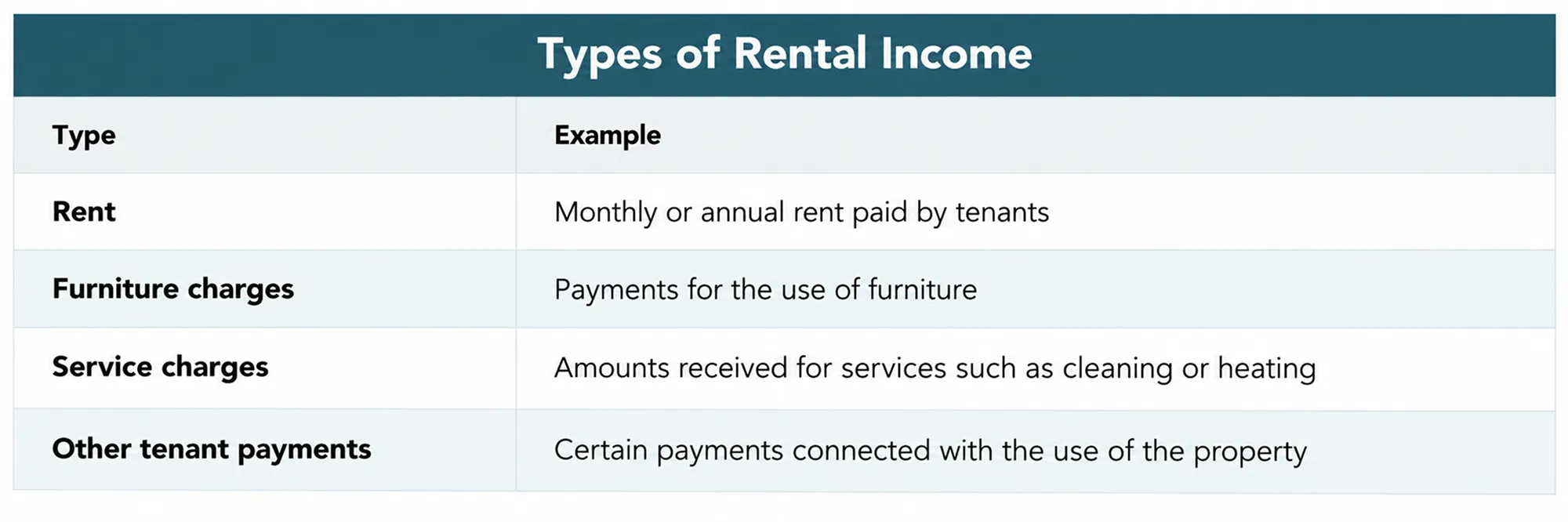
    Rental income is not limited to the rent a tenant pays for using the property. Depending on the letting arrangement, your property income may also include certain payments you receive for services, furniture or other facilities connected with the property.

    Examples of amounts that may form part of your property income include:

    The exact treatment depends on the nature of the payment and the letting arrangement, so landlords should check the relevant HMRC rules when calculating their property income.

    How Much Tax Do You Pay On Rental Income?

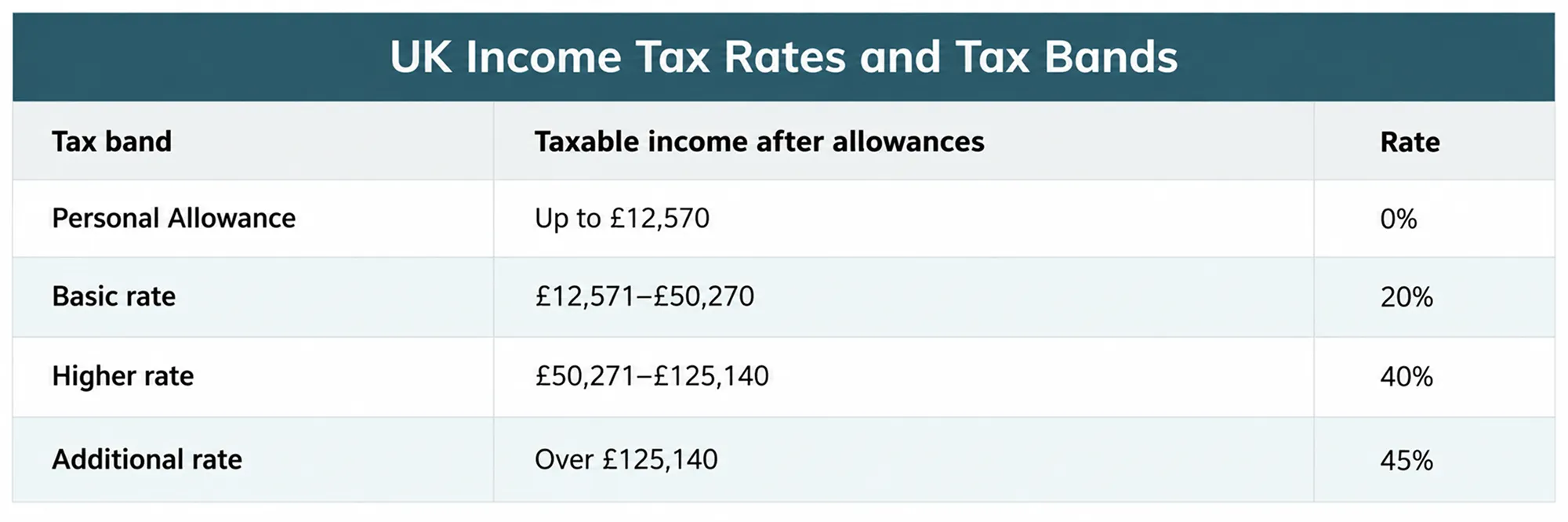
    The amount of Income Tax you pay on rental income depends on your overall taxable income. Your property profit is generally considered alongside income from employment, self-employment, pensions and other taxable sources when determining which tax bands apply.

    For 2026/27, the main Income Tax rates for England, Wales and Northern Ireland are:

    The standard Personal Allowance is £12,570, although it can be reduced for people with adjusted net income above £100,000. Scotland has different Income Tax rates and bands.

    Example of How Rental Profit Can Be Taxed

    Suppose a landlord has £25,000 of taxable employment income and £10,000 of rental profit. Their combined taxable income is £35,000. Assuming the standard Personal Allowance has already been accounted for in the figures above, the £10,000 rental profit falls within the basic-rate band and would be subject to Income Tax at 20%:

    £10,000 × 20% = £2,000

    This is a simplified example. The actual tax position can differ depending on the landlord’s Personal Allowance, other income, tax reliefs and individual circumstances.

    This is also why two landlords with the same rental profit can have different tax bills. Their other income and available allowances may place their rental profit in different tax bands.

    What Expenses Can You Deduct From Rental Income?

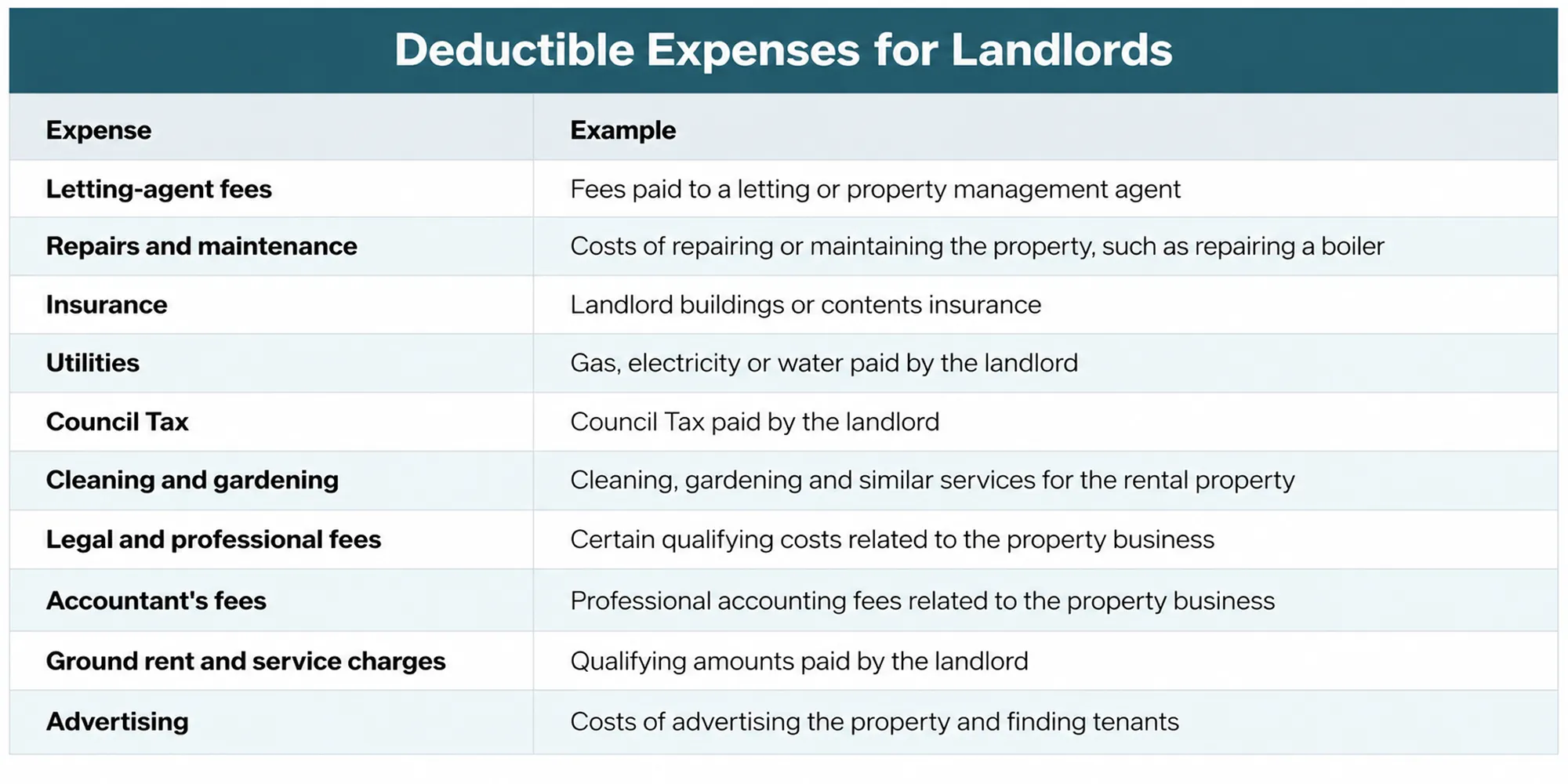
    You can generally deduct expenses that are incurred wholly and exclusively for your property rental business, provided they meet HMRC’s rules for allowable expenses. Revenue expenses may reduce the profit on which your property business is taxed. Common examples include:

    However, some property costs cannot normally be deducted as ordinary revenue expenses. These may include:

    • the purchase price of the property
    • the cost of adding an extension
    • capital improvements or upgrades
    • the capital element of mortgage repayments
    • private expenses unrelated to the property business

    Repairs vs Improvements

    It is important to distinguish between repairs and improvements. A repair generally restores an existing part of the property to its original condition. An improvement usually changes or upgrades the property beyond its original condition and is more likely to be treated as a capital cost.

    Capital expenditure is not normally deducted from rental income as an allowable revenue expense. However, certain capital costs may be relevant when calculating a future Capital Gains Tax liability, depending on the circumstances. Keep records and receipts for significant property costs even when they cannot be deducted from current rental income.

    How Do You Report and Pay Tax on Rental Income?

    Once you have calculated your property income and allowable expenses, you need to determine whether you have to report the income to HMRC.

    You generally need to report property income through Self Assessment if it is more than:

    • £2,500 after allowable expenses
    • £10,000 before allowable expenses

    If your rental income is above £1,000 but does not exceed these thresholds, you should contact HMRC to find out how you need to report and pay the tax. In some circumstances, HMRC may be able to collect the tax through your PAYE tax code.

    If you need to register for Self Assessment and did not already file a tax return, you generally need to register by 5 October following the tax year in which you had the income.

    Step 1: Calculate Your Rental Profit

    Add up your rental income for the tax year and identify the allowable expenses that relate to your property business:

    Rental income − allowable expenses = property profit

    If you own more than one UK rental property personally, HMRC generally treats the properties as one UK property business when calculating the overall profit or loss.

    Step 2: Consider Your Other Taxable Income

    Your rental income is not taxed separately from your other income. Hence, consider your other taxable income along with your rental profit to determine the tax bands that would apply to you. If your combined taxable income exceeds the set margins, some or all of your rental profit would fall within the basic, higher or additional rates. 

    Step 3: Report the Income

    If you need to file a Self Assessment tax return, report your property income and relevant expenses on the return. If you do not normally file a tax return but need to register for Self Assessment, the usual registration deadline is 5 October following the tax year in which you had the income.

    Step 4: Pay the Tax

    The usual deadline for paying Self Assessment tax is 31 January following the end of the tax year. Depending on your circumstances, you may also have to make payments on account towards your next tax bill. It is therefore useful to calculate your expected tax liability during the year and set aside enough money to meet the payment deadlines.

    What You Need to Know About Making Tax Digital (MTD)

    Making Tax Digital (MTD) for Income Tax is being introduced in stages for landlords and other individuals with qualifying income above the relevant thresholds. It does not apply to every landlord immediately.

    If MTD applies to you, you will generally need to use compatible software to keep digital records of your property income and expenses and send quarterly updates to HMRC. You will also need to complete the relevant end-of-year tax requirements and pay any tax due by the applicable deadline.

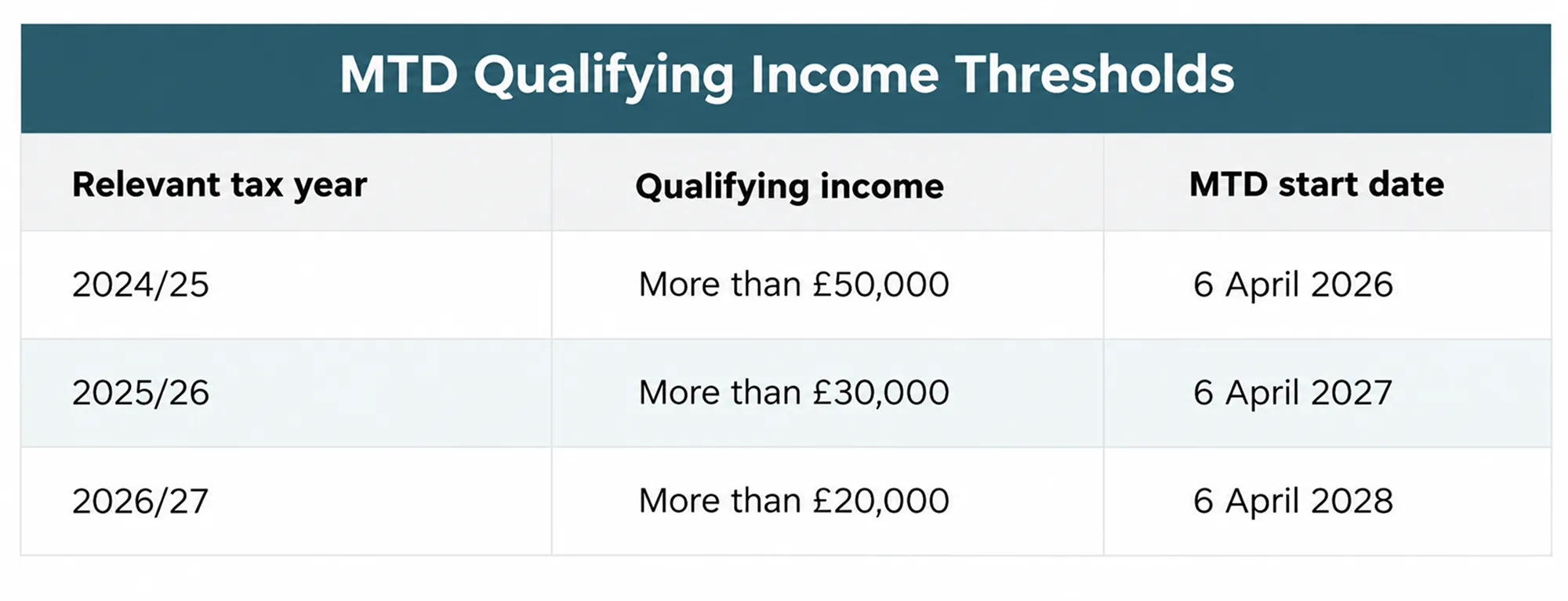
    A key point is that MTD eligibility is based on qualifying income, not your final rental profit. Qualifying income is the gross income from property and self-employment before expenses and tax:

    These thresholds apply to the relevant qualifying income, which can include both property and self-employment income.

    Example

    Suppose a landlord receives £25,000 in rental income, £10,000 in allowable expenses and £15,000 in rental profit. For MTD purposes, the relevant qualifying income is £25,000, not £15,000. Therefore, if the landlord’s qualifying income exceeds the applicable threshold for the relevant tax year, they may need to use MTD even though their final rental profit is lower.

    MTD changes how qualifying taxpayers keep records and report their income. It does not change the basic calculation of rental profit or the Income Tax rates themselves.

    Checklist: Records to Keep for Rental Income and MTD

    Keeping organised records can make it easier to calculate your property profit, support expense claims and meet HMRC reporting requirements:

    Rental Income

    ☐ Rent received from each tenant
    ☐ Bank statements showing rental payments
    ☐ Letting-agent statements
    ☐ Records of other relevant payments received from tenants
    ☐ Records for each rental property

    Allowable Expenses

    ☐ Repair and maintenance invoices
    ☐ Insurance documents
    ☐ Letting-agent and management fees
    ☐ Utility and Council Tax records where applicable
    ☐ Legal and professional fees
    ☐ Advertising costs
    ☐ Ground rent and service-charge records
    ☐ Relevant finance and mortgage records

    Property and Capital Costs

    ☐ Property purchase records
    ☐ Records of improvements and alterations
    ☐ Receipts for major capital work
    ☐ Records of relevant costs connected with a future property sale

    MTD Records

    If MTD for Income Tax applies to you, you should also:

    ☐ Use compatible software
    ☐ Keep relevant income and expense records digitally
    ☐ Keep supporting evidence for your figures
    ☐ Send quarterly updates by the required deadlines
    ☐ Complete the end-of-year tax requirements
    ☐ Keep your records for the required retention period

    Conclusion

    Letting a property in the UK can create Income Tax obligations alongside rental income. To work out what you owe, you need to understand which income and expenses count, how your property profit is taxed alongside your other taxable income and which rules apply to your circumstances.

    You should also keep up with relevant rules on residential finance costs, the Property Allowance, losses and Making Tax Digital. Keeping accurate records throughout the year can make it easier to calculate your tax and meet your reporting obligations. Professional tax services can also help with rental income tax and HMRC requirements

    Need Help With Rental Income Tax?

    Sterling Cooper Consultants can help you manage rental income tax, prepare your Self Assessment and meet HMRC requirements. Contact us today to discuss your tax needs.

    +443300102526
    Book an Appointment

    FAQs


    Do I pay tax on rental income if I also have a full-time job?

    Yes, you may. Your rental profit is generally considered alongside your employment income, which can affect the tax band that applies to it.

    Ordinary rental income is generally not subject to National Insurance in the same way as employment or self-employment income. Different rules may apply in certain circumstances.

    If your allowable expenses are greater than your rental income, your property business may make a loss. Property losses are generally carried forward and set against future profits from the same property business, subject to the relevant rules.

    You cannot normally deduct the capital repayment element of a residential mortgage from rental income. Qualifying finance costs, such as mortgage interest, may instead qualify for a basic-rate tax reduction.

    Generally, each owner is taxed on their share of the property income and allowable expenses. Different rules can apply to jointly owned property held by married couples and civil partners.

    Share This Article!

    Recent Posts

  • Using Losses to Reduce Your Corporation Tax Bill

    Using Losses to Reduce Your Corporation Tax Bill

    corporation tax losses

    Posted by:

    Admin

    Date:

    December 11, 2025

    Category:

    blogs

    Error: Contact form not found.

    Using Losses to Reduce Your Corporation Tax Bill

    According to HMRC’s Corporation Tax statistics, over 1.6 million UK companies had no Corporation Tax liability in 2023–24. This represents around 51% of UK companies. There are several reasons why a company may have no Corporation Tax to pay. One of these is making a loss.
    If your business has had a tough year, that loss does not necessarily need to go unused. Depending on the circumstances, it may reduce the tax you owe for the current year, be carried back against profits from an earlier year or be carried forward to offset future profits.
    Trading losses happen when your costs are higher than your profits. No business wants this outcome. But once it happens, corporation tax losses can still work in your favour. This guide explains exactly how you can work out your losses, using clear examples throughout.

    Key Information

    • A corporation tax loss can be set against profits from other years, or against profits made by other companies in the same group
    • You do not pay corporation tax on a loss, but you must still calculate and report it correctly
    • Losses can be carried back 12 months, carried forward indefinitely, or used through group relief
    • Since April 2017, losses above £5 million can only offset 50 per cent of remaining profits, not the correct figure previously misquoted elsewhere online
    • Getting the calculation right from the start avoids delays to your corporation tax refund on losses.

    What Are Corporation Tax Losses?

    Corporation tax losses occur when a company’s allowable costs exceed its taxable profits in an accounting period. You might ask, do you pay corporate tax on losses? The answer is no. But that does not mean losses are ignored. HMRC allows you to use them for relief, adjusting them against profits from other periods or other group companies.

    Tax expert Daniel Drebler has explained this well. He noted that while profits are taxed, no immediate refund is granted simply because a corporation reports a loss. Instead, the loss can only offset profits made in other periods or by related companies. He also pointed out that the rules for using losses vary widely between countries, though most allow losses to be carried forward.

    Are You Eligible for Corporation Tax Losses Relief?

    In order to claim relief, your company must have paid corporation tax on profits at some point and then suffered a loss in the current accounting year. Even if your business has closed down, the losses made just before stopping the operations can count. This is commonly called terminal loss relief. This one works slightly differently from an ongoing trading loss.
    Pro Tip:
    Even in a loss-making year, keep detailed records of income and expenses. Clean records make it far easier to claim a refund on corporation tax losses later, whether that is this year or several years from now.

    How to Calculate Your Corporation Tax Losses?

    Before claiming anything, you need an accurate figure for your loss. This starts with your company’s profit and loss statement. It should be adjusted using HMRC’s rules to reflect what is actually tax-deductible. Below mentioned are the ways you can use to calculate your corporation tax losses:

    1. Capital Allowances

    Capital allowances are tax reliefs for buying business assets such as machinery, equipment and vehicles. In your tax calculation, these allowances replace depreciation. Since depreciation is not allowed for tax purposes, using capital allowances instead tends to increase the size of your tax loss.

    2. Balancing Charges

    A balancing charge arises when you sell an asset for more than its tax write-down value, though still less than what you originally paid. This amount counts as taxable profit and must be added back. Balancing charges reduce your tax loss since the gain is treated as income.

    3. Trade Charges

    Trade charges include certain insurance premiums, payments into registered pension schemes and qualifying charitable donations. These count as allowable expenses so they increase your tax loss. They can also be carried back to a previous accounting period to help generate a corporation tax refund on losses.

    4. What Not to Include

    A few items must stay out of your corporation tax losses calculation entirely.

    • Capital gains or losses: Profits or losses from selling fixed assets such as land, buildings, or shares fall under separate chargeable gains rules.
    • Non-trade income or expenses:  Investment income, fines and penalties are not linked to trading, so they do not belong in this calculation.
    • Disallowed expenses: Costs such as client entertainment or excessive director pay are not tax-deductible and must be added back.


    How to Use Corporation Tax Losses?

    using corporation tax losses
    Once your loss figure is confirmed, you have several ways to use it. Which one suits you best depends on your company’s situation. It includes whether profits are expected soon, whether you are part of a group or whether the business has stopped trading. Following are the ways you can use your corporation tax losses:

    1. In-Year Relief

    The simplest option. Your loss is set against other profits made in the same accounting period, such as investment income or chargeable gains.

    2. Carrying a Loss Back

    You can carry a loss back 12 months and set it against profits from that earlier period. This is not necessarily a full accounting year. It often leads to a faster corporation tax refund on losses since tax already paid may be repaid.

    3. Carrying a Loss Forward

    Losses that are not used straight away can be carried forward and set against profits in future years. Since April 2017, forward losses can be used more flexibly against total profits rather than only profits from the same trade.
    Did You Know?
    There is no time limit on how long a corporation tax loss can be carried forward. In theory, a loss made decades ago could still be used today, as long as the company has kept trading and the loss has never been claimed elsewhere. 

    4. Group Relief

    If your company is part of a group, meaning one company owns at least 75 per cent of another, losses can be surrendered to another group company. That company then uses the loss to reduce its own tax bill.

    5. Cessation (Terminal) Loss Relief

    If your company stops trading, losses from the final 12 months can be offset against profits from the three years before that. The trade must be the same as before and if accounting periods do not line up neatly, only the portion of profit that falls within those three years counts.

    6. Property Income Losses

    Companies earning income from renting out property can offset a property loss against other profits made in the same year, such as trading profits. These losses can also be surrendered to another group company, but only if the loss is larger than that company’s own profit. Property losses cannot be carried back.

    7. Capital Losses

    Capital losses arise when a company sells an asset for less than it paid. These cannot be used against trading profits. Instead, they can only offset capital gains made in the same year, or be carried forward if gains that year are not large enough.

    8. Losses for New Businesses

    New companies get slightly more flexibility. If a loss occurs within the first four years of trading, it can be claimed against profits from the first three years, giving new businesses more breathing room while they get established.

    What Is the £5 Million Restriction?

    What is the £5 Million Restriction

    Before April 2017, companies could use the whole of their corporation tax losses to offset profits, with no cap. That changed. Since 1 April 2017, restrictions apply once losses carried forward pass a certain size.

    The rule works like this. Every company, or group of companies, gets a deduction allowance of £5 million per year. Profits up to that amount can be fully covered by carried-forward losses. Above £5 million, only 50 per cent of the remaining profit can be offset by those losses. Groups share a single £5 million allowance between them, which they can allocate however they choose.

    Case Study: How a Loss Carry Back Claim Turned a Tough Year into a Cash Refund

    Innovate Ltd is a UK based company which had a strong first year, making £100,000 in profit. It paid £37,500 in corporation tax at the 25% rate. The next year the market shifted and the company made a £30,000 loss.

    Instead of carrying the loss forward, Innovate Ltd claimed it back against the previous year’s profit. This lowered Year 1’s profit to £70,000. At the same 25% rate this meant a revised tax bill of £17,500.

    Innovate Ltd had already paid £37,500 for that year. HMRC paid back the difference. That’s a £20,000 cash refund straight into the company’s bank account.

    This is exactly the point made throughout this guide. Corporation tax losses doesn’t need to sit unused. Used the right way through carry back relief it can turn a hard year into fast, debt-free cash. That cash can help cover payroll fund operations or support the business through recovery.

    Conclusion

    A loss may sound like everything negative. But corporation tax losses are not the setback they might first appear to be. If calculated correctly, they open up several ways to reduce your tax bill, whether through in-year relief, carrying losses back or forward, group relief or terminal loss relief on cessation. Getting the calculation right at the start makes every later step far more straightforward.

    If you would like support working through your own losses, our team at Sterling Cooper Consultants can help


    Do not let your losses go to waste.

    Contact Sterling Cooper Consultants today and our expert accountants will help you make the most of your corporation tax losses.


    +443300102526
    Book an Appointment

    FAQs


    Do you pay corporation tax on a loss?

    No. A loss does not create a corporation tax bill on its own. Instead, it can be used to reduce tax owed in another period, either through carry-back, carry-forward, or group relief.


    Trading losses can generally be carried back 12 months. Terminal losses on cessation can be carried back up to three years.


    Yes. Carry-back claims must generally be made within two years of the end of the accounting period in which the loss occurred.


    It is the amount of profit that can be fully covered by carried-forward losses each year without restriction. Above this threshold, only 50 per cent of remaining profit can be offset by those losses.


    Yes. Losses made within the first four years of trading can be claimed against profits from the first three years, giving new companies more flexibility than established ones.


    Claims are made through your CT600 form, either by amending a return already submitted, filing a new one, or writing to HMRC directly, depending on the accounting period involved.


    Share This Article!

    Recent Posts

  • Dealing with HMRC Tax Investigations: Do’s and Don’ts

    Dealing with HMRC Tax Investigations: Do’s and Don’ts

    hmrc tax investigations

    Posted by:

    Admin

    Date:

    December 9, 2025

    Category:

    blogs

    Error: Contact form not found.

    Dealing with HMRC Tax Investigations: Do’s and Don’ts

    Tax compliance in the UK is one of the most important aspects of your financial life. You have to follow tax laws, file returns on time, and report expenses to HMRC. You may ask do HMRC investigate tax returns, the answer is yes. HMRC conducts regular enquiries to determine whether you are paying the correct amount of tax. They inform you when they start looking into your returns. HMRC tax investigations are detailed and might cause stress due to their serious nature. The dread is often due to a lack of information about the HMRC enquiry. Here is everything you need to know to make the HMRC tax investigation procedure easier.

    Types of HMRC tax investigations

    Now that we know the answer to do HMRC investigate tax returns is affirmative. Next step is to answer when do HMRC investigate tax returns. Different scenarios may warrant different types of investigation.HMRC tax investigations can be of following three types:

    1. Random check

    As the name suggests, these HMRC tax investigations are random. There might be no implication of error on your tax returns. HMRC carries them out for confirmation. This type of enquiry can be carried out for both individuals and businesses. Random check ensures general compliance. Random checks are an answer to when do HMRC investigate tax returns.

    2. Aspect Enquiry

    Aspect enquiries are related to a few entries on your return. They are focused on one or two elements rather than the whole return. These challenge the claim of some of your returns. If there is irregularity in any section, it can trigger an HMRC investigation. For instance, HMRC may ask you about a large income source or a large expense claim.

    3. Full Enquiry

    HMRC tax investigations take place if HMRC believes there is a huge error in your records. They might view all of your records. Tax returns of your company, as well as its directors, might be called into question.
    Types of HMRC Tax Investigation

    Why does a tax investigation begin?

    You might wonder when do HMRC investigate tax returns. OR what triggers HMRC tax investigations. Here’s are some common reasons for which HMRC might trigger an investigation:

    1. Discrepancies in Tax Returns

    HMRC tax investigations may occur if they find out mismatched figures, i.e., inconsistencies between income and expenses. They can also become alarmed if there are frequent errors on submitted returns.

     2. Sudden Changes in Income or Profit

    If you have a sharp increase in your income, this may prompt HMRC tax investigations. Similarly, if you have a sudden and large profit, you might be under their radar as well.

    3. Industry Comparisons

    Businesses are compared to industry norms by HMRC. Your company may draw notice if its reported performance differs noticeably from that of others in your industry. HMRC tax investigations may occur as a result of that.

     4. Frequent Late Filing or Payment

    If you are frequently late in submitting your returns, you may signal poor compliance. HMRC tax investigations may happen due to this. Paying tax bills late can yield similar results.

    5. Unusual Tax Claims

    If you put in an unusual or large claim for tax relief or deduction, HMRC may be compelled to look further. Large VAT refunds can also make you look suspicious. Any unusually large tax claim is sufficient cause for HMRC tax investigations.

     6. Tip-offs or Reports

    Third parties may tip off HMRC against you. They can be random members of the public or your own disgruntled employees, or business partners. HMRC tax investigations are not prompted by all tip-offs. The tip-offs are first assessed. If found credible then HMRC tax investigations may proceed.

    7. Cash-Heavy Businesses

    Cash-heavy businesses often prompt more HMRC tax investigations. This is because they are seen as higher risk. Some of these sectors include hospitality, construction and retail.

    8. Offshore Accounts or Assets

    HMRC tax investigations are more likely to target you or your business if you have a foreign bank account. Another reason for their suspicion might be undeclared overseas income.

    9. Previous Investigations or Errors

    You are more likely to face an enquiry if you have ever been reviewed before. A history of errors also means more risk of investigation.

    “Tax audits and tax investigations are the principle tools aimed at driving the taxpayer to pay the right amount of tax and to become compliant with the provisions of tax laws.” 

    Dr. Aitaa Sam Kilimvi

    What is the HMRC tax investigation procedure?

    Now that we have covered when do HMRC investigate tax returns, we must not define their procedure. HMRC tax investigation procedure occurs in five stages. Here are the 5 stages of tax investigation:

    1. The investigation’s notification

    The HMRC tax investigation procedure begins with HMRC informing. This is the first of the 5 stages of tax investigation. It happens via a letter or a phone call.  They inform you about the following:

    • Type of enquiry
    • The time period for it
    • What do they need to conduct the enquiry

    If you have an agent, i.e., your accountant, HMRC will inform them instead.

    2. Collection of information:

    The second of the 5 stages of tax investigation is data collection. You’ll be informed of a deadline by which you have to submit your documents. Their details are further in the blog. HMRC may visit the address you provide for your business or personal use. In case you have an agent, HMRC will pay them a visit.

    3. Communication and Evaluation

    Next of the 5 stages of tax investigation is review and evaluation. Your documents will be viewed by the HMRC in this stage. They’ll provide you feedback on whatever they have gathered. You might be asked for more information or they might schedule an interview. HMRC tax investigation procedure continues with review.

    4. Penalty

    On completion of the review, HMRC will propose a settlement based on your tax position. In case of underpaying, you’ll have to pay the amount you owe with a penalty. They will give you your money back if you overpaid. You will most likely face prosecution if you are found guilty of tax evasion. This is the most important of the 5 stages of tax investigation.
    Any of these decisions can be appealed within 30 days.

    5. Closure

    Last of the 5 stages of tax investigation is the closure. When the investigation is completed, HMRC will send you a letter. This contains the details of the settlement and confirmation of closure.
    What is the HMRC Tax Investigation Procedure

    The Dos: Handling the investigation properly

    Once you know you’re under HMRC tax investigation, do the following:

    1. Consult professionals for help

    You need to consult professionals to take a look at your returns and investigation. They ensure the HMRC tax investigation procedure is smooth. Responding to HMRC on your own can cause trouble if you say something you are not supposed to.

    To stay abreast of latest updates, check out our guide for changes and updates for tax year 2025-26.

     2. Respond

    You should respond to HMRC professionally and listen carefully to their claims. If you cannot get back to them on the deadline, communicate this to them.

    3. Check Validity

    Correct details:

    The enquiry letter should contain the right details for validity. These include:

    • Name
    • Address

    HMRC Tax investigation time limit:

    Some may ask, how often do HMRC investigate tax returns. To answer, The HMRC have 1 year from filing deadline to investigate your tax returns. In reality however, HMRC has four years from the end of the relevant tax year to issue a discovery assessment after an inquiry into your tax affairs has been initiated. They can issue a “discovery assessment” for the missing tax if they can demonstrate that the taxpayer or their agent intentionally or negligently caused the loss of tax. If the taxpayer has been negligent, the standard four-year period is extended to six years. If he has been dishonest, it is extended to twenty years. The following is a more detailed overview.

    Tax Type Routine checks (random enquiries) Negligence(aspect enquiry, such as errors in filing) Full Enquiry (tax fraud or evasion)
    VAT 4 4 20
    Income tax 4 6 20
    PAYE 4 6 20
    Capitals Gain Tax 4 6 20
    Corporation Tax 4 6 20

    If the enquiry is from beyond this period, HMRC cannot conduct it.

    1. Verify the information schedule

    An information schedule refers to a document that contains information required for an enquiry. This is needed to check if your return was correct. You should verify this document. Check if the requirements on the information schedule are important to check your return.

    2. Provide the documents

    While you are responding to HMRC, provide them with the necessary records. They  might ask you for:

    • Bank statements
    • Credit card statements
    • Invoices
    • Receipts
    • Records of payroll
    • VAT records
    • Job quotes

    If you organise these documents, it will help you navigate the HMRC tax investigation procedure better.
    To get your VAT records and financial documents in order, check out our VAT preparation services.

    3. Give voluntary disclosures

    While dealing with an enquiry, you might find skipped details or mistakes in your tax returns. This information should be disclosed to HMRC as soon as it is found. HMRC will investigate and check if this had any effect on the tax loss. Your penalty might be reduced because of disclosure.

    What are the Don’ts?

    4. Don’t panic

    You should take the enquiry seriously. However, you should not panic at all. It may cause you to make mistakes, overshare or present incorrect data.

    5. Don’t ignore the investigation

    You need to respond to the HMRC enquiry. If you try ignoring it, it may cause more trouble. This is because you are likely to miss deadlines.

    6. Don’t destroy any document

    If you destroy any documents, you’ll be considered guilty. Even if it goes against you, coming clean may reduce your penalty.
    If you don’t have records available, you should get their replacements. Make a request under the Data Protection Act 1998, and you’ll receive them.

    Conclusion:

    It is important to respond to an HMRC investigation properly. For an effective defence, choose Sterling Cooper Consultants. Our self-assessment preparation and filing in HMRC services can help you understand the complexity of the situation and the possible repercussions.

    Don’t wait for HMRC to come knocking at your door.

    Contact us now to stay ahead of the curve and keep your finances in order.

    FAQs


    Which taxes can be investigated?


    VAT, corporation tax, capital gains tax, construction industry schemes, and IR35 can be investigated.


    Yes, they are allowed under Schedule 36, Finance Act 2008.


    HMRC offers alternative dispute resolution in this case.


    It depends on the type of inquiry. Aspect enquiries can take 3-6 months. A full enquiry can take up to 18 months.


    Yes, it can depend on the offence. You might pay a fine, or you may face charges in case of tax evasion.

    Share This Article!

    Recent Posts

  • How will the National Minimum Wage rise impact SMEs?

    How will the National Minimum Wage rise impact SMEs?

    minimum wage increase 2025

    Posted by:

    Admin

    Date:

    December 5, 2025

    Category:

    blogs

    Error: Contact form not found.

    How will the National Minimum Wage rise impact SMEs?

    In October 2024, the Low Pay Commission (LPC) recommended a 6.7%  increase in the National Minimum Wage. This increase is in effect since 1st April 2025. The minimum wage increase 2025 is set to affect all the major economic sectors.

    Employing 59.9% of the workforce of the UK workforce, SMEs are going to be one of the most impacted sectors. Here is everything you need to know about this impact.

    What is the National Minimum Wage?

    The National Minimum Wage is the basic hourly rate that employers are supposed to pay. The purpose of setting it is to get fair compensation for the workers. In 2025, minimum wage increase UK has changed things. To stay abreast of similar changes in financial world check out our guide for tax year updates 2025-26.

    Reasons for the 2025 minimum wage increase 2025:

    The minimum wage increase 2025 came about for following reasons:

    Living costs:

    An increase in the national minimum wage guarantees at least a minimum living standard. This is more important when housing, food, and utility costs are rising.

    Growth of Economy:

    A higher minimum wage can increase purchasing power. This, in turn, can boost the economy.

    Reduction of income inequality:

    There is a disparity in the highest and lowest incomes in society. Setting a minimum wage reduces this gap.

    “We have argued elsewhere, the effect of the minimum wage on employment represents only one piece of the analysis necessary to assess whether minimum wages are a useful policy tool for improving the economic position of those at the bottom of the income distribution—which is the ultimate goal of minimum wage policy.”

    David Neumark

    The minimum wage increase 2025

    Here are the new wages after the minimum wage increase UK.

    The 2025 minimum wage increase

    Target to be achieved by the increase:

    The National Minimum Wage rise 2025 will make it two-thirds of the National Living Wage (NLW) by October 2025. Another reason is leading more jobs to the NLW. So, around 2.2 million jobs are expected to fall under NLW. About 2.2 million jobs are about to be led to NLW in 2025. This is 7.3% of the total jobs and exceeds the peak of 2016.

    Understanding the SMEs

    SMEs stand for small and medium enterprises. The following two factors determine if a business is an SME:

    • Number of employees(should be 250 or more)
    • Annual turnover

    27% of the SMEs are concerned regarding employee retention after the minimum wage increase 2025.

    Impact of national minimum wage increase UK

    The minimum wage increase 2025 will affect SMEs in a variety of different ways. The impact of rising national minimum wages will have far reaching consequences. Especially when it comes to small business expenses. Some of these ways may include:

    Labour expenses:

    Labour costs will be affected the most by the UK minimum wage increase. Even though the increase is less than the last 2 years (10%), this coincides with an increase in National Insurance Contributions(NIC). The employers have to pay NIC for 16-hour jobs too now since the salary threshold has dropped from £9,100 to £5,000 per year. The 16-hour jobs, thus, will see a larger increase in employment costs. The 38-hour jobs will see a relatively smaller increase. SMEs might have to revise their budgets to account for these increased wage costs.

    Profit margin pressure

    Profit margins for SMEs might reduce. This in turn is going to impact sectors like the following:

    1. Industries with cutthroat competition:

    SMEs that operate in such industries will face challenges. This is due to their budget being spent on wages.

    2. Industries with thin profit margins

    These industries include:

    • Retail
    • Hospitality
    • Cleaning sector

    These employ the most minimum wage workers but have already thin profit margins. The national minimum wage rise 2025, may affect them more than the other industries.

    Adjustments in prices:

    After the minimum wage increase 2025, SMEs will have to look for ways of accommodating the higher pays.
    Often, they adjust this in the pricing of their product or services. This might cause an issue in retaining clients. Careful consideration should be provided while making these increases.

    Reduced staffing:

    The minimum wage increase UK can lead to SMEs reducing their employees. This, in turn, can affect productivity. Customer service can also be impacted by this decision. SMEs should consider the impact before taking these measures.

    Changes in business model:

    One of the impacts can be a change in business model for some SMEs. They might need to do any of the following:

    • Explore new markets
    • Diversify products
    • Adjust operating hours

    To know more about the finances of your business
    Impact of national minimum wage increase UK

    Strategies for SMEs:

    Businesses can brace for the UK minimum wage increase 2025 using the following strategies:

    1. Streamline operations:

    SMEs should streamline operations in a way that increases productivity. This includes:

    • Improvement in processes
    • Training workforce
    • Upskilling the employees
    • Better scheduling

    2. Exploring Technology:

    Another solution to the national minimum wage rise 2025 is technology. It can be of benefit because of these two reasons.

    1. It can automate tasks.
    2. It can improve efficiency.

    The technological innovation can consist of the following:

    • Point-of-sale systems
    • Inventory management software

    3. Employment allowance:

    The national minimum wage rise 2025 can be countered with employment allowance. Employment allowance can help with small business expenses. In addition to the minimum salary, the employment allowance has been increased. Small enterprises are therefore exempt from paying the first £10,500 in NIC. As a result, these companies will pay lower wages.
    However, the increase in the number of employees increases this NIC too. So, only small businesses can claim relief through this.

    4. Increase in prices:

    Price increment can help businesses deal with the impact. Businesses can increase the price in the following ways:

    • They should promote value-based pricing.
    • They should bundle services so customers can handle the price increase.

    5. Financial consultancy:

    The final strategy for SMEs is to speak to financial consultants. These consultants can help them understand the impact and plan accordingly.
    Strategies for SMEs

    Contact Sterling Cooper Consultants

    At Sterling Cooper Consultants, we provide you with customised solutions for your businesses. We help you understand the wage increase and its impact on your profits. We assist you in figuring out a way around this. Check out our business advisory services to get your way around the national minimum wage rise 2025.

    Each year brings new changes. The game is to stay ahead all the time.

    Contact us now to grab the financial bull by the horns and take control of your fiscal destiny.

    FAQs


    Are workers under 21 eligible for the national minimum wage?


    Yes, they are eligible if they are full-time employees.


    Yes, since overhead costs of businesses increase, product costs can increase too.


    Yes, it can benefit SMEs by providing them with a stable workforce.


    National minimum wage for regular employees (over age 21) is £12.21.


    Minimum wage is based on equitable distribution of income and wealth. It is also based on the capacity of the employer.

    Share This Article!

    Recent Posts

  • Top Tax Saving Tips to Reduce Your Bill Legally

    Top Tax Saving Tips to Reduce Your Bill Legally

    tax saving tips

    Posted by:

    Admin

    Date:

    November 25, 2025

    Category:

    blogs

    Error: Contact form not found.

    Top Tax Saving Tips to Reduce Your Bill Legally

    You have to strategically plan your way around tax paying. Else, it is going to cost you thousands of pounds annually. There are schemes, tips and ways that can legally reduce your bill. Here are some of the tax saving tips that can help you.

    1. Tax allowances and reliefs

    One of the best tax saving tips is to avail the tax allowances and reliefs available to you.

    Personal allowance:

    You can keep up to £12,570 of your salary tax-free. It can be transferred among married couples. For instance, you earn £50000 and your spouse earns £40000. You can transfer your personal allowance (10%) to your spouse. This can be one of your key income tax saving tips.

    Capital Gains Tax allowance

    Selling any investments, properties, or assets can make you liable to capital gains tax. This can be reduced by availing capital gains allowance. This allowance allows £3000 gain every year. Married couples can transfer assets among each other to avail both of their allowance. Sales should be distributed over a number of tax years in order to maximise the tax-free allowance..

    Dividend allowance

    Owning a share in a company can let you have a dividend if the company performs well. Dividend allowance is £500. You have to pay tax over this amount but any dividend below it is tax free.

    Learn more about Tax Planning & Compliance with us.

    Tax Allowances and Reliefs

    2. Investment in ISA

    An account type known as an Individual Savings Account (ISA) allows you to save up to £20000 tax-free.So, investing in it is one of the best tax saving tips.

    The following taxes do not apply on ISA:

    • Capital gains tax
    • Dividend tax
    • Income tax (on interest)

    This makes ISA one of the key tax saving tips for individuals.

    Types of ISA

    The main types of ISA are :

    Cash ISA:

    This type of ISA allows you interest on your cash that isn’t taxed.

    Stocks ISA:

    In stocks ISA, returns are generated through dividends.

    Lifetime ISA

    In this case, a 25% government bonus is given on savings of up to £4,000 per tax year. This can be used to save for your first home or retirement. It can be opened at the age of 40.

    Junior ISA

    In junior ISA, up to £9,000 per tax year can be saved by a parent or guardian for a child’s future.

    Investment in ISA

    3. Tax relief on pension funds

    Tax saving tips also include investing in pension funds. Pension saving allows you a significant tax relief, boosting your contributions as a result.

    Contributions at different tax rates:

    Different taxpayers receive different tax reliefs.

    Tax relief on pension funds

    4. Tax planning for self employment and business

    Planning your taxes is crucial when you are self employed or managing a business. This is due to the fact that tax planning can maximise your earnings.

    Tax saving tips for small businesses:

    “If you run a business, you need to navigate corporation tax and VAT efficiently. For the UK to remain internationally competitive for business, it needs a tax system that is sufficiently clear for business to be able to operate within with confidence.”

    Tracey Bowler

    Corporation tax:

    It is one of the major business’ costs. Here is how it applies to profits.
    Tax relief on pension funds

    One of the best tax saving tips for businesses is reducing corporation tax. To minimize this: 

    • You should invest in business assets such as vehicles, software, etc.
    • You should make pension contributions.
    • You should make an efficient payment of dividends.

    VAT:

    Even though it only applies if your turnover is more than £85000, you should still need a good scheme.

    Some of these schemes are:

    • Cash accounting scheme
    • Flat rate scheme

    Learn more about How to get a VAT Certificate: A Complete Guide

    Tax saving tips for self employed

    If you are self employed, you can use the following tax saving tips: 

    Claim business expenses:

    You can claim costs of home office, travel, training, etc.

    Pension contributions:

    You can make pension contributions since they allow you significant self relief. 

    Income spread

    You can keep the tax rates lower by structuring income over multiple years. 

    Get detailed insights on 2025–26 Tax Year Updates.

    5. What are the tax reliefs for higher-rate taxpayers?

    Some saving tips for higher-rate taxpayers include availing pension contributions and schemes like ISA. They can also take part in salary sacrifice schemes. 

    Salary sacrifice scheme

    Through salary sacrifice schemes, individuals can buy non-cash benefits from their employers, such as more vacation time. The employee will receive less money from the employer in return.
    Since reduced take-home pay translates into less income that needs to be taxed, government-backed salary sacrifice programs assist both companies and employees in saving money on taxes.

    What are the tax reliefs for higher-rate taxpayers

    6. Part of charity contributions in tax relief

    Another one of the best tax saving tips is charitable contribution. This is because you can get tax relief on charitable donations you make. Here is how it is done.

    Part of Charity Contributions in Tax Relief

    Giving payroll

    Your contributions to a charitable Payroll Giving Scheme are subtracted before taxes. These schemes are offered by some employers through a payroll.
    You can donate more money this way and your gross salary will be reduced. You’ll have to pay less tax on it.

    Gift Aid scheme

    When you donate through this scheme, the charity can claim the 20% basic rate tax that you have paid . This is especially beneficial for higher-rate taxpayers who pay 40% in taxes. This is because the charity has claimed 20%, they can claim the rest of 20%.

    Donating assets to charity

    While donating assets such as shares to a registered charity, you can get capital gains and income tax relief on full market value.

    How to claim a tax refund

    In case you have missed your tax reliefs, you can contact HMRC and claim them back. This tax relief can be backdated up to 4 years. Make sure to claim this tax directly with HMRC. If you use any tax refund agency, read their terms and conditions carefully because you may have to pay agents’ fee and other charges. You can claim back tax on the following:

    • Expenses of job (fuel, work clothes, working for home, etc.)
    • Pensions
    • Interests from savings
    • Interests from payment protection insurance (PPI)
    • Redundancy payment

    Contact Sterling Cooper Consultants for more tips

    At Sterling Cooper Consultants, we provide you with the best tax saving tips. We assist you with minimizing tax returns while keeping it legal. Whether you’re an individual, a business, or a family, we provide you unique solutions to your overpaid tax problems.
    So, for more such insights, contact us now.

    Simplify taxes with expert planning, self-assessment, VAT returns & corporation tax services in the UK.

    Ensure maximize savings today.

    FAQs


    Are there any tax saving tips for inheritance?


    Yes, the 40% tax on £325,000 can be reduced. Tax saving tips for this include using the £3000 annual allowance gifts. Making larger gifts seven years before death can make the gifts tax-free.


    Yes, schemes like EIS can help you get a variety of tax reliefs such as income tax relief, capital gains tax deferral and exemption and inheritance tax relief.


    For landlords, there are a few options. They can get rent-a-room tax relief while renting a room. They can get £7500 a year without tax. They can also claim replacement of domestic items.


    One such type of loan is taken out to purchase shares in the borrower’s company. The loan taken out for an investment in a partnership also qualifies. Loans for machinery or plants used in businesses(trading and professional/property partnership) are also subject to this exemption. If you take out a loan to pay inheritance tax, this may also be qualified for relief.


    Yes, you can claim tax relief on travel on two conditions. The first is that your place of work is not permanent. The other is working for home and travelling to meet your clients.

    Share This Article!

    Recent Posts

  • How Outsourced Bookkeeping Services Can Save You Time and Money

    How Outsourced Bookkeeping Services Can Save You Time and Money

    Outsourced Bookkeeping

    Posted by:

    Admin

    Date:

    November 21, 2025

    Category:

    blogs

    Error: Contact form not found.

    How Outsourced Bookkeeping Services Can Save You Time and Money

    Bookkeeping is important for any business, but it can take up a lot of time. Recording transactions, tracking receipts, handling invoices and reconciling bank accounts can quickly add to your workload. When these tasks are handled entirely in-house, they can also become costly, taking up valuable staff time and resources.

    Outsourcing your bookkeeping can take some of this workload off your hands. A professional bookkeeping team can manage your day-to-day financial tasks, giving you more time to focus on your customers, operations and business growth. It can also help reduce costs while keeping your financial records accurate and up to date.

    This blog explores how outsourced bookkeeping services can save you time and money while supporting better financial management and business growth.

    Key Takeaways

    • Every VAT return deadline follows the same rule: one calendar month plus seven days after your accounting period ends
    • Filing and paying are treated as two separate obligations by HMRC, so submitting your return on time does not protect you from a late payment penalty
    • A payment only counts as on time once it has actually been received by HMRC, not simply sent
    • Since January 2023, late filing works on a points system, with a £200 penalty only once you cross your scheme’s threshold, while late payment runs on its own faster track with penalties and interest
    • Annual Accounting works differently from other schemes, using estimated payments throughout the year with one final balancing payment two months after the accounting year ends
    • Treating filing and paying as separate tasks, and understanding your scheme’s exact deadline, is what keeps most businesses out of HMRC’s penalty system

    How Outsourcing Bookkeeping Saves You Time

    Bookkeeping can take up much of your working day when handled alongside other business tasks. What starts as a few transactions or invoices can quickly turn into hours of financial administration. 

    ‘Bookkeeping can be a headache for big and small business owners.’

    QuickBooks (Intuit)

    Outsourcing your bookkeeping can help free up this time. A professional bookkeeping team can handle your routine financial tasks, allowing you to focus on your customers, operations and business growth 

    Here’s how you can save time by outsourcing your bookkeeping:

    Data Entry Is Handled for You

    Entering transactions, recording receipts and updating financial records can take up hours of your day. An outsourced bookkeeping team can handle these routine tasks and keep your records up to date. This means less time spent on repetitive work and more time available for other important areas of your business.

    Once your records are updated, your bookkeeper can also handle regular checks, such as bank reconciliations. This means you do not have to keep reviewing your accounts yourself. 

    Bank Reconciliations Are Completed Faster

    Bank reconciliation involves checking your records against your bank statements and finding any differences. Doing this yourself can take time, especially when your business has a high number of transactions.

    An outsourced bookkeeping team can handle these checks as part of its regular work. This helps keep your accounts up to date and reduces the time you need to spend checking transactions yourself.

    The time savings can start even before the bookkeeping work begins.

    Hiring and Training Time Is Reduced

    Hiring a bookkeeper takes time. You may need to write a job advert, review applications, interview candidates and train the person you hire. After that, you still need to manage their workload and make sure your business has the support it needs.

    With an outsourced service, you can access bookkeeping support without going through the same hiring and training process. This can be particularly useful for businesses that need regular support but do not need a full-time bookkeeper.

    Instead of spending time recruiting and managing another employee, you can work with a team that is already set up to handle your bookkeeping. 

    Administrative Tasks Are Reduced

    Bookkeeping often involves more than recording transactions. You may also need to organise receipts, process invoices, check records and follow up on missing information. These tasks can quickly build up during a busy week.

    An outsourced team can handle many of these tasks for you. This reduces the amount of financial admin you need to manage and helps keep your records organised.

    With these tasks handled by one team, you spend less time managing routine administrative work. This gives you more time to focus on other important areas of your business. 

    By outsourcing these tasks, you can spend less time on bookkeeping and more time on customers, staff, daily operations and business growth. The benefit is not just having someone else manage your books, but freeing up your working hours for other priorities.

    common bookkeeping tasks

    How Outsourcing Bookkeeping Saves You Money

    Outsourcing bookkeeping can reduce some of the costs associated with managing financial tasks in-house. It can reduce staffing and overhead costs while helping keep financial records accurate and up to date.

    Here’s how you can save money with outsourced bookkeeping:

    In-House Salaries Are Avoided

    Hiring a full-time bookkeeper involves more than paying a salary. Depending on the employee and their circumstances, you may also need to cover employer National Insurance, workplace pension contributions, paid leave, training and other employment costs. 

    With outsourced bookkeeping services, you pay for the support your business needs without adding a full-time employee. This can make bookkeeping more cost-effective for businesses that do not need dedicated bookkeeping support every day.

    You can also adjust the level of support as your needs change, rather than committing to the ongoing cost of another full-time employee.

    Overhead Costs Are Reduced

    An in-house bookkeeper may need a computer, accounting software, a desk and other workplace resources. These costs can add up, particularly for small businesses with limited resources.

    Outsourcing gives you access to the systems and tools used by the bookkeeping team without having to purchase and manage them yourself. This can reduce some of the overhead associated with maintaining an in-house role 

    Costly Errors Are Reduced

    Bookkeeping errors can lead to more than incorrect figures in your records. A missed payment, incorrect transaction or outdated record can create extra work and lead to avoidable costs.

    A professional bookkeeping team can help maintain organised records and carry out routine checks. This can make it easier to identify issues early and keep your accounts accurate.

    Accurate books also mean fewer surprises when you need to review your finances, prepare reports or make important business decisions.

    in house bookkeeper cost breakdown

    Cash Flow Is Better Managed

    Up-to-date bookkeeping gives you a clearer view of the money coming into and leaving your business. You can see which invoices are due, track expenses and check how much cash is available.

    With this information, you can plan payments and manage your spending with more confidence. Better visibility also makes it easier to spot cash flow problems before they become harder to manage.

    When your financial information is accurate and up to date, you can make decisions based on what is actually happening in your business rather than relying on estimates or outdated figures.

    Late Payments Impact on UK Businesses

    How to Choose an Outsourced Bookkeeping Service

    Understanding the advantages of outsourcing bookkeeping services can help you decide if it is right for your business. Outsourcing bookkeeping can reduce workloads, improve accuracy and free up time for growth.

    Here are the key factors to consider when choosing an outsourced bookkeeping service:

    Assess Your Current Needs

    Start by identifying the bookkeeping tasks you need help with. These may include transaction recording, bank reconciliation, invoice processing and expense tracking.

    Think about how you will communicate with your provider and whether you prefer local, virtual or hybrid support. Choose an arrangement that gives you convenient access to the support you need.

    The service should fit into your existing processes and make your financial administration easier to manage.

    Evaluate Software & Tech Stack

    Check that the provider works with the accounting software you use, such as Xero or QuickBooks. Ask whether they use cloud-based tools and automation to streamline routine tasks and reduce manual data entry. Also, check how they share and store documents. They should use secure systems for exchanging files and protecting your financial information. This can also make it easier for you and your bookkeeper to access and manage documents when needed.

    Verify Security & Compliance

    Check how the provider protects your financial data. Ask how client records are stored, who can access them and what security measures are in place to protect sensitive information. You should also check that the provider follows relevant UK data protection requirements.

    For tax-related work, check whether the provider understands the relevant HMRC requirements and responsibilities. You can also ask about relevant professional qualifications, such as ACCA or ACA, where applicable. 

    A provider should be transparent about how your financial information is handled and the measures they use to protect it.

    Compare Pricing & Scalability

    Ask for a clear breakdown of the costs before choosing a provider. Find out if they charge a fixed monthly fee or an hourly rate. Check what is included in the price.

    Look out for extra charges for services such as year-end accounts, additional reporting or extra consultations. Also, check if the provider can change its level of support as your business grows. Your needs may increase as your transaction volume grows.

    The right outsourced bookkeeping service should offer more than competitive pricing. It should provide reliable support, accurate records and a service that can grow alongside your business.

    What Should You Look For?

    The cheapest bookkeeping service is not always the best fit. Look for reliable support, clear pricing, secure systems and a service that can grow with your business

    Case Study: Ocean Bottle Saves 200 Hours a Month

    Ocean Bottle is a UK retail brand that grew its revenue by more than 200% year on year. As the company grew, its in-house finance team faced an increasing workload.

    To manage this, Ocean Bottle outsourced several finance tasks, including bookkeeping, accounts receivable reconciliation, weekly accounts payable and month-end close. This reduced the in-house team’s routine workload and saved about 200 hours of finance work each month.

    Outsourcing also provided more timely management reports and clearer cash flow data. This case study shows how outsourcing bookkeeping and other finance tasks can reduce administrative workload and free up valuable time for in-house teams.


    Why Outsource Your Bookkeeping?

    Your time is better spent running your business than chasing receipts, checking transactions and keeping spreadsheets up to date. With the right bookkeeping support, you can have accurate financial records and a clearer view of your cash flow without carrying the day-to-day workload yourself.

    With accurate and up-to-date financial records, you can also gain a clearer view of your cash flow, make informed decisions and stay on top of your finances. The right outsourced bookkeeping service can take care of the day-to-day numbers while you focus on your customers, operations and business growth.

    Ready to Simplify Your Bookkeeping?

    Get reliable bookkeeping support without the cost of an in-house team. Talk to our experts today and let us handle your day-to-day bookkeeping

    +443300102526
    Book an Appointment

    FAQs


    Is outsourced bookkeeping worth it for a small business?

    Yes. Outsourced bookkeeping can give small businesses access to professional support without the cost of hiring a full-time bookkeeper. It can also free up time and keep financial records organised as the business grows.

    The savings depend on the business, its bookkeeping needs and the cost of in-house staff. Outsourcing can reduce salary, software, equipment, training and other overhead costs associated with maintaining an in-house bookkeeping function.

    Common tasks include transaction recording, bank reconciliation, invoice processing, accounts payable and receivable, expense tracking, payroll support and financial reporting. The exact services depend on the provider and your business needs.

    Consider outsourcing when bookkeeping takes too much time, financial admin is becoming difficult to manage, records are falling behind or hiring a full-time bookkeeper does not make financial sense.

    It can be, particularly for businesses that do not need a full-time employee. Outsourcing lets you pay for the level of bookkeeping support you need without taking on the full cost of salary, benefits, equipment and other employment expenses.

    Look for a provider that understands your business needs, works with your accounting software, protects your financial data and offers clear pricing. You should also consider the level of support and whether the service can adapt as your business grows.

    Share This Article!

    Recent Posts