Blog

  • Signs Your Small Business Needs a Bookkeeper

    Signs Your Small Business Needs a Bookkeeper

    small business needs bookkeeper

    Posted by:

    Admin

    Date:

    July 15, 2026

    Category:

    blogs

    Error: Contact form not found.

    Signs Your Small Business Needs a Bookkeeper

    Running a small or medium-sized business is not easy. Every day brings new tasks, new costs and new decisions.

    This is why business owners need clear information about how their company is performing.

    Many SMEs focus only on sales and bank balances. While these numbers matter, but they do not show the full picture. Proper KPI tracking helps you to understand what is really happening inside your business.

    Research shows that almost 50% of UK SMEs experience difficulties in cash flow. Rising costs and late customer payments are among the most common reasons.

    When you review the key figures every month then you can spot the issues early. You can also find new opportunities for growth. Good KPI tracking gives you confidence during the decision making process.

    Key Takeaways

    • A small business needs a bookkeeper when financial tasks start taking time away from serving customers and growing the business.
    • Accurate bookkeeping helps business owners track income, expenses, profits, and cash flow with confidence.
    • Falling behind on financial records can lead to poor decision-making, missed opportunities, and compliance issues.
    • Cash flow problems, even in profitable businesses, are often a sign that better bookkeeping support is needed.
    • Tax season becomes much easier when financial records are organised and updated throughout the year.
    • Frequent bookkeeping mistakes, missing receipts, and inaccurate records can result in costly financial and tax errors.
    • Managing payroll, invoices, and supplier payments becomes more complex as a business grows and may require professional assistance.
    • Up-to-date financial reports provide valuable insights that help owners make informed business decisions.
    • A professional bookkeeper can save time, improve financial accuracy, and reduce stress for business owners.
    • Businesses seeking loans, investment, or expansion opportunities benefit from having well-maintained financial records.
    • Good bookkeeping improves financial visibility and helps business owners plan for future growth.
    • Hiring a bookkeeper is not just about managing numbers; it is an investment in the long-term success and stability of the business.

    Why Bookkeeping Matters for Small Business?

    Bookkeeping is more than recording the numbers. It is the process of organising and tracking the financial transactions of a business.

    It helps you to understand the financial health of your company. Without the accurate records, it becomes difficult to know whether your business is making money or losing it.

    A reliable bookkeeping system helps you to track the expenses, income, invoices and cash flow. This info allows you to plan the future growth of your business with confidence.

    When a small business needs a bookkeeper, it often means that financial records have become difficult to manage alone.

    The Role of a Bookkeeper in Small Businesses

    A bookkeeper records and organises the financial records. They help to maintain the accurate records and ensure important info is available when needed.

    They often use cloud-based software to keep records updated in real time. This helps you to access the financial info quickly.

    Did you know?
    A good bookkeeper helps prevent problems before they become expensive mistakes.

    Top Signs When Your Small Business Needs a Bookkeeper

    Here are some top signs when your small business needs a bookkeeper:

    Sign #1: You’re Spending Too Much Time on Bookkeeping

    Every business owner has limited time. If bookkeeping is taking many hours every week, it may be stopping you from focusing on factors that generate income. This is often one of the first signs a small business needs a bookkeeper.

    How Admin Tasks Distract You from Growth?

    Administrative work is important, but it should not dominate your schedule. Growth often slows down when you become trapped in the daily paperwork. A small business needs a bookkeeper, when financial tasks start reducing productivity.

    Bookkeepers allow you to focus on strategic work. This helps the growth of the businesses while maintaining accurate financial records.

    The Opportunity Cost of Managing Your Own Books

    Opportunity cost refers to what you give up by spending time on one activity instead of another. Every hour spent on bookkeeping could be used to win new customers or improve services.

    Growth of the business often depends on where you spend your attention. Many businesses that need bookkeepers realise that financial work is holding them back.

    A small business needs a bookkeeper when the value of your time becomes greater than the cost of bookkeeping.

    Work on your business, not just in your business.”

    – Michael E. Gerber

    Sign #2: Your Books Are Never Updated

    Keeping financial records updated is essential for every business.

    When bookkeeping tasks are delayed for weeks or months then it becomes difficult to know where your business stands. This is a common sign that a small business needs a bookkeeper.

    Before long, receipts, invoices and the bank statements start piling up, making it difficult to keep your financial records accurate and up to date. Many owners plan to catch up later, but the to-do list keeps growing.

    Why Up-to-Date Books Matter?

    Current financial records provide you a clear picture of your business performance. They help you to understand your income, expenses and available cash. Without updated books, important decisions become much harder.

    Accurate records also help with budgeting and planning. You can identify the trends and make changes before problems develop.

    Up-to-date books also help to reduce the stress during tax season.

    How Late Books Affect Decision-Making?

    Good decisions depend on accurate information. If your records are months behind, you may not know whether your business is profitable or losing money.

    Late records make forecasting difficult. You may delay the investments or overspend because the numbers are unclear.

    Business owners need confidence in their financial figures. Updated books provide you that confidence and also support better planning for future growth.

    Sign #3: You’re Struggling to Understand Your Financial Reports

    Many owners do work hard but still feel unsure about their financial reports. They know that money is coming in, but they cannot clearly explain where it is going. This often shows that a small business needs a bookkeeper.

    Financial confusion creates uncertainty. It becomes difficult to plan for growth, hire staff or invest in new projects. Such a scenario highlights that your small business needs a bookkeeper now.

    Tracking Revenue, Expenses and Profitability

    Revenue alone does not tell the full story. A business may generate strong sales but still struggle with losses due to high expenses.

    Tracking the costs helps you to reveal the true profitability. Without proper records, you may overestimate the performance of the business. A small business needs a bookkeeper when income and expenses become difficult to track.
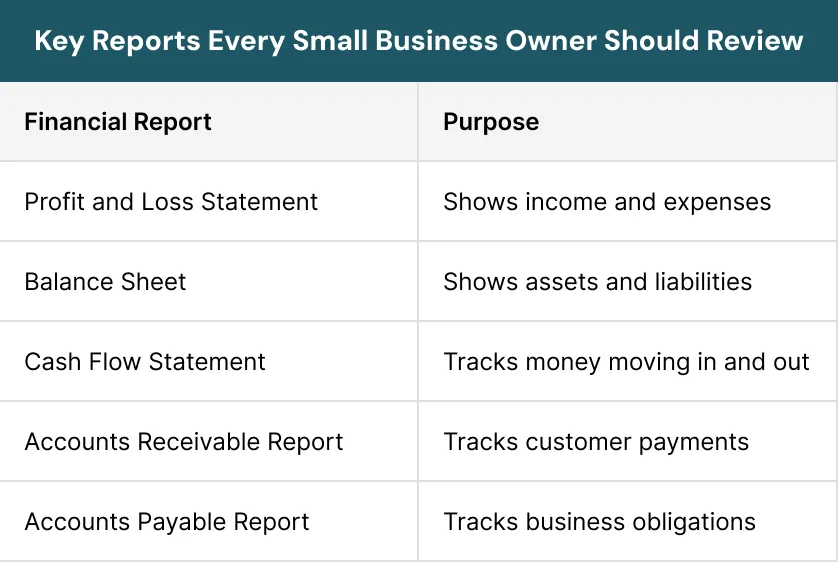
    Key Reports Every Small Business Owner Should Review

    “Financial reports tell the story behind your numbers.”

    – Business Finance Consultant 

    Sign #4: Cash Flow Problems

    Cash flow is the movement of money into and out of a business. If cash flow is managed poorly then even profitable businesses can face difficulties. This is another major sign that a small business needs a bookkeeper.

    Many owners focus heavily on the sales figures. However, healthy sales do not always guarantee available cash. This is why many businesses that need bookkeepers seek help with cash flow management.

    Common Signs of Cash Flow Issues

    Problems of cash flow often appear gradually. Small warning signs can quickly develop into serious financial pressure.

    Some common symptoms include:

    • Paying suppliers late
    • Struggling to meet payroll
    • Using personal funds for business costs
    • Frequent overdrafts
    • Delayed customer payments

    Difference Between Profit and Cash Flow

    Many business owners confuse profit with cash flow. Profit represents the earnings after expenses. Cash flow refers to the actual money available in the business.

    For example, a company may record a profitable sale today but not receive payment for several weeks.

    During that period, cash may still be tight. This causes a cash flow issue. If a payment is received and a company deduct all of their expenses then the remaining cash is counted as a profit.
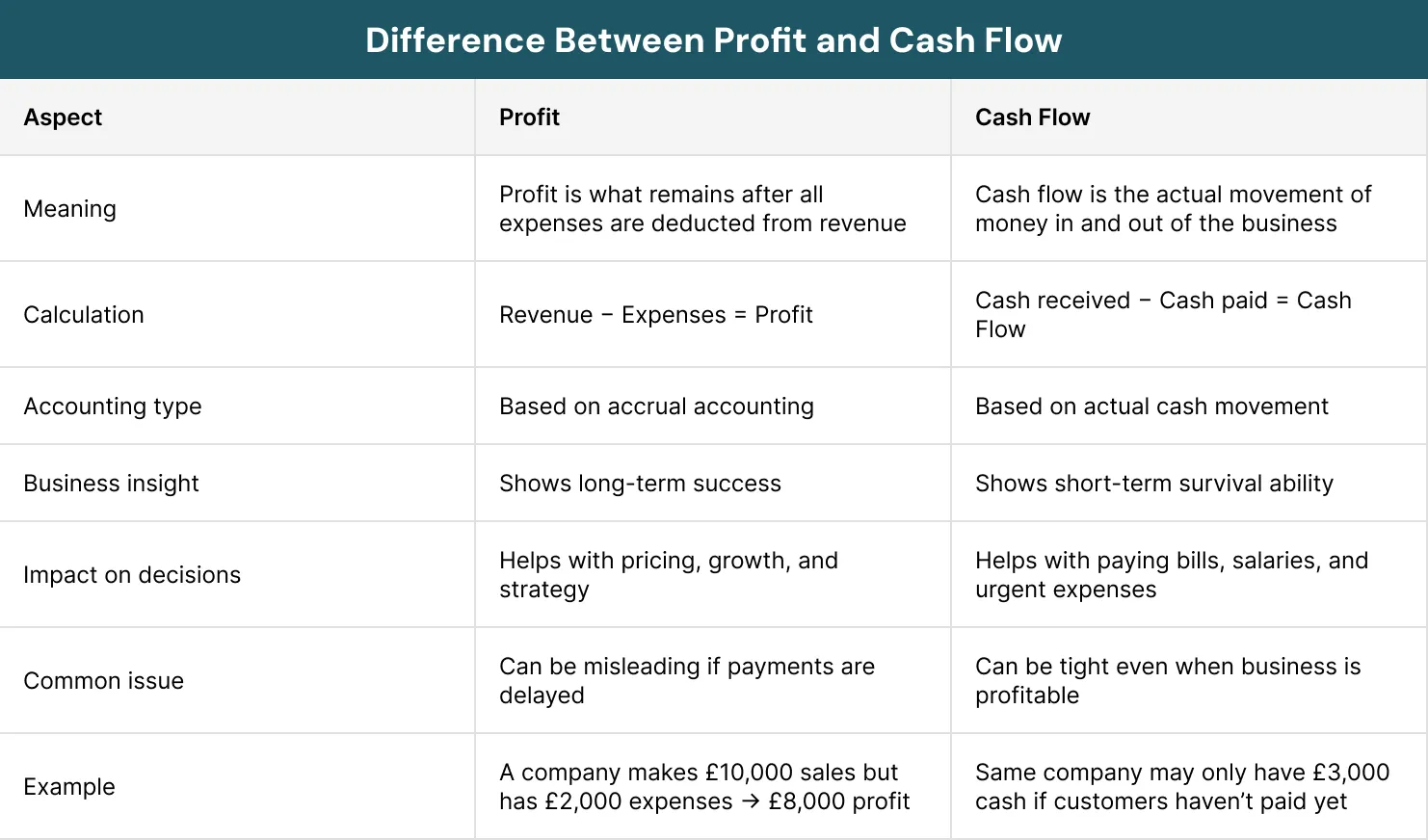
    Difference Between Profit and Cash Flow

    How Bookkeepers Help Improve Cash Flow Management?

    Bookkeepers help to monitor the incoming and outgoing payments. They track invoices, expenses and account balances. This provide a clearer picture of the financial health of a business.

    They also identify the patterns that affect the cash flow. This helps you to plan ahead and avoid unexpected shortages. Many businesses that need bookkeepers rely on these insights to improve their stability.

    Pro Tip:
    Review your cash flow weekly, not just monthly. Small issues are easier to fix when spotted early.
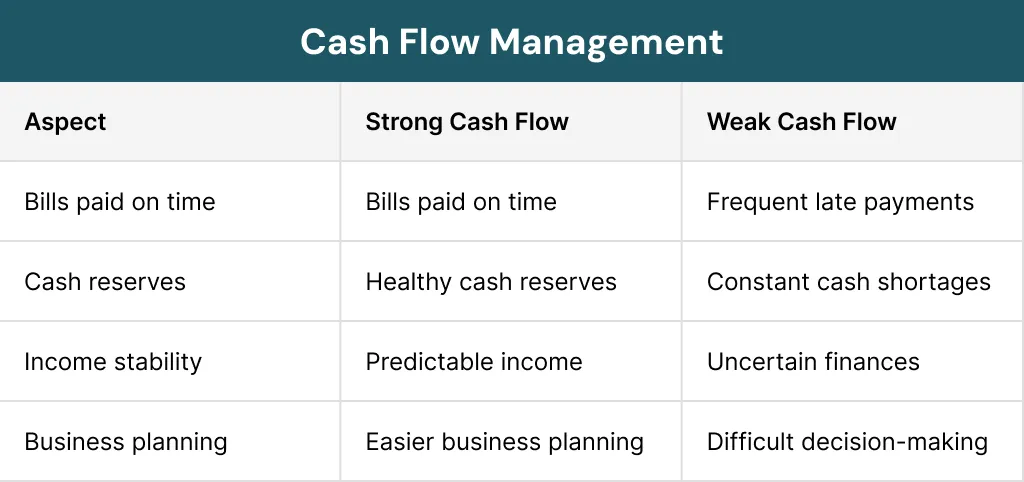
    Cash Flow Management

    Sign #5: Tax Season Causes Stress Every Year

    Tax season should not feel like a crisis every year. If you spend weeks searching for receipts, checking figures and correcting errors, it may be a sign that your bookkeeping system needs improvement.

    Often, a small business needs a bookkeeper when tax preparation becomes overwhelming.

    Many business owners leave the financial records until the last minute. This creates pressure and increases the chance of mistakes.

    Several businesses that need bookkeepers seek help because they are tired of the yearly tax scramble.

    Tax Filing Mistakes

    Tax filing mistakes can happen when your records are incomplete or outdated. Even small errors may lead to penalties, delays or additional reviews.

    Common mistakes include:

    • Missing income records
    • Incorrect expense claims
    • Lost receipts
    • Duplicate transactions
    • Missed tax deadlines

    How a Bookkeeper Helps You to Stay Tax-Ready Year-Round?

    A bookkeeper keeps your financial records organised throughout the year. This means fewer surprises when tax deadlines arrive.

    They ensure that transactions are recorded correctly and supporting documents are available when needed. This helps you to reduce stress and improves confidence during the preparation of tax.

    A small business needs a bookkeeper when staying ready for tax becomes a challenge.

    Pro Tip:
    Do not wait until tax season to organise your records. Keeping everything updated monthly saves time and stress.

    Additional Signs It’s Time to Hire a Bookkeeper

    Not every bookkeeping problem appears in the form of tax issues or cash flow concerns. There are many smaller warning signs that suggest professional support may be beneficial.

    1. Fail to Manage the Payroll

    Payroll becomes more complex as businesses grow. Employees expect accurate and timely payments in every pay period.

    Managing wages, deductions and payroll records can take more time.

    A bookkeeper helps you to ensure that payroll is processed correctly. This helps to reduce errors and to maintain the trust of the employee.

    2. Challenges with Accounts Payable and Accounts Receivable

    Every business needs to manage both incoming and outgoing payments. When invoices are overlooked, cash flow can quickly suffer.

    Late customer payments may affect the available funds. Invoices of an unpaid supplier can damage your business. A small business needs a bookkeeper when payment tracking becomes difficult to manage.

    3. Preparing for Loan or Investor Funding

    Lenders and investors want to see accurate financial records of your business. They need proof that your business is financially stable and also well managed.

    Poor books can create concerns during the approval of a loan. Businesses that need bookkeepers hire one before applying for a business loan.

    Read more: Best AI Tools for Accountants and Bookkeepers in 2026

    What Happens When Bookkeeping Is Neglected?

    When bookkeeping is neglected, small mistakes often become bigger financial issues when they are not identified quickly. This can affect the cash flow, taxes and planning of a business.

    Many owners only realise the importance of bookkeeping when they face unexpected challenges. By that point, fixing errors can require more time and money.

    Hidden Mistakes of DIY Bookkeeping

    Managing DIY bookkeeping can lead to costly errors. Transactions may be entered incorrectly, accounts may not balance and important documents may be misplaced.

    The cost of mistakes is not always obvious. Incorrect records can lead to missed tax deductions and penalties.

    When a small business needs a bookkeeper, the true value often comes from saving time as well as improving accuracy.
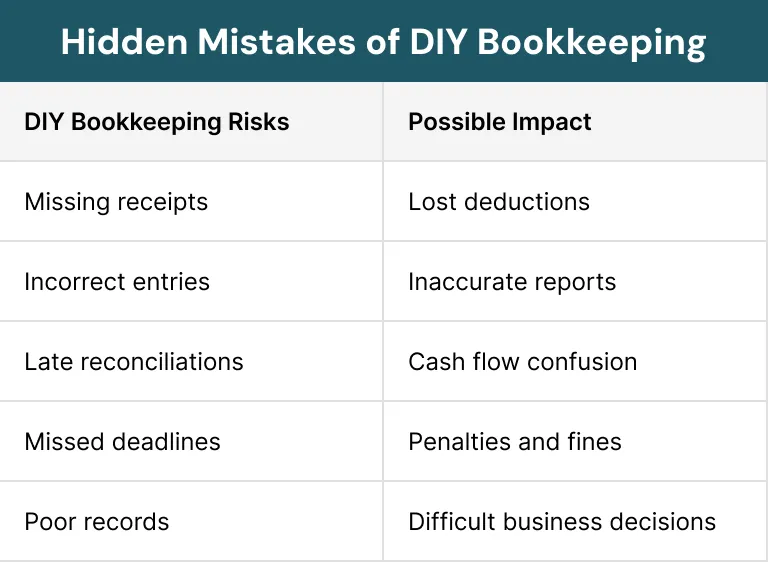
    Hidden Mistakes of DIY Bookkeeping

    Real-World Example: How a Bookkeeper Helped a Small Business Grow

    Many business owners do not realise the value of bookkeeping until they see the results firsthand. The following example shows how bookkeeping improves financial control, saves time and supports growth.

    The Challenge

    A small retail business had been operating successfully for several years. Sales were growing, but the owner struggled to keep up with the increasing number of financial records.

    Receipts were stored in different places, invoices were often delayed and monthly reports were rarely completed on time. Cash flow also became difficult to manage.

    The owner spent evenings and weekends trying to catch up on bookkeeping tasks.

    Although sales looked strong, there was not enough money available when bills were due.

    The Solution

    The business hired a bookkeeper to organise the financial records in a better way. He reviewed the past records and created a consistent reporting system.

    He provided monthly reports that helped the owner to understand the performance of the business in a more clear way. This allowed better planning for the future growth.

    The Results

    Within a few months, the business experienced good improvements. Financial records were organised, invoices were processed faster and overdue payments were decreased.

    The owner gained a clearer understanding of cash flow.

    It shows that a small business needs a bookkeeper not only to solve the existing problems but also to prepare for future growth.
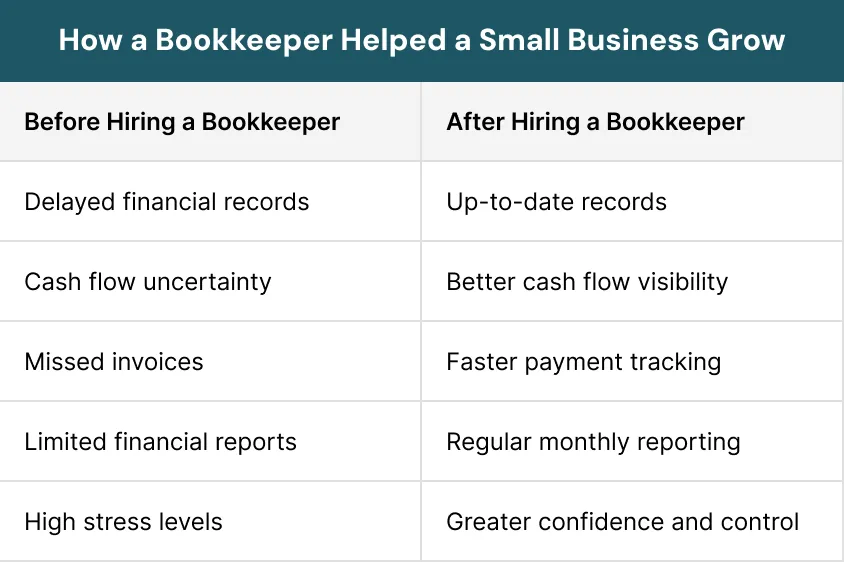
    How a Bookkeeper Helped a Small Business Grow

    Conclusion

    Every business reaches a point where managing finances alone becomes difficult. As business grows, bookkeeping becomes more complex. Knowing the warning signs early can prevent costly mistakes.

    If you are spending too much time on admin work or struggling with cash flow, it may be time to seek the help of a bookkeeper. These challenges often indicate that a small business needs a bookkeeper to maintain the accurate records.

    Many businesses that need bookkeepers wait until problems become serious.

    However, hiring a bookkeeper is not just about fixing the issues. It is also about creating a stronger foundation for future growth of a business.

    Good bookkeeping helps you to make the right decisions, manage cash flow effectively, stay compliant and focus on what you do best.

    At Sterling Cooper, we understand that your time is valuable. Our professional bookkeeping services keep your records organised, accurate and ready all year round.

    Spending too much time on bookkeeping?

    et us handle your finances while you focus on growing your business. Contact us today for expert bookkeeping support.
    +443300102526
    Book an Appointment

    FAQs


    Do I need a bookkeeper for my small business?


    You may need a bookkeeper if managing your finances is taking too much time, causing errors or making it difficult to track your business performance and cash flow.


    Bookkeeping should ideally be updated weekly or at least monthly. Regular updates help keep financial records accurate, improve cash flow visibility and make tax preparation much easier.


    Yes, bookkeeping and accounting are different but closely related. Bookkeeping focuses on recording and organising financial transactions, while accounting involves analysing financial data, preparing reports, and providing strategic financial advice for business decisions.


    Popular bookkeeping software options for small businesses include QuickBooks, Xero, Sage, FreshBooks and Zoho Books. The best choice depends on your business size, budget, industry and specific financial management needs.


    Your business may be ready to hire a bookkeeper if you are spending too much time on financial tasks, struggling to keep records updated, experiencing cash flow issues, making bookkeeping mistakes or feeling stressed during tax season.

    Share This Article!

    Recent Posts

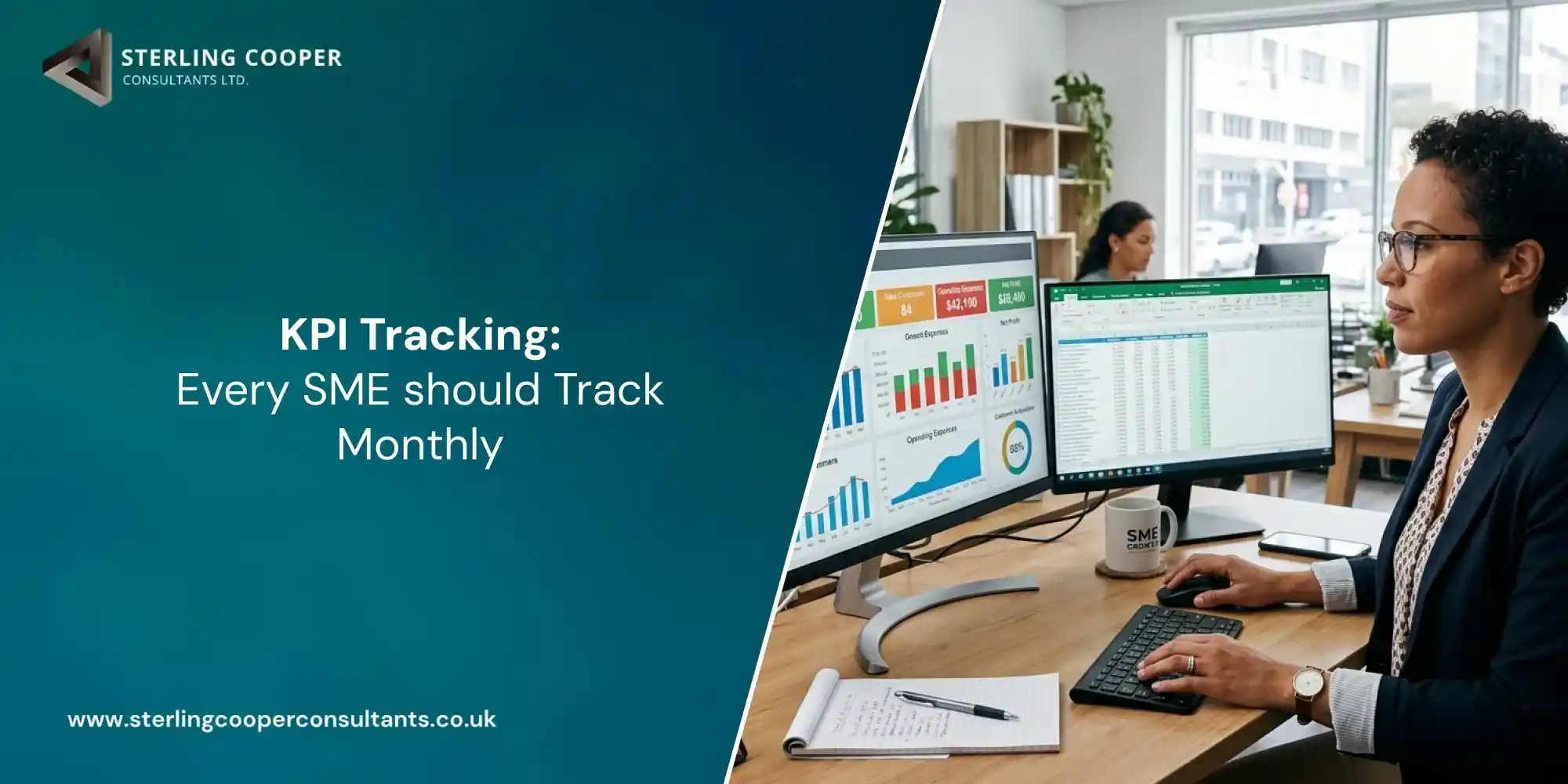
  • KPI Tracking: Every SME should Track Monthly

    KPI Tracking: Every SME should Track Monthly

    kpi tracking

    Posted by:

    Admin

    Date:

    July 14, 2026

    Category:

    blogs

    Error: Contact form not found.

    KPI Tracking: Every SME should Track Monthly

    Running a small or medium-sized business is not easy. Every day brings new tasks, new costs and new decisions.

    This is why business owners need clear information about how their company is performing.

    Many SMEs focus only on sales and bank balances. While these numbers matter, but they do not show the full picture. Proper KPI tracking helps you to understand what is really happening inside your business.

    Research shows that almost 50% of UK SMEs experience difficulties in cash flow. Rising costs and late customer payments are among the most common reasons. 

    When you review the key figures every month then you can spot the issues early. You can also find new opportunities for growth. Good KPI tracking gives you confidence during the decision making process.

    Key Takeaways

    • KPI tracking helps SME owners understand the true financial health of their business beyond just sales and bank balances.
    • Regular KPI tracking allows businesses to identify problems early and take action before small issues become major challenges.
    • Cash flow is one of the most important financial metrics because even profitable businesses can struggle if cash is not available when needed.
    • Gross profit margin and net profit margin help measure profitability and show whether pricing and cost management strategies are working effectively.
    • Revenue growth and sales growth rates provide valuable insight into business performance and future growth opportunities.
    • Debtor days help businesses monitor how quickly customers pay invoices, improving cash flow management and reducing financial pressure.
    • Liquidity metrics such as the current ratio and quick ratio show whether a business can meet its short-term financial obligations.
    • Working capital management is essential for maintaining smooth daily operations and supporting business growth.
    • Customer-focused KPIs such as Customer Acquisition Cost (CAC), Customer Lifetime Value (CLV), churn rate and conversion rates help businesses improve marketing efficiency and customer retention.
    • A simple monthly KPI dashboard can help business owners track performance, monitor trends and make informed decisions quickly.
    • Businesses should focus on a small number of meaningful KPIs rather than tracking too many metrics at once.
    • KPI tracking is most effective when business owners review results regularly and take action based on the insights gained.
    • Consistent KPI tracking supports stronger financial control, better decision-making, improved profitability and sustainable long-term business growth.

    What Are Financial KPIs?

    Financial KPIs are numbers that measure the performance of a business. They show how your company is doing financially over a specific period.

    Examples include cash flows, profit margins, revenue growth and debtor days. Each figure helps to provide useful information about a different area of the business.

    They act like a health check for your company. Effective KPI tracking allows you to understand the strengths and weaknesses of a business.

    “What gets measured gets managed.”

    – Peter Drucker, Management Consultant 

    Why Does Monthly KPI Tracking Matters for SMEs?

    Monthly reviews help you to stay in control. Instead of waiting for year-end reports to arrive, you can identify the issues as soon as they appear.

    Many businesses face problems like cash flow, rising costs or falling profits. Regular KPI tracking helps you to notice these issues before they become serious.

    Top KPIs You Should Track Monthly

    Here are some important KPIs that you should track on a monthly basis. These KPI’s help you grow your business.

    1. Cash Flow: The Most Important KPI for SME Survival

    Cash flow is often described as the lifeblood of a business. A business may show strong sales but still face financial difficulties. This is why cash flow deserves close attention.

    Many experts consider the cash flow as the most important area of KPI tracking for SMEs.

    “Revenue is vanity, profit is sanity, but cash is king.”

    – Alan Miltz, Business Turnaround Specialist

    What Does Cash Flow Measures?

    Cash flow measures the money entering and leaving the business. It shows whether cash reserves are increasing or decreasing.

    Incoming cash may come from customers or loans. Outgoing cash includes wages, rent, suppliers and other expenses.

    Strong KPI tracking helps you to understand your monthly cash position.

    Tips to Improve Monthly Cash Flow

    You can improve the cash flow by issuing the invoices quickly. Also following up on overdue payments is equally important.

    Reducing the unnecessary spending can also help to protect the available cash.

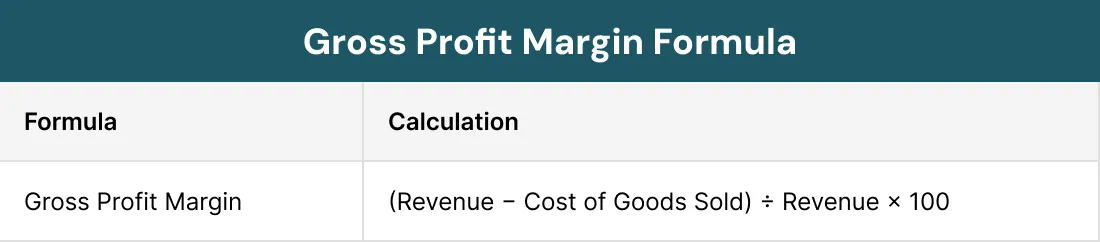
    2. Gross Profit Margin

    Gross profit margin shows how much money remains after the direct costs are removed from the revenue. It highlights how efficiently products or services are delivered.

    This KPI provides valuable insight into pricing and cost management.

    For many SMEs, gross margin is a core part of monthly KPI tracking.

    What Does Gross Profit Margin Reveals?

    Gross profit margin helps to reveal how much profit is generated from the sales before overhead expenses are considered.

    A strong margin usually indicates good pricing and the cost control. A falling margin may suggest those problems that need attention on time.

    Every useful KPI for business should help you to understand the trends of profitability.

    Gross Profit Margin Formula

    How to Increase Gross Profit Margin?

    You can review the pricing strategies and negotiate the suppliers’ terms in a better way. Small improvements often help you to produce significant gains.

    Reducing waste and improving efficiency can also increase the margins.

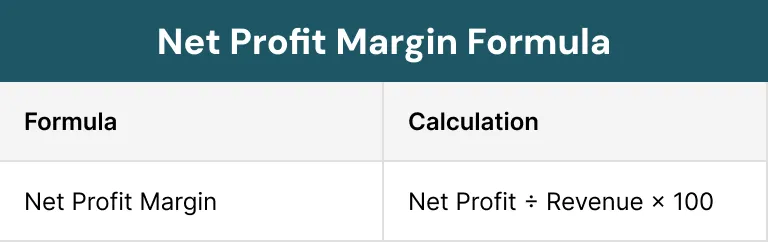
    3. Net Profit Margin

    Net profit margin shows how much profit remains after all expenses have been deducted. It reflects the true profitability of your business.

    Unlike gross margin, net margin includes rent, wages, utilities, marketing and finance costs. It provides a complete view of the performance.

    Many SMEs consider this one as the most valuable area of KPI tracking.

    What Does Profit Margin Measure?

    Net profit margin measures the percentage of the revenue that becomes a profit. It reflects the overall efficiency of a business.

    A healthy margin suggests that costs are under control. A weak margin may indicate that spending is too high.

    This is one of the most important examples of a KPI for business.

    Net Profit Margin Formula

    How to Improve Net Profit Margin?

    Reviewing the expenses on a regular basis can uncover the savings opportunities.

    Improving efficiency and increasing revenue can also give a boost to the net profit margins. Small changes often create good benefits.

    Effective KPI tracking helps to ensure that efforts remain focused on the measurable outcomes.

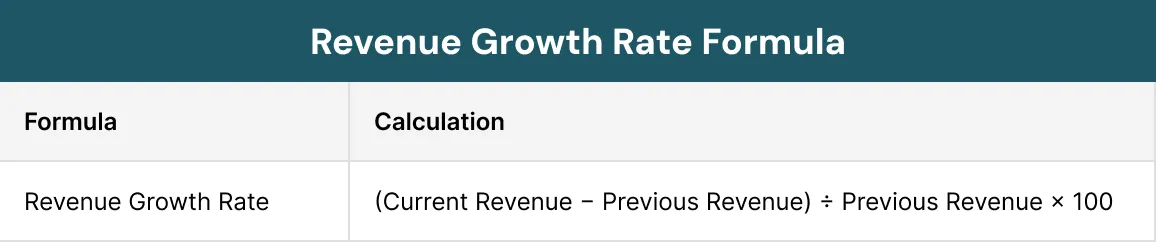
    4. Revenue Growth Rate

    Revenue growth shows whether your business is moving forward or not. It measures how much income has increased over a specific period.

    Growing revenue usually means your products or services are attracting the customers

    For many SMEs, revenue growth is a key part of monthly KPI tracking because it highlights the momentum of a business.

    Why Does Revenue Growth Matters?

    Revenue growth helps you to understand whether demand is increasing.

    Steady growth can help to create more opportunities for investment, recruitment and expansion. It also improves confidence when you are planning for future goals.

    A strong KPI for business should always help to measure the growth and long-term success.

    Revenue Growth Rate Formula

    How to Drive Sustainable Revenue Growth?

    Businesses can increase their growth by improving customer service. Introducing new products may also help in the process of growth.

    In this process marketing campaigns should focus on attracting the quality customers. Retaining the existing customers is equally important.

    “Growth is never by mere chance; it is the result of forces working together.”

    – James Cash Penney 

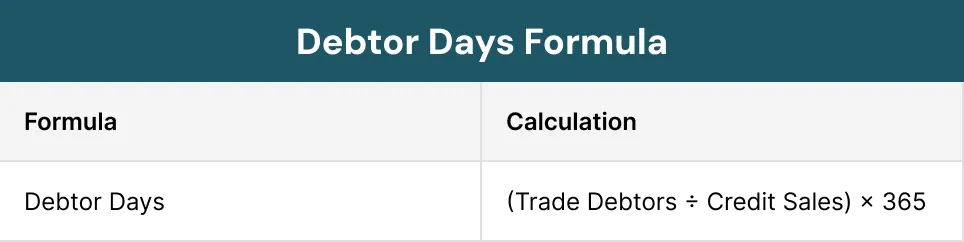
    5. Debtor Days: Improving Cash Collection

    Debtor days mean how long customers take to pay invoices. This KPI directly affects the cash flow of the business.

    Many SMEs include debtor days within their monthly KPI tracking process.

    The quicker customers pay, the faster money becomes available for daily business operations.

    Did you know?
    Slow payments can create financial pressure.

    What Do Debtor Days Measure?

    Debtor days show the average number of days required to collect payment. This helps you to evaluate your credit control process.

    Every useful KPI for business should support stronger cash management.

    Debtor Days Formula

    Ways to Reduce Debtor Days

    You can send invoices immediately after completing the work. Automated reminders can also help to improve the speed of payment.

    Good KPI tracking ensures the collection efforts remain effective.

    6. Current Ratio

    The current ratio shows how many current assets are available to cover the short-term debts. Assets may include cash and stock.

    A ratio above one usually means the business has enough resources to meet the obligations.

    Strong KPI tracking helps you to monitor financial stability over time.

    7. Quick Ratio

    The quick ratio measures the immediate financial strength. It shows whether the business can meet the obligations without selling their stock.

    This KPI is useful because inventory may take time to convert into cash. A strong kpi for business should provide a realistic picture of short-term financial health.

    Quick Ratio Formula

    8. Debt-to-Equity Ratio

    The debt-to-equity ratio shows how much debt your business uses compared to its own funds. It helps you to understand the financial risk.

    Most businesses use some level of borrowing to grow. However, too much debt can create pressure when your sales become down or costs rise.

    This metric is an important part of financial KPI tracking. It highlights the balance between borrowing and ownership.

    What Debt-to-Equity Ratio Measures

    This ratio helps you to measure the relationship between the business debt and shareholder equity.

    A lower ratio often suggests lower financial risk. A higher ratio may indicate the heavy dependence on borrowing.

    Debt-to-Equity Ratio Formula

    Ways to Reduce Financial Risk

    Paying down the existing debt is one solution. You should have to avoid the unnecessary borrowing. In this process, careful planning helps you to reduce the reliance on loans.

    A strong KPI for business should support better financial decisions.

    9. Operating Expenses

    It includes the costs of running the business. This KPI measures how much revenue is being used by these expenses.

    Monitoring this ratio helps you to control the overhead costs. Many companies include this metric in monthly KPI tracking reports.

    Why Do Operating Costs Need Monitoring?

    Operating costs can rise slowly over time. Without monitoring, these increases may go unnoticed and become a risk for your business.

    This is why you have to monitor the costs of operating on a monthly basis.

    Operating Expense Ratio Formula

    Cost Control Strategies for SMEs 

    Review the expenses on a regular basis. Look for services that no longer provide value to the business.

    Negotiate the better supplier contracts where possible. Small savings can create long-term benefits.

    Strong KPI tracking helps you to measure the success of cost reduction efforts.

    Pro Tip:
    Do not focus only on increasing revenue. Managing costs is equally important for profitability.

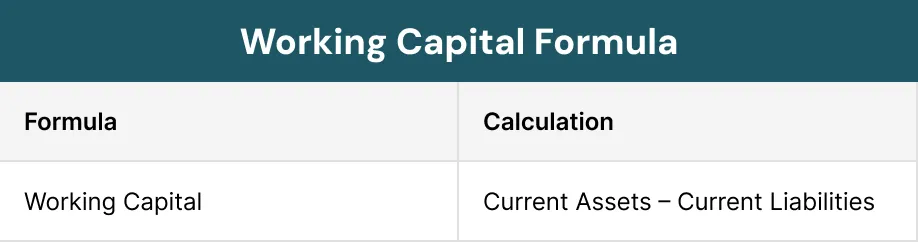
    10. Working Capital

    Working capital is the funds that are available for daily operations. It plays a major role in the stability of the business.

    Healthy working capital allows you to pay bills, purchase stock and also manage the unexpected costs.

    This metric is an important part of financial KPI tracking for SMEs.

    What Working Capital Measures

    It helps to measure short-term financial health. It compares the current assets of the business with the current liabilities.

    The result shows whether resources are available to support the operations or not. Positive working capital is generally a good sign for your business.

    This KPI for business should help to protect the operational stability.

    Working Capital Formula

    How to Strengthen Working Capital?

    Review the stock levels and negotiate the terms of a supplier where possible. These actions often help to give strength to the working capital.

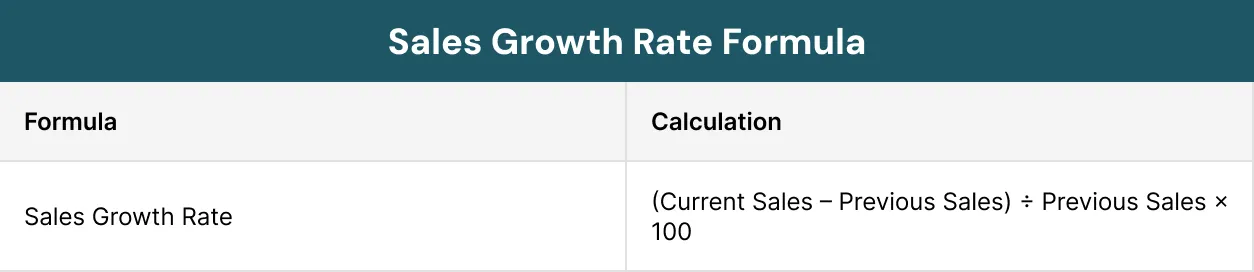
    11. Sales Growth Rate

    Sales growth rate helps to measure how quickly sales are increasing over time. It helps you to understand the demand of the market.

    Growth in sales often gives signals that customers are interested in your product or service. 

    This metric is a valuable part of monthly KPI tracking for SMEs.

    Sales Growth Rate Formula

    Strategies to Increase Sales

    Improving customer service can help to make repeat purchases. Expanding the product ranges may also attract new buyers.

    You should focus on understanding the needs of the customer. In this process effective marketing plays a key role.

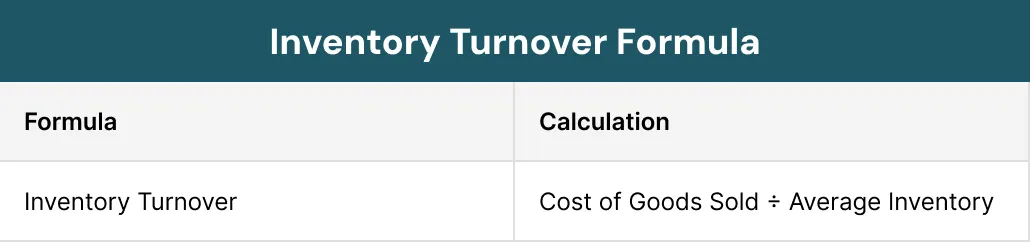
    12. Inventory Turnover

    Inventory turnover shows how quickly stock is sold and replaced. It helps you to understand the efficiency of the inventory.

    Holding too much stock can tie up cash. While holding too little may result in missed sales.

    This KPI is a valuable part of financial KPI tracking for product-based businesses.

    Inventory Turnover Formula

    Ways to Improve Inventory Turnover

    Review the data of sales on a regular basis. This helps you to identify those products that sell quickly and those that do not.

    You should avoid over-ordering stock. A practical KPI for business should support smarter inventory decisions.

    “Inventory is money sitting around in another form.”

    – Rhonda Abrams 

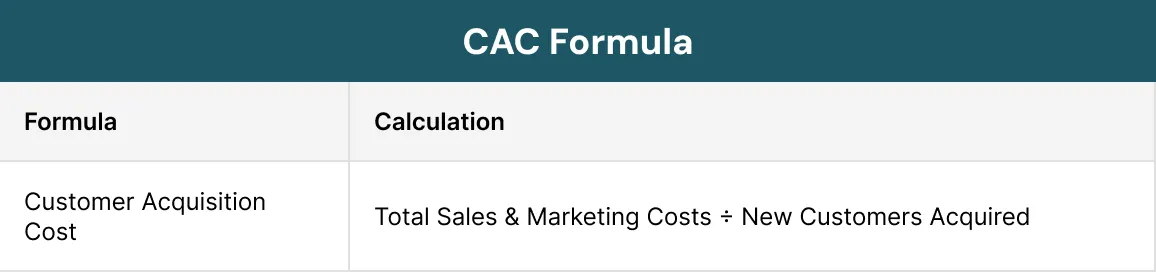
    13. Customer Acquisition Cost (CAC)

    Customer Acquisition Cost means how much it costs to gain a new customer. It includes the expenses of marketing and sales.

    This KPI helps you to understand whether growth efforts are cost-effective or not.

    What CAC Measures?

    CAC helps to measure the average amount spent to attract one new customer. This includes ads and sales activity.

    Understanding this figure helps you to evaluate the marketing efficiency. It also helps to support the budget planning.

    CAC Formula

    How to Reduce CAC

    You must have to focus on marketing efforts on high-performing channels. Avoid spending extra money on campaigns that produce weak results.

    Better targeting often helps you lower acquisition costs.

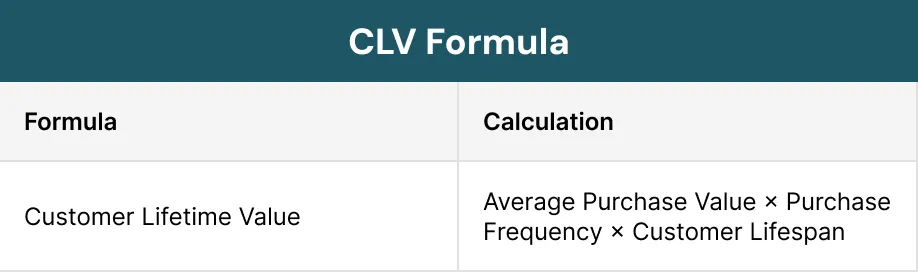
    14. Customer Lifetime Value (CLV)

    Customer Lifetime Value estimates the total revenue generated by a customer. It goes beyond a single purchase.

    This KPI helps you to understand the long-term value of retaining customers. It highlights the importance of loyalty.

    CLV Formula

    Strategies to Increase CLV

    Good customer service helps you to encourage repeat business.

    You should  focus on building long-term relationships with customers. Satisfied customers often spend more money on your product or service over time.

    “The goal as a company is to have customer service that is not just the best, but legendary.”

    – Sam Walton 

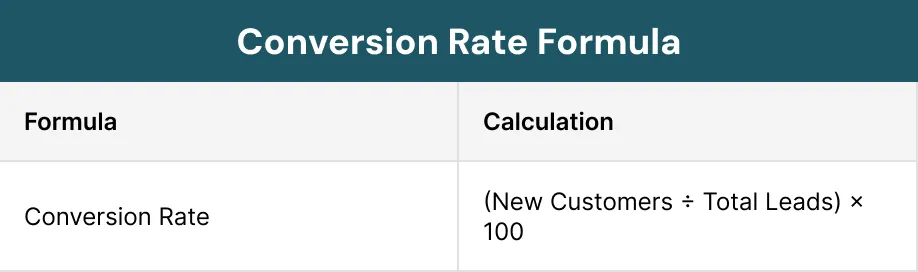
    15. Lead-to-Customer Conversion Rate

    The lead-to-customer conversion rate means how many leads become paying customers. It helps you to assess the effectiveness of the sales.

    Generating leads is important, but conversions generate revenue. This KPI helps you to understand the performance of the sales.

    Many SMEs include conversion rates within their monthly KPI tracking reports.

    Conversion Rate Formula

    How to Improve Lead Conversion

    Respond quickly to the customer enquiries. They often choose businesses that respond to them in an effective way.

    To get more leads, you have to Improve the sales training and refine the marketing messages. Better targeting usually helps to increase the conversions.

    Pro Tip:
    Track conversion rates for the different marketing channels to identify your best sources of leads.

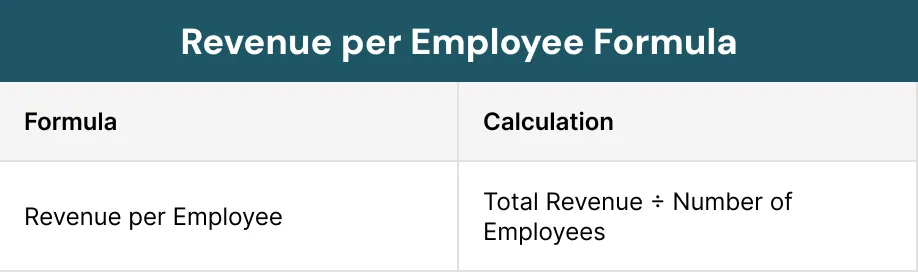
    16. Revenue per Employee

    Revenue per employee shows how much income each employee helps to generate. It is a useful measure of the productivity of a business.

    This KPI helps you to understand whether resources are being used effectively.

    Many SMEs include this metric as a part of their monthly performance reviews.

    Revenue per Employee Formula

    Case Study

    A small UK retail business was growing in sales, but it often struggled to pay suppliers on time. The owner started monthly KPI tracking by reviewing cash flow, debtor days and gross profit margin every month.

    After checking the numbers, the owner found that many customers were paying invoices late. The business introduced payment reminders and reviewed its pricing.

    Within three months, cash flow improved, payments arrived faster and profits became more stable.

    This simple monthly KPI tracking routine helped the business to make better financial decisions and plan for future growth.

    Conclusion

    Financial KPIs provide a clear picture of the performance of a business. They help you to make informed decisions.

    The most important KPIs often include cash flows, profit margins, revenue growth and liquidity ratios.

    These indicators provide a balanced view of business performance. Together they support better decision-making.

    Monitoring the key metrics on a regular basis supports profitability, stability and growth. Businesses that track the performance consistently are better prepared to handle the challenges of the future.

    At Sterling Cooper, our financial experts streamline your monthly KPI tracking so you can stay updated and informed about where your business stands.

    Not sure which metrics to track first?

    Contact us and tell us a bit about your business. We will point you in the right direction.
    +443300102526
    Book an Appointment

    FAQs


    What is KPI tracking?


    KPI tracking is the continuous process of measuring and monitoring key business metrics to evaluate performance, spot financial trends, and make data-driven decisions for growth.


    Financial KPIs are measurable figures that show how a business is performing financially. They help monitor areas such as profit, cash flow, growth and efficiency.


    Cash flow is often considered the most important KPI because it affects the ability to pay bills, wages and suppliers.


    Most SMEs should review financial KPIs every month. Regular reviews help identify trends and support better decisions.

    A profitable business can still face difficulties if cash is unavailable when needed. Cash flow supports daily operations.

    Share This Article!

    Recent Posts

  • Budget vs Actual Reporting Explained

    Budget vs Actual Reporting Explained

    budget vs actual reporting

    Posted by:

    Admin

    Date:

    July 13, 2026
    Category:

    blogs

    Error: Contact form not found.

    Budget vs Actual Reporting Explained

    A budget can look perfect on paper but real business does not always follow the plan. Sales can drop, costs can rise and cash can become difficult to manage before anyone notices the problem. This is where budget vs actual reporting becomes important.

    Tracking a budget properly is still not common enough. Only 51% of UK adults say they have a budget in place for 2026, up from 46% in 2025. This means nearly half of people in the UK are making financial decisions with no plan to compare against at all. For businesses, the consequences of that gap are far more serious.

    Budget vs actual reporting compares planned financial figures with real financial results. It helps businesses see whether they are performing as expected. It also highlights areas where action may be needed before small problems become bigger ones.

    Many businesses rely on budget vs actual reporting because it provides a clear picture of financial performance. Instead of guessing what is happening, managers can use real data to make better decisions. Later in this guide, a sample budget vs actual report will show how businesses compare planned figures with actual results.

    Key Takeaways

    • Budget vs actual reporting helps businesses compare planned financial figures with actual results, making it easier to spot problems and opportunities early
    • The most common budget variances involve revenue, expenses, profit and cash flow, so these areas should be reviewed regularly during budget vs actual reporting
    • Learning how to check the report budget vs actual can help businesses identify trends, investigate large variances and make more informed financial decisions
    • A budget vs actual report template provides a simple structure for comparing budgeted and actual figures, helping maintain consistency across reporting periods
    • Many small businesses start with a budget vs actual report excel template because it is affordable, easy to use and suitable for basic financial analysis
    • A sample budget vs actual report or budget vs actual report example can help businesses understand how variances affect performance and what actions may be needed
    • Regular budget vs actual reporting improves forecasting, strengthens cash flow management and supports better long-term business planning

    What Is Budget vs Actual Reporting?

    Budget vs actual reporting compares budgeted financial figures with actual financial results. The budget shows expected numbers. These numbers are made before the month, quarter or year starts.

    Actual numbers show what really happened. For example, a business may plan to make £50,000 in sales in one month but at the end of the month, it only makes £45,000. The difference is £5,000. This difference is called a variance.

    A budget vs actual report shows these differences clearly. It helps business owners and managers understand where the business is on track and where it is not. Without this report, money problems can stay hidden for too long.

    1. Why Does Budget vs Actual Reporting Matter?

    Budget vs actual reporting matters because it shows the real financial position of a business. A budget is based on expectations. Actual results show reality. When both are compared, the business can see if it is moving in the right direction.

    For example, if costs are higher than planned for three months, this is a warning sign. The business can check why costs are rising and take action.

    Budget vs actual reporting also supports better control. Each department can see if it is spending within budget. It also helps with planning. Future budgets become more accurate when past results are checked properly.

    2. What Is Included in a Budget vs Actual Report?

    A budget vs actual report usually includes income, costs, profit and cash flow. Revenue is the money earned from sales or services. Expenses are the money spent to run the business. This may include rent, wages, bills, marketing and supplies.

    Profit is what remains after expenses are deducted from revenue. Cash flow shows how money moves in and out of the business.

    Some reports also show separate figures for different departments. For example, sales, marketing and operations may each have their own budget.

    A budget vs actual report template normally puts budget and actual figures side by side. This makes the differences easy to see.

    What Are Variances in Budget vs Actual Reporting?

    A variance is the difference between the budgeted amount and the actual amount. If the result is better than planned, it is called a favourable variance. For example, if sales were budgeted at £100,000 but actual sales reached £120,000, this is a favourable variance.

    If the result is worse than planned, it is called an unfavourable variance. For example, if expenses were planned at £10,000 but actual expenses became £15,000, this is an unfavourable variance.

    Watch Small Gaps:
    Small variances can become big problems if they happen every month.

    However, not every unfavourable variance is bad. Sometimes a business spends more because it is investing in growth. For example, it may spend more on marketing to bring in new customers. The reason behind the variance matters more than the number alone.

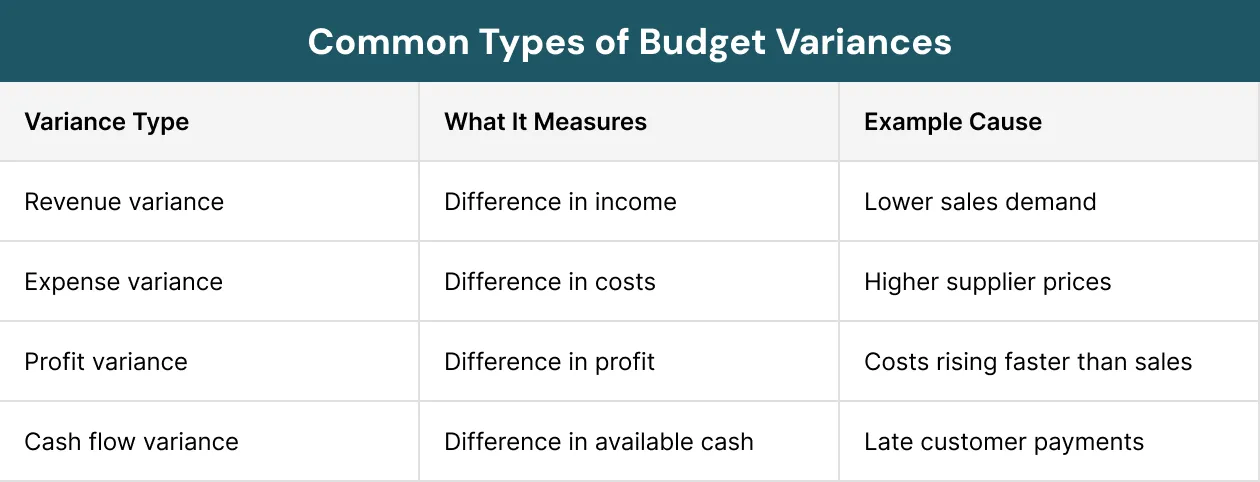
    1. What Are the Common Types of Budget Variances?

    The common types of budget variances are revenue variance, expense variance, profit variance and cash flow variance.

    Revenue variance happens when actual income is different from planned income. This may happen because of lower sales, price changes or customer demand.

    Expense variance happens when actual costs are different from planned costs. This may happen because of inflation, supplier price rises or extra business costs.

    Profit variance happens when profit is different from the budget. A business may earn more sales but still make less profit if costs rise too much.

    Cash flow variance happens when expected cash is different from real cash. This is important because a business needs enough cash to pay bills, staff and suppliers.

    Common Types of Budget Variances

    2. What Causes Budget Variances?

    Budget variances can happen for many reasons. One common reason is poor planning. If the budget was not realistic, the actual results will often be different.

    Market changes can also affect results. Prices may rise. Customers may spend less. Competitors may offer better deals.

    Seasonal changes can also matter. Some businesses sell more in summer. Others sell more near Christmas.

    Operational problems can also increase costs. Delays, waste, staff shortages and poor systems can all affect the budget.

    Unexpected events can also create variances. This may include supply chain disruptions, new rules, economic changes or sudden business costs.

    What gets measured gets managed.

    – Peter Drucker, Management consultant & Educator

    3. How Do You Calculate Budget Variance?

    Budget variance is calculated by subtracting the budgeted amount from the actual amount. The basic formula is:

    Budget Variance = Actual Amount − Budget Amount

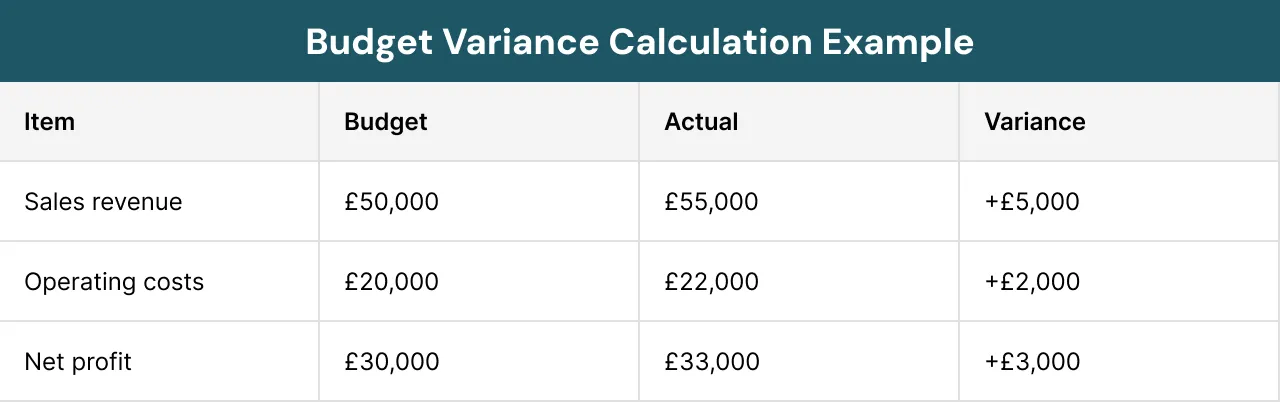
    For example, if monthly sales were budgeted at £50,000 and actual sales reached £55,000, the variance is £5,000. This means sales were £5,000 higher than planned.

    Businesses also use percentage variance. The formula is:

    Variance Percentage = (Actual Amount − Budget Amount) ÷ Budget Amount × 100

    Using the same example:

    • £55,000 minus £50,000 equals £5,000
    • £5,000 divided by £50,000 equals 0.10
    • 0.10 multiplied by 100 equals 10%

    This means sales were 10% above budget. Percentage variance is useful because it shows how large the difference is compared to the original budget.

    Budget Variance Calculation Example

    How Do You Create a Budget vs Actual Report?

    To create a budget vs actual report, start with a clear budget, collect actual financial data, compare both sets of numbers, calculate variances and review the results.

    Next, the business collects actual financial data. This information may come from accounting software, bank records or bookkeeping reports.

    Then the budget numbers are compared with the actual numbers. The differences are calculated.

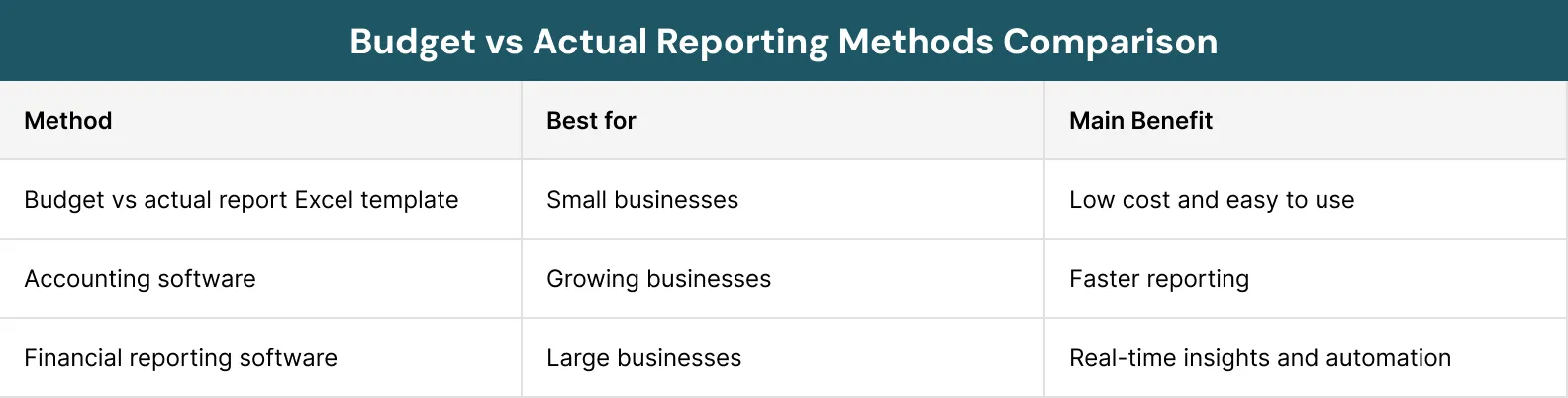
    Many small businesses use a budget vs actual report excel template because it is simple and familiar. Larger businesses may use finance software. This can save time and reduce mistakes.

    Reports Need Action:
    A report only helps when the business uses it to make better decisions.

    After the report is made, the numbers should be reviewed. Large variances should be checked first. The final step is action. A report is only useful when it helps the business make better decisions.

    1. What Does a Sample Budget vs Actual Report Look Like?

    A sample budget vs actual report is useful because it shows the budgeted amount, the actual amount and the variance between them. This makes it easy to see where the business is above or below budget.

    For example, a business budgets for a monthly revenue of £50,000 and only manages to earn £47,000. This means revenue is £3,000 below target.

    The firm also budgets £20,000 for the month’s expenditure and ends up spending £22,000. This shows that the cost of operating the business exceeds £2,000. So the business earns less and spends more. This will affect its profit adversely.

    A report like this makes the problem clear. The firm will realise that the situation needs some attention. It could be due to poor customer demand, low pricing, high cost from suppliers or a poor marketing strategy.

    Most businesses begin with a sample budget vs actual report before preparing their reports. Others prefer starting with a budget versus actual report template or even budget versus actual report excel template.

    2. How Do You Read and Analyse a Budget vs Actual Report?

    To read and analyse a budget vs actual report, check the size of each variance, look for repeated patterns and then investigate the reason behind the numbers.

    Then look for patterns. If revenue is below budget for one month, it may be a short-term issue. If revenue is below budget for three months, there may be a bigger problem.

    Also look deeper into the numbers. For example, sales may look low across the business. However, when checked closely, only one product may be causing the issue. This deeper review is called drill-down analysis. It helps the business find the real cause.

    What Are the Benefits of Budget vs Actual Reporting?

    The main benefit of budget vs actual reporting is a clear view of business performance. It shows where money is coming from and where money is going. It also helps business owners make faster decisions.

    If costs are rising, action can be taken early. If sales are growing, the business can plan for more stock, staff or marketing. This reporting also improves accountability. Teams can see if they are meeting their targets.

    It also helps reduce waste. When spending is checked often, unnecessary costs are easier to find. Cash flow also becomes easier to manage. A business may make sales but still struggle if cash is not available at the right time. Regular reporting helps avoid that problem.

    This challenge is more common than many people realise. Research from the Chartered Institute of Credit Management has shown that in the year 2025, 82% of UK-based small to medium-sized enterprises faced cash flow problems. This shows why budget vs actual reporting is important.

    Cash Flow Warning
    Profit does not always mean cash is available. Check cash flow often.

    What Are the Challenges of Budget vs Actual Reporting?

    Budget vs actual reporting is useful but it can have problems. The first problem is poor data. If the financial records are wrong, the report will also be wrong.

    Another problem is late reporting. If a report is prepared too late, the business may miss the chance to fix the issue.

    Spreadsheets can also become hard to manage. A budget vs actual report excel template is useful for small businesses. However, when the business grows, errors can happen more easily.

    Formulas may break. Files may have different versions. Teams may use different numbers.

    Another challenge is reading only the numbers. The report shows what happened but it does not always explain why it happened.

    This is why discussion and analysis are important.

    How Do Real-Time Reporting and Modern Tools Improve Financial Reporting?

    Real-time reporting and modern tools improve financial reporting by giving faster updates, clearer dashboards and deeper detail behind the numbers.

    Old reporting often happens once a month but modern reporting can happen in real time. Real-time budget vs actual reporting means managers can see updated numbers quickly.

    This helps them act faster. For example, if expenses rise in the middle of the month, the business can respond before the month ends.

    Dashboards are also helpful because they show charts, graphs and key numbers in one place. This makes financial information easier to understand.

    Modern tools can also help users drill down into the numbers. For example, if expenses increased by 15%, the report can show which cost caused the increase.

    This saves time and improves decisions.

    Which Budget vs Actual Report Template Should You Use?

    The choice of template depends on the size of the company and how detailed the reporting needs to be. Small companies usually use a budget vs actual report excel template, while larger companies may need financial software.

    1. Purpose of a Budget vs Actual Report Template

    Many companies usually prefer to start with the budget vs actual report template as it is pretty easy. It includes budget, actual result and variance.

    2. Suitability of an Excel Template

    This is usually enough for a small company. The program can calculate differences and provide simple charts. If the company is larger, it may need some financial software. The right choice depends on the company size and reporting needs.

    Budget vs Actual Reporting Methods Comparison

    How Does Budget vs Actual Reporting Improve Forecasting?

    Budget vs actual reporting improves forecasting by showing the gap between expected results and real results. This helps a business update future plans with more accurate numbers.

    When a business looks at real results, it can update its future plans. For example, a business may expect £1 million in yearly sales but after six months, sales may be much lower than expected.

    If the forecast is not updated, the business may keep planning around wrong numbers. If the forecast is updated, decisions become more realistic.

    Some businesses use rolling forecasts. This means the forecast is updated during the year, not only once a year. This makes planning more flexible.

    What Are the Best Practices for Budget vs Actual Reporting?

    The best practices for budget vs actual reporting are regular review, focusing on major variances, recording reasons, comparing trends and involving the right people.

    Most businesses review these reports every month. Some businesses check them weekly if money moves fast.

    Focus on the biggest variances first. Not every small difference needs action.

    Write down the reason for each major variance. This helps when making future budgets.

    Compare results over time because one month does not always tell the full story.

    Also involve the right people. Finance teams can explain the numbers, while department managers can explain what happened in daily work.

    Budget vs actual reporting works better when both sides talk to each other.

    What Common Budget vs Actual Reporting Mistakes Should You Avoid?

    A common budget vs actual reporting mistake is ignoring small issues. A small difference may not look serious at first but if it happens every month, it can become a bigger problem.

    Another mistake is ignoring good results. In case something turned out even better than predicted, it makes sense to analyse what brought about such a positive outcome.

    Some businesses treat budgets as fixed documents. This is wrong since changes happen continuously in any business process. Rather, budgets should guide people in decision-making processes.

    The biggest mistake is not taking action. Even a detailed report becomes useless if the business does not use the information to make better decisions.

    Budget vs Actual Reporting Example

    A small retail business in Manchester created a budget at the start of the year. The company expected monthly sales of £60,000 and planned operating expenses of £25,000.

    After three months, the budget vs actual report showed that sales averaged only £52,000 per month. At the same time, operating expenses had increased to £29,000 because of higher supplier prices and rising energy costs.

    Without regular budget vs actual reporting, the business may not have noticed the problem until much later. The reports clearly showed that revenue was below target while expenses were increasing.

    Management reviewed the numbers and identified two main issues. First, a popular product line was generating fewer sales than expected. Second, supplier costs had increased by nearly 12% compared to the original budget.

    The business responded by adjusting product pricing, negotiating with suppliers and increasing promotions for its best-selling products. Within four months, monthly sales increased to £58,000 and operating costs began to stabilise.

    This example shows how budget vs actual reporting can help businesses identify financial problems early, take corrective action and improve future performance before small issues become larger ones.

    Conclusion

    A budget shows the plan, while actual results show what really happened. Budget vs actual reporting brings both together and helps a business see if it is on track.

    The process does not need to be complex. A business can start with clear budget figures, collect real results, compare the numbers, check the variances, find the reasons and then take action.

    A simple budget vs actual report template can be enough for many small businesses. A budget vs actual report excel template can also help organise the numbers.

    Larger businesses may need software for faster and clearer reporting. Still, the goal is always the same: understand the numbers, learn from the results and make better decisions.

    When used regularly, budget vs actual reporting becomes more than a finance task. It becomes a simple way to protect profit, improve planning and help the business grow in a healthier way.

    Sterling Cooper understands that good financial decisions start with clear and accurate reporting. This helps businesses stay in control of their finances throughout the year.

    Contact us today and let experienced professionals turn your financial data into practical insights that support smarter planning, stronger cash flow and long-term business growth.

    Not sure whether your business is performing as planned? Sterling Cooper helps businesses compare budgets with actual results, uncover financial risks and make smarter decisions.

    We have helped businesses improve reporting accuracy and financial visibility. Get in touch today to see how accurate reporting can help your business stay on track, reduce financial surprises and plan for future growth.
    +443300102526
    Book an Appointment

    FAQs


    What is budget vs actual reporting?


    Budget vs actual reporting compares planned financial figures with actual business results. It helps businesses understand performance, identify variances and make informed financial decisions.


    Variances can be caused by changing market conditions, inaccurate budgeting assumptions, inflation, operational issues, seasonal demand changes or unexpected business events.


    A favourable variance occurs when actual results are better than budgeted expectations. Examples include higher sales revenue or lower operating costs.


    Yes. A budget vs actual report excel template is often suitable for small businesses because it is affordable, flexible and easy to customise.


    A budget vs actual report template provides a structured format for comparing budgeted figures with actual results. It improves consistency and makes reporting easier to understand.


    To check the report budget vs actual, compare the budgeted amount with the actual amount, calculate the variance and look for big or repeated differences. Then check why the difference happened. This helps a business see if income, costs, profit or cash flow are on track.


    A budget vs actual report example shows planned figures beside real results. For example, if a business budgets £50,000 in revenue but earns £47,000, the variance is £3,000 below target. This helps the business see where performance is different from the original plan.

    Share This Article!

    Recent Posts

  • Why Cash Flow Problems Cause Profitable Businesses to Fail

    Why Cash Flow Problems Cause Profitable Businesses to Fail

    causes of cash flow problems

    Posted by:

    Admin

    Date:

    July 9, 2026
    Category:

    blogs

    Error: Contact form not found.

    Why Cash Flow Problems Cause Profitable Businesses to Fail

    Have you ever thought about the reason why a successful business can still run out of money?

    Many owners believe that high sales and profits ensure that every aspect is under control. However, that statement is not always true. Timing errors and late payments are usually the primary causes of cash flow problems. Also, the cause may be how money actually circulates in a business.

    This is the point at which most business cash flow problems arise, even in firms that look successful on paper.

    The transfer of money into and out of a company is referred to as cash flow. That shows whether it can meet its daily costs when they are payable.

    Most business owners think that profit is the ultimate metric of success. If a brand is profitable, it must be secure. If sales are increasing, the business must be powerful. However, in real life, this isn’t always the situation.

    The latest UK report indicates that more than 1.57 million UK firms are carrying late invoices in 2026. This highlights how overdue payments remain one of the major causes of cash flow problems at present.

    Even profitable firms suffer when cash is stuck, which shows that cash flow matters more than profit in daily life.

    In this blog, you will learn why profitable firms fail and what leads to cash pressure. You will also explore how to detect early warning signs before they become serious.

    Key Takeaways

    • Causes of cash flow problems often include late payments, high costs, poor planning, and too much money tied up in stock, so track cash closely
    • Business cash flow problems can affect profitable firms, so check cash in and out, not just sales and profit reports
    • Solutions to cash flow problems include faster invoice payments, lower costs, better forecasts, and keeping a cash reserve for slow periods
    • Businesses with cash flow problems should act early by finding the cause and making clear changes before cash shortages grow
    • How to solve cash flow problems starts with good cash tracking, strong payment terms, and a plan for future income and costs
    • What cash flow problems mean is a gap where money leaving the business is higher than money coming in, making it hard to pay bills

    What Are Cash Flow Problems?

    Cash flow is the exchange of money that flows into and out of a business. Money is received from customers and is paid out through wages, rent, stock buying, taxes, utility bills and loan payments. When greater amounts of cash leave instead of coming in, the business faces financial strain. This pressure can result in business cash flow problems.

    One of the primary causes of cash flow problems is timing issues. A customer may purchase something now but make payments after a few months. In the meantime, bills must still be paid right now.

    Such a gap is one of the initial causes of cash flow problems that many owners fail to recognise.

    A lot of businesses with cash flow problems continue to look good on paper. Sales are strong and profit seems stable but cash is limited in the bank.

    A company can be profitable on paper and still fail if it does not have enough cash to pay its bills.

    Warren Buffett, Investor and Chairman & CEO of Berkshire Hathaway

    Cash Flow vs Profit: Why They Are Not the Same

    Profit is a core term in accounting that indicates financial gain. However, cash flow refers to the transfer of cash in and out of a company during a period of time. Therefore, they are not the same indicators of financial success.

    A business may show a profit based on a £100,000 sale. However, if the payment is received after two months, cash is not available. This lag is among some of the primary causes of cash flow problems in growing firms.

    Many business owners fail to understand this difference, which turns into one of the hidden causes of cash flow problems. Even profitable firms can face stress when cash is not received on time.

    This is the reason that some firms with cash flow problems have trouble even when sales are up.

    Quick Insight!
    A profitable business can still fail if its cash is tied up in unpaid invoices, stock, or future expenses. Profit shows performance, but cash flow shows whether the business can pay its bills today.

    Why Profitable Businesses Still Experience Cash Flow Problems?

    Profitable firms usually get bigger fast. They recruit staff, purchase stock and increase spending but cash goes out sooner than it comes in.

    This growing gap is one of the most significant causes of cash flow problems. An additional serious issue is that invoices are submitted late while costs continue on a daily basis.

    Rapid growth, improper planning and weak oversight are common causes of cash flow problems in growing firms. Many owners only discover the issue when severe stress builds up.

    This is how business cash flow problems show up even in growing firms.

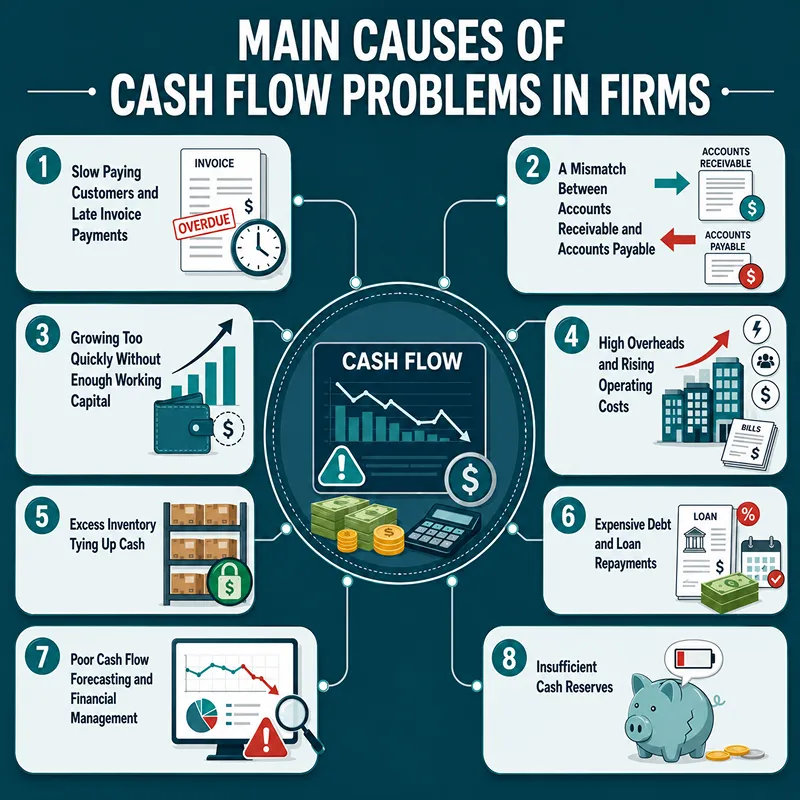
    Main Causes of Cash Flow Problems in Firms

    There are plenty of reasons leading to cash shortfalls. Pending payments are one of the most harmful causes of cash flow problems. When clients fail to make payments, cash becomes tight right away. This is a routine concern for businesses with cash flow problems.

    The second major problem is poor financial timing, which has remained one of the most ignored causes of cash flow problems.

    The following are the primary usual causes of cash flow problems in daily business activities:

    1. Slow Paying Customers and Late Invoice Payments

    One of the biggest causes of cash flow problems is paying late. Certain clients require 30, 60 or even 120 days to make payments.

    This leads to financial strain because expenses still have to be paid. Many firms with cash flow problems have difficulty due to a number of huge delayed invoices.

    This is considered one of the most common causes of cash flow problems in small and mid-sized firms.

    2. A Mismatch Between Accounts Receivable and Accounts Payable

    When vendors must be paid out prior to when customers pay, a gap is created. This imbalance is one of the primary causes of cash flow problems.

    This matter often results in direct business cash flow problems, especially in trading and retail based firms.

    3. Growing Too Quickly Without Enough Working Capital

    Fast progress is always desired but it comes with several challenges. Growth needs sufficient cash for staff, stock and routine activities. Most businesses with cash flow problems fail during expansion because cash is locked in pending invoices.This can turn into one of the overlooked causes of cash flow problems.

    4. High Overheads and Rising Operating Costs

    Certain fixed expenses, such as rent, salaries and utilities, can go up rapidly. If earnings do not align, pressure increases.

    This is a further significant group of causes of cash flow problems that gradually lowers existing cash.

    5. Excess Inventory Tying Up Cash

    The amount of stock stored in warehouses is cash that cannot be utilised. This is among some of the realistic causes of cash flow problems.

    Many firms with cash flow problems possess too much stock and cannot transform it into cash swiftly.

    6. Expensive Debt and Loan Repayments

    Loans help progress but repayments lower existing cash. A lot of debt is one of the lasting causes of cash flow problems.

    This usually gives rise to business cash flow problems when repayment deadlines are strict.

    7. Poor Cash Flow Forecasting and Financial Management

    Without proper preparation, cash shortfalls show up unexpectedly. Poor prediction is one of the easily avoidable causes of cash flow problems.

    Most firms with weak planning become businesses with cash flow problems even when sales are healthy.
    Learn more: Business growth guide

    8. Insufficient Cash Reserves

    There is no financial security when a company has limited or no cash buffer to depend on during crises. Thus, even minor sudden costs or lags in income can interfere with daily routines and cause unexpected financial stress.

    This lack of financial resources is one of the major causes of cash flow problems. This is because the firm has nothing to rely on when cash inflows unexpectedly slow down.

    Main Causes of Cash Flow Problems in Firms

    Warning Signs Your Business Has Cash Flow Problems

    Even successful companies can deal with business cash flow problems without discovering it very soon. The warning signs often show up in routine tasks before the scenario becomes severe. Here’s what you need to look for:

    1. Struggling to Pay Suppliers on Time

    One of the early warning signs is a delay in vendor payments. When a company does not have a sufficient amount of existing cash, bills start building up. Owners may begin asking for more flexible payment terms or be at risk of not meeting payment deadlines altogether.

    This can negatively impact supplier trust and may result in tougher payment conditions in the future. It also indicates that inflowing cash is not in line with outgoing costs.

    2. Difficulty Meeting Payroll and Operating Expenses

    Pressure on salaries is another warning sign. Cash flow is already under stress if a company is unable to pay salaries and rent on time. The firm is also under pressure if utility bills or basic working costs are not paid on the due date.

    Even if sales are looking good, timing gaps between income and expenses can lead to shortfalls. This is one of the most serious causes of cash flow problems in developing firms.

    3. Increasing Reliance on Credit or Short-Term Borrowing

    When companies start relying on credit cards, overdrafts or temporary loans to stay functioning, it shows cash assets are low. While taking out loans can help with growth, frequent use for daily costs is a warning sign. It indicates that the company is not producing enough internal cash to support itself.

    4. Declining Cash Balances Despite Strong Sales

    A difficult but common sign is increasing sales with less cash in the bank. This usually happens when payments received from customers are postponed while costs are paid promptly. As a result, profit may appear good on paper but actual cash keeps falling. This gap is one of the most obvious signs of secret cash flow problems.

    Best Practices to Prevent Future Cash Flow Problems

    Resolving cash flow problems is essential but avoiding them is even more beneficial. Effective financial routines lower the chance of issues coming back.

    The following are crucial practices that help keep a steady cash flow:

    1. Monitor Working Capital Closely

    Operating capital indicates how easily a company can pay for temporary costs.

    Monitor receivables, payables and stock routinely. If money is trapped in pending invoices or extra stock, cash flow will reduce fast.

    Continuous tracking will allow you to deal with problems before they develop.

    2. Maintain a Cash Buffer

    A cash buffer helps protect your business during sudden declines in revenue or postponed payments.

    Try to keep sufficient reserves to pay for at least a few weeks of necessary costs. This creates financial breathing room during pressure periods.

    3. Track Key Cash Flow Metrics

    Major metrics involve cash flow rate, payment cycle time and cost ratio.

    Being aware of these numbers helps detect initial warning signs. If costs go up quicker than income, corrective action can be carried out right away.

    4. Create a Realistic Growth Plan

    Fast progress without planning usually results in cash shortfalls.

    A practical growth plan involves balancing sales expansion with existing cash supplies. It guarantees that recruiting, purchasing and growth happen in line with financial resources.

    Managed expansion keeps cash flow steady and reduces financial risk.

    What Happens When Cash Flow Problems Are Ignored?

    Neglecting cash flow issues does not make them go away. Rather, it usually causes them to become more severe over time. Minor delays in payments or planned gaps slowly turn into major financial stress.

    In the end, the company begins losing control over its daily stability. What starts as a small concern can affect routine tasks, connections and even survival.

    When you are unable to find the causes of cash flow problems and they are left untreated, this creates many issues. They start impacting every aspect of the company in different ways:

    1. Disrupted Daily Operations

    When cash is limited, routine tasks become hard to carry out. Business owners begin to postpone vital payments such as rent, salaries and payments to suppliers. This results in internal pressure and slows down normal operations.

    Teams fail to maintain attention to detail because the priority changes from progress to survival. Stock orders are put on hold, services get interrupted and clients may suffer from poor service. Over time, this impacts the entire performance of the company and lowers efficiency in all of its divisions.

    2. Missed Growth Opportunities

    Cash flow problems directly hinder business progress. Even if consumer demand is high, there is no available cash to invest in growth, advertising or new items.

    Firms may postpone recruiting trained staff or upgrading technology. They may also ignore massive buying deals or new business opportunities.

    Competitors with greater cash flow proceed ahead while weaker firms remain stuck in place. This gap becomes more difficult to recoup over time.
    Related: Business growth strategies

    3. Damaged Supplier and Lender Relationships

    Suppliers and lenders depend on on-time payments. As soon as dues are put on hold multiple times, trust begins to break down. Suppliers may lower the credit terms, ask for initial payments or stop working with the company overall.

    Banks and financial partners also regard delayed payments as a risk warning. This can result in lower credit limits or trouble in obtaining future funds. Once trust is broken, restoring these ties takes time and regular financial control.

    4. Increased Risk of Insolvency

    If cash flow problems persist without a proper fix, the company can hit a critical stage. Even profitable firms can become troubled if they cannot pay temporary payments on time.

    Costs keep building up while accessible cash keeps reducing. In the end, the company may fall behind on payments or depend too much on loans to stay operational. As a result, a turnaround becomes tough and in serious cases, the company may shut down despite having solid sales on paper.

    How to Solve Cash Flow Problems?

    Cash flow problems often arise when money going out is more rapid than money coming in.

    The good news is that there are solutions to cash flow problems with better control, planning and financial control.

    Below are the practical steps firms use for the solutions to cash flow problems properly:

    Step 1. Improve Invoice Collection and Credit Control

    Delays in payments are one of the most common causes of cash flow problems. The quicker you gather money, the more stable your cash position becomes.

    Start by submitting invoices soon after the delivery of a product or service. Do not postpone billing because delays directly impact cash flow. Provide specific payment terms like 7, 14 or 30 days and promise that they are fully clarified. They should also be decided upon prior to when work takes place.

    Follow up regularly on late billings. Even a minor pause in collection can lead to stress in paying salaries, suppliers and other fixed expenses. Numerous firms also reduce the risk by allowing minor discounts for prompt payments.

    Step 2. Reduce Unnecessary Overheads

    Increased fixed fees can take away cash even when sales are steady. Assessing costs helps determine areas where money is being used up.

    Look closely at subscriptions, unutilised services, excess staff expenses and ineffective tools. Eliminate anything that does not directly support revenue or routine tasks. Minor monthly bills often build into large annual financial losses.

    The aim is not to reduce everything but to keep only what adds real value to the company.

    Step 3. Optimise Inventory Management

    Too much inventory holds cash, while too little stock can prevent sales. Proper stock is essential for a stable cash flow.

    Monitor which items move fast and which continue to be in storage. Avoid ordering too many slow-selling items. Utilise demand forecasting to arrange purchase orders based on real sales trends.

    This guarantees that cash is not locked up in idle inventory and stays available for daily tasks.

    Step 4. Build and Maintain Cash Reserves

    A cash reserve serves as a financial security net during weak sales periods or sudden costs.

    Set aside a minor amount of income regularly, even during profitable months. This results in stability during economic crises or payment lags.

    Firms with sufficient funds can survive tough times without depending on loans or urgent credit.

    Step 5. Forecast Cash Flow Regularly

    Cash flow prediction helps you identify upcoming money gaps before they arise.

    Create weekly or monthly estimates that show expected income and costs. This allows quick action, such as putting off unneeded bills or accelerating payments.

    Ongoing prediction transforms cash handling from reactive to proactive.

    Step 6. Review and Restructure Business Debt

    Debt is considered a serious issue when repayment stress is greater than cash inflow.

    Look over all existing loans and repayment plans. If payments are too high, look into restructuring options such as increasing repayment terms or changing to reduced interest plans.

    This lowers monthly stress and increases temporary cash flow.

    Step 7. Use Business Financing Strategically

    Outside funding can help deal with timing gaps but it must be utilised cautiously.

    Temporary financing like overdrafts or billing funding can support sudden needs. However, it should not be utilised to pay for constant losses.

    The most important thing is to utilise financing as a bridge, not a lasting solution.

    How to Solve Cash Flow Problems

    Best Practice!
    Review your cash flow regularly, track unpaid invoices, control costs, and keep a cash reserve. Small checks each month can prevent bigger cash problems later.

    Case Study: Profitable on Paper, Failure in Reality

    Patisserie Valerie was a renowned UK café company that had more than 200 stores. The business was earning £100 million in annual sales. It seemed to be strong and even indicated £28 million in cash.

    However, in October 2018, that all broke down. Auditors detected scams in the accounts and the real story came out soon enough:

    The reason for all this was secret money transfers, false invoices and fake bank statements.

    The result was severe because 70 stores were closed and 900+ jobs were gone. Thus, the company broke down within weeks.

    The lesson

    This case study teaches us that profit and cash are not the same. A company can seem to be doing well and still be covering up a crisis. Therefore, always confirm actual cash balances rather than depending only on recorded figures.

    Conclusion

    Cash flow problems do not arise suddenly. They grow from delayed payments, rapid progress, higher expenses and incorrect planning. If you leave it unchecked, they can ruin even a profitable business.

    The good news is that such issues are easily avoided. More accurate prediction, faster collections and stricter budget control go a long way. Proper practices now will protect your business in the future.

    Sterling Cooper understands these issues and helps firms spot causes of cash flow problems early. We build a thorough plan to deal with these issues with confidence.

    Contact us today and take the initial step to build a stronger and more trustworthy business.

    Struggling with cash flow gaps despite making a profit?

    Our experts help businesses improve cash flow, manage risks, and find practical solutions.
    We have helped with cash flow challenges and supported businesses in building stronger financial control. Reach out today.
    +443300102526
    Book an Appointment

    FAQs


    What are cash flow problems?


    Cash flow problems happen when a business does not have enough available cash to cover its regular expenses, even if it is making a profit. This usually occurs when money coming into the business is delayed while payments such as wages, supplier bills, rent, and taxes still need to be paid. Poor cash planning, late customer payments, high costs, and rapid growth are common reasons businesses face cash flow issues.


    To solve cash flow problems, businesses should first identify where money is being delayed or spent unnecessarily. Improving invoice collection, setting clear payment terms, reducing avoidable costs, managing inventory, forecasting future cash needs, and building a cash reserve can all help improve cash flow. Regular monitoring of income and expenses allows businesses to spot problems early and take action before they become serious.


    Several factors can affect cash flow, including customer payment delays, operating costs, inventory levels, loan repayments, sales changes, and business growth. A company may face cash flow pressure when expenses increase faster than income or when cash is tied up in unpaid invoices and stock. Regular cash flow tracking helps businesses manage these factors and avoid future problems.


    Startups, construction companies, manufacturing firms, wholesalers, and businesses with long payment terms are often more vulnerable to cash flow problems. These businesses usually have high upfront costs, delayed customer payments, or large amounts of money tied up in stock and projects before they receive income.


    Businesses with low overheads, quick customer payments, and recurring income models often have stronger cash flow. Examples include subscription-based businesses, digital services, consulting, and businesses that receive upfront payments. However, good cash flow depends more on effective money management than the type of business itself.

    Share This Article!

    Recent Posts

  • Tax-Free Benefits Directors Can Claim

    Tax-Free Benefits Directors Can Claim

    tax free benefits for directors

    Posted by:

    Admin

    Date:

    July 8, 2026

    Category:

    blogs

    Error: Contact form not found.

    Tax-Free Benefits Directors Can Claim

    Why do so many company directors in the UK miss out on tax-free small business perks while they can have it easily?

    Yes, it is possible but only if they comply with strict rules. Knowing about tax-free benefits for directors is very necessary if you own a limited company. These are specific rewards allowed as per HMRC rules. They allow directors to receive small benefits without paying income tax or national insurance. This is possible only if all conditions are followed precisely.

    One of the most significant laws is the £50 limit (tax-free allowance). This implies that a benefit is only tax-free if it is valued at £50 or less. If it goes more than £1, such as £51, then the entire payment becomes taxable. From this, you can guess how strict the rules really are.

    Tax-free perks offered to directors can be small gifts, travel (tax-free funds for business journeys) or specific permitted allowances. However, not everything is considered. Some factors that look minor may still be taxed if they do not adhere to the rules.

    It is also vital to know that rules can vary based on whether the benefit is for a director or an employee. This confusion causes many directors to overlook legal ways to lower their tax duties.

    Certain directors do not utilise these benefits at any point, simply because they do not understand what is allowed.

    In this blog, you will learn what directors tax-free benefits mean and how directors can legally use them. You will also explore how to reduce your tax safely while being fully secure and compliant with the rules.

    Key Takeaways

    • Tax-free benefits for directors can include pensions, mileage claims, trivial benefits, and annual staff events when HMRC rules are met
    • Tax-free benefits help reduce personal tax costs while allowing directors to take value from their company in a compliant way
    • Tax-free allowance rules vary by benefit type, so it is important to check limits, keep records, and follow HMRC guidance
    • Directors tax free benefits often come with extra conditions, such as the £300 annual cap on trivial benefits for close company directors
    • Tax-free benefits UK rules allow exemptions for workplace parking, one company mobile phone, working from home support, and certain medical checks
    • Tax-free benefits for employees can also apply to directors, although some allowances and limits may differ depending on company structure
    • What are tax-free benefits? They are approved perks or allowances that can be provided without creating Income Tax or National Insurance charges when all qualifying conditions are met

    What Are Tax-Free Benefits for Directors?

    Tax-free benefits for directors are relatively minor amenities a company provides to its directors. However, a key rule is that these perks must not be considered as part of your normal salary or wages. Also, the directors must follow HMRC rules so no additional tax is charged.

    These perks are usually offerings like small gifts, holiday-related benefits or simple company-provided items used for work. These payments are not given in the form of cash.

    In simple words, they are a way for business owners to receive a few extra benefits from their company. Yet, this is done without paying extra tax, as long as the laws are followed.

    However, this does not mean that everything is allowed.

    There are several clear rules:

    • The reward cannot be cash or something like cash
    • It cannot be given for high performance or achieving targets
    • It must be kept within set value limits when restrictions apply
    • It cannot be part of a salary exchange plan 

    If all these rules are adhered to, then the benefit can stay free of taxation. This is why it is very significant for directors to be aware of what tax-free perks really are. If they don’t, they might by mistake violate the rules and end up paying tax.

    Tax planning is not about avoiding tax; it’s about arranging your affairs so that you pay the right amount of tax under the law.

    Anita Monteith, Chartered Tax Adviser and former Technical Manager, The Chartered Institute of Taxation (CIOT)

    Tax-Free Benefits for Directors in the UK

    In the UK, there is no one specific tax-free cap for company directors. Instead, there are particular rules that apply to different types of scenarios.

    So, tax-free benefits for directors are not all in a single place. They are divided into categories like travel, small gifts and work costs.

    Here are some easy examples:

    • When you go somewhere for work, you can claim funds back using HMRC set costs
    • Minor presents are tax-free only if each one is estimated at £50 or less
    • Business activities are tax-free but only up to £150 per person 

    All these laws combined make the full system of tax-free allowance for directors. However, there is a very crucial point to remember.

    Tax-free benefits for directors only continue to be tax-free if every rule is adhered to. If even one rule is ignored, you may be required to pay tax on it.

    That is why directors usually cautiously combine salary and dividends. They also use HMRC-certified tax-free perks where appropriate. They follow all this to manage their money in a smart way.

    Tax-free Benefits for Directors vs Employees

    Tax-free benefits for directors and employees are certainly not identical. There is typically greater freedom for employees. They can usually receive small tax-free perks if they comply with HMRC rules. These advantages are fundamental and easier to give.

    Directors, particularly in small privately owned companies, have tougher rules. For example, employees can get multiple allowed benefits without strict limits. Directors may have annual restrictions on some perks.

    Directors must also maintain more accurate records and paperwork. So, directors are required to plan extra wisely when utilising tax-free perks.

    The rules are monitored strictly by HMRC to make sure everything is honest and correct.

    When directors comply with the rules properly, these benefits continue to be valid. They can also be very helpful and save you a few bucks.

    Tax-Free Benefits for Directors in the UK

    UK company directors may be eligible for specific business perks if they comply with HMRC rules. However, each benefit is subject to clear limits to guarantee fairness and compliance.

    Learn more: Dealings with HMRC tax investigations

    These perks are explained one by one below:

    1. Trivial Benefits

    Trivial benefits are small gifts provided by the company. Every gift is required to be of £50 or lower. If it exceeds more than £50, it is no longer tax-free.

    Directors in small firms can only receive £300 worth of value per year. These gifts are non-cash items provided by the company. They are just kind actions, not compensation for work.

    Did You Know?
    Directors of close companies can receive up to £300 per tax year in trivial benefits, provided each benefit costs £50 or less and meets HMRC’s qualifying conditions.

    2. Mileage Allowances

    If a director makes use of their own car for business trips, the company can afford to pay them back. The amount is fixed by the government for each mile.

    It is £0.45 per mile for the initial 10,000 miles. After that, it is £0.25 for every mile. However, every journey must be documented concisely.

    3. Annual Events

    Companies can pay for special occasions like Christmas parties or corporate team days. Each person can go for up to £150 per year. If the rules of the limit are followed, the event is free of tax. It is very helpful for people to relax and enjoy time with one another.

    4. Mobile Phone in Company Name

    If the phone agreement is in the company’s name, the business can pay the fee for it. Only one phone for each person is usually permitted. However, you have to use that phone for work.

    5. Working From Home Allowance

    If a director works from home, the company can help with additional expenses. This takes into account utility costs like electricity, heating and internet. This reward is helpful for paying the cost of working from home.

    6. Parking

    If parking is needed for your work, it can be tax-free. However, you have to link it to your business and not for personal use.

    7. Pensions

    A company can deposit funds into a director’s pension. This is one of the greatest lasting advantages. However, there is a per-year limit that must not be exceeded.

    8. Medical Benefits

    There are certain health checks that are free of tax. They are helpful in finding health problems ahead of time. However, private medical insurance is usually subject to tax.

    9. Electric Cars

    Electric business cars generally have reduced tax expenses. This is the reason that they are cheaper than petrol or diesel vehicles. They are a sensible selection for a variety of directors.

    10. Interest on Director’s Loan Account

    If a director contributes money to the company, the business may pay interest. Within specific bounds, some of this may be free of tax. HMRC reporting is necessary in some specialised situations.

    11. Tax-Free Dividends

    Directors can receive company earnings as dividends. Every year, a certain amount is free from tax. Anything higher than that amount is taxed depending on income rules. Dividends must be earned from actual company profits.

    Related: The complete guide to UK dividend tax for beginners

    12. Rewarding Long Service

    Long-term directors may be compensated by their employers. They can provide up to £50 for each year of service.

    It needs to be a gift, not cash or salary. Also, it is a standard way to express a thank you for their loyalty.

    Tax-Free Benefits for Directors in the UK

    How Trivial Benefits Compare to Other Unique Benefits?

    Some job-related perks are basic, while others are more complex. Thus, trivial benefits are the most basic ones that exist. These often consist of low-cost gifts or small non-cash benefits offered by the employer.

    If they comply with the rules, you do not impose a tax on them. You also do not need to submit reports to them.

    Other benefits are not the same; for example, advantages like a company car or private medical insurance are often taxed. This indicates that you may have to impose tax on them.

    This is the reason that trivial benefits are valued so much, particularly by directors. They are simple to use and give flexibility without lots of documents.

    However, there is still a rule to follow and if they are not managed effectively, tax charges can be applied. So they must be utilised carefully under UK tax rules.

    Tax Tips and Compliance Checklist

    Keeping track of tax-free benefits for directors, needs attention to detail and good records. The tax office requires clear proof for every benefit you claim.

    Let’s break this down into simple regulations you can easily comply with:

    Trivial Benefits Tips

    Some of the tips for trivial benefits are given below:

    • Keep each gift less than £50
    • Give them these benefits only once in a while, not all the time
    • Do not link them to work goals or deals
    • Always write down what you provided and when

    If you adhere to these rules, tax-free advantages can continue to be safe and simple.

    Details to avoid

    There are some factors that you must avoid:

    • Do not provide cash or something that functions like cash
    • Do not offer bonuses for performance or targets
    • Do not give regular monthly benefits that can be expected
    • Do not call payments as gifts if they are truly refunds

    If these rules are violated, the benefit can not continue being tax-free. It might then be considered taxable income.

    Tax Tips and Compliance Checklist

    What to Avoid!
    A tax-free benefit can become fully taxable if it exceeds HMRC limits, is linked to work performance, or is provided as cash or a cash-equivalent voucher. Always check the qualifying rules before claiming.

    Starting as a Limited Company Director

    For newly hired business owners, knowing about tax-free benefits for directors is vital for setting up a tax-efficient system.

    When carried out effectively, tax-free benefits for directors help lower unneeded tax while raising total financial quality. However, directors must always find a harmony between compliance and planning.

    Many firms integrate salary, dividends and tax-free benefits for directors to improve overall income.

    Case Study: Tax-free Benefits for a UK Company Director

    A small UK limited company director was looking to take minor benefits from the business without paying more tax. Instead of raising his salary, the director opted for trivial perks as per HMRC rules.

    Over the year, the company provided the director a wide range of small gifts. For example, a birthday present, a Christmas gift basket and a small voucher. Each item was carefully kept within the £50 limit per benefit, so it remained tax-free.

    The total value of all benefits was also kept in balance with the £300 yearly limit for directors of a limited company. This is the highest level permitted with no tax charges.

    All rules were complying with, so the director did not pay income tax or national insurance on these benefits. Also, these were not necessary to be considered as salary by the company.

    However, the primary rule was firm: if any single gift went above £50, the entire amount would have become taxable.

    Final Thoughts

    Knowing about tax-free benefits for directors is mandatory for any person who manages a UK limited company. These benefits enable directors to obtain legal, tax-efficient advantages while staying fully aligned with HMRC rules.

    Tax-free benefits for directors act as practical ways to reduce overall tax liability. You can apply this to trivial perks and mileage allowances, pensions, remote work support and yearly events.

    When applied accurately, they can help reduce the total tax you are required to pay. When carried out as an aspect of a structured strategy, they can make a major difference.

    However, compliance still remains the most crucial factor. Every benefit must satisfy HMRC criteria and precise records must always be preserved. Even minor errors can change tax-free benefits for directors to taxable income, resulting in unnecessary penalties.

    When organised well, tax-free benefits for directors become a major part of a wider compensation plan. By adding together salary, dividends and approved allowances, directors improve efficiency while remaining fully in line with UK tax rules.

    At Sterling Cooper, we understand the importance of tax-free benefits for directors legally and efficiently.

    If you want assistance with organising your tax position, contact us today to get qualified guidance for your limited company.

    Unsure whether you’re making the most of the tax-free benefits available to directors?

    We help limited companies identify tax-efficient opportunities while staying fully compliant with HMRC rules.
    We’ve helped hundreds of business owners optimise their remuneration strategies and maximise available allowances. Reach us today.
    +443300102526
    Book an Appointment

    FAQs


    What are tax-free benefits in the UK?


    UK employers can provide perks or allowances that are exempt from income tax and National Insurance when HMRC conditions are met. Common examples include trivial benefits, mileage allowances, workplace parking, employer pension contributions, and annual staff events. Understanding what tax-free benefits are can help both businesses and individuals make the most of available tax-efficient opportunities.

    Tax-free benefits for employees may include qualifying trivial benefits, approved mileage payments, workplace parking, certain medical screenings, and employer pension contributions. These benefits can help improve employee rewards packages while remaining tax-efficient for both the employer and employee, provided all HMRC rules are followed.


    As a director of a limited company in the UK, you can claim expenses that are wholly, exclusively, and necessarily incurred for business purposes. Common allowable expenses include business travel, mileage, accommodation for business trips, professional subscriptions, office supplies, business phone costs, training relevant to your role, and certain home office expenses. Keeping accurate records and receipts is essential to support any claims and ensure compliance with HMRC requirements.

    The tax-free salary for directors in the UK depends on the current personal allowance and National Insurance thresholds, which may change each tax year. Many directors choose to take a salary up to a tax-efficient level and then draw additional income through dividends. This approach can help minimise overall tax liabilities while remaining compliant with HMRC rules. It is advisable to review the latest thresholds or seek professional advice to determine the most tax-efficient salary for your circumstances.


    The most tax-efficient way to pay a director in the UK is usually a combination of a low salary, dividends (if the company is profitable), and tax-free benefits where eligible. A common approach is to take a salary up to the National Insurance threshold to preserve state benefits, then withdraw additional income as dividends, which are often taxed at a lower rate than salary.
    On top of this, directors can use HMRC-approved tax-free benefits such as trivial benefits, mileage allowances, employer pension contributions, and certain allowable expenses to improve overall tax efficiency. The exact mix depends on company profits, personal tax position, and HMRC rules, so it is often reviewed annually with an accountant to ensure compliance and optimisation.

    Share This Article!

    Recent Posts

  • How to Start Investing: A Step-by-Step Guide

    How to Start Investing: A Step-by-Step Guide

    investing

    Posted by:

    Admin

    Date:

    July 7, 2026

    Category:

    blogs

    Error: Contact form not found.

    How to Start Investing: A Step-by-Step Guide

    While most people earn money, very few people have an idea of how to make the money grow. Around 58% of the adults in the UK are currently investors, which shows just how common it is. However, many beginners still have no idea how to begin investing or how it works. For those who are new, his blog will help you understand the basics of investing in the UK so you can get started easily.

    Key Takeaways

    • Investing can grow your money over time, but it also comes with risk.
    • Build an emergency fund and set clear financial goals before you start investing.
    • Choose simple investments and diversify your portfolio to reduce risk.
    • Select the right investment account and be aware of fees that can affect your returns.
    • Start early and stay consistent to benefit from long-term growth.

    What Is Investing?

    Investing is putting money into an investment to make sure that there will be growth in its value in the future. Examples of investments are stocks, funds and property.

    Investment is more risky as compared to savings. This is because the value of the investment can vary. So, the value of your investment may go up or down. This means you could lose some of the money you invest.

    So, before you invest, ensure you have enough savings to cover unexpected costs. As investing involves risk, it is usually more suitable for long-term goals.

    The stock market is a device for transferring money from the impatient to the patient.

    Warren Buffett 

    When Should You Start Investing in the UK?

    You should start investing when your finances are stable. This means you have no high-interest debt and you have an emergency fund of 3 to 6 months of living expenses. You should only invest money you do not need for at least 5 years. Starting early is important because it gives your money more time to grow and helps you earn compound growth, which means your money grows on both your original amount and the profit it makes over time. The best investment decisions are made when you are financially ready and focused on long-term goals.

    How to Start Investing in the UK Step by Step?

    Starting to invest in the UK involves five key steps. First, clear high-interest debt and build an emergency fund. Next, choose a tax-efficient account like a Stocks & Shares ISA. Then pick a regulated platform. Finally, invest in diversified index funds instead of individual stocks. 

    Below are the detailed steps:

    1. Pay Off Debt and Build an Emergency Fund

    Before investing, clear high-interest debt like credit cards. The interest on debt is usually higher than investment returns. Build an emergency fund of 3 to 6 months of living expenses. Keep this in an easy-access savings account for emergencies.

    2. Choose the Right Account

    In the UK, you can invest through different accounts depending on your goals and tax needs. These accounts decide how your money is taxed and how easily you can access it. 

    The main types of investment accounts are:

    • Stocks & Shares ISA

    It is a tax-free account to invest up to £20,000 per year. You do not pay tax on profits or dividends. It is flexible and good for most beginners.

    • SIPP (Pension Account)

    A SIPP (Self-Invested Personal Pension) is a retirement account with tax relief on contributions. Your money usually stays locked until age 55–57. It is best for long-term retirement savings.

    • General Investment Account (GIA)

    It is a normal investment account with no tax benefits. It is used if you have used your ISA or pension limits. You can withdraw money anytime, but taxes may apply.

    3. Pick an Investment Platform

    Choose a UK platform that is regulated by the Financial Conduct Authority (FCA). This ensures your money is protected. Look for low fees and easy access to investments. Some platforms also include tools like an investment calculator, which can help you estimate how regular investing may grow your money over time. 

    Popular platforms include:

    • Vanguard Investor (low-cost, simple index based investment).
    • Trading 212 (easy app, low fees, beginner-friendly).
    • Hargreaves Lansdown / AJ Bell (wide investment options).

    4. Select Your Investments

    For beginners, individual stocks are riskier than funds. A fund is a mix of many shares or bonds in one investment. It helps reduce risk through diversification. The best investments for beginners are usually low-cost, diversified options like index funds and ETFs.

    So, the most common choices are:

    • Index Funds / ETFs

    These are investment funds that track a market index like the FTSE 100 or S&P 500. They are low-cost and simple for beginners. They also give instant diversification. 

    • Global All-Cap Funds

    These are investment funds that invest in thousands of companies across the world. They spread your money across countries and industries for wider diversification.

    5. Automate and Hold

    Start small and invest regularly using a monthly Direct Debit. This helps you invest without thinking about timing. Keep your money invested for at least 5 years and stay consistent.

    If you want to get an idea of how your investments will develop in the future, then you should consider making use of an investment calculator. It allows you to calculate your returns based on your monthly deposits, time frame and rate of gain.

    Start Simple, Stay Consistent
    You don’t need a lot of money to start investing. Even small, regular investments can grow over time if you stay consistent and patient.

    What Are the Common Ways to Invest?

    Common ways to invest in the UK include stocks, bonds and funds. These help people grow money in different ways depending on risk and goals. Some also use ISAs, pensions, real estate and savings accounts to balance growth and safety.

    To understand these better, here are the main types explained:

    1. Stocks (Shares)

    Stocks represent the ownership of a part of a business. You can buy them and earn if the company grows in value or pays dividends.

    2. Funds (ETFs and Mutual Funds)

    Funds are investments where money from multiple investors is collected and managed together. The money is then invested across different assets like stocks and bonds. This helps reduce risk through diversification as the investment is spread across multiple companies and sectors.

    3. Stocks and Shares ISA

    Stocks and Shares ISA (Individual Savings Account) is a tax-free investment account in the UK. You can invest without paying tax on profits or dividends. It is a simple way to invest for long-term investment goals.

    If you invest outside an ISA in the UK, you need to pay capital gains tax on your profits.

    Read our guide: How to Avoid Capital Gains Tax in the UK?

    What Fees Are Involved in Investing?

    Investing in the UK comes with a few common costs that reduce your overall returns. These fees are usually charged when you trade, use a platform or get professional help.

    The main fees involved are:

    1. Trading Fee

    This is the charge that you pay when you buy or sell an investment. This is charged every time you do a transaction. It costs around £1 – £10 per trade.

    2. Platform Fee

    This is a normal fee for the use of an investment platform. It is normally charged monthly or yearly. It costs around 0.1% – 0.5% yearly.

    3. Management Fee

    This fee is paid when you manage your money. This will cover the costs involved in professional fund management. It costs around 0.2% – 1.5% yearly.

    4. Advice Fee

    This fee applies when you get help from a financial adviser. It covers advice on selecting and handling your investments. It costs around £100+ or 1% – 2%.

    Investment Fees Overview

    What Are the Risks of Investing in the UK?

    Investing in the UK involves several risks that can affect the value of your money. These risks come from market changes, inflation and how easily you can access your funds. Understanding them helps you make better long-term decisions. The key risks includes:

    1. Market Risk

    Market prices may increase or decrease at any time. This shows that the value of your investment can either go up or down.

    2. Inflation Risk

    The price of goods and services might go up as time progresses. It shows that the value of your money will decrease if the prices go up.

    3. Liquidity Risk

    Liquidity risk is the risk that you won’t be able to sell an investment without suffering a loss. Some investments cannot be sold quickly when you require money. At that time, it will be hard for you to get your money on time.

    4. Emotional Risk

    Emotional risk is the risk of making wrong decisions about your investments due to emotions such as fear, panic or excitement. This fear or panic might affect your investment decisions and would cause you to sell or buy at the wrong time.

    All investments come with uncertainty at one point. So, the best way to make an investment is to have a long-term strategy.

    Read more: How to Assess Your Risk Tolerance Before Investing

    Don’t Ignore Risk
    All investments carry some level of risk. Prices can go up and down, so always invest money you will not need in the short term.

    Case Study

    Darktrace is an IT firm in the UK based in Cambridge.

    Darktrace was founded in 2013 and developed AI-based systems to identify and neutralize cybersecurity threats. As a result, it became one of the prominent players in the market.

    The initial capital raised was provided by venture capitalists. This gave it rapid growth and it expanded into many regions of the world.

    As early as 2021, Darktrace was listed on the London Stock Exchange, worth around £1.7 billion. Only by 2024, it was sold at over $5 billion in value, providing good returns to its first-time investors.

    Darktrace succeeded due to its advanced technology, rapid growth rates and high demand for AI-related solutions.  It shows how investment in technological firms in the UK could be beneficial in the long term.

    Conclusion 

    Investing is an easy process that will ensure you multiply your money, but you have to be patient and make the right decisions. The first thing you need to do is set goals, make good choices and be consistent. But always remember that everything in the market changes.

    At Sterling Cooper Consultants, we provide expert help and financial guidance. You can contact us, if you want to support your investment journey with professional advice.

    Ready to start investing?

    Take your first step today by choosing a simple investment that matches your goals. Start small, stay regular and let your money grow over time with patience. If you’re unsure about investing, reach out to us for guidance on getting started.
    +443300102526
    Book an Appointment

    FAQs


    What is investing in simple words?

    Investing means putting your money into things like shares, funds or other assets with the goal of growing it over time. Instead of keeping money idle, you let it work for you. The value can go up or down, but the aim is long-term growth.


    For beginners, index funds and ETFs are usually the best options. They spread your money across many companies, which reduces risk. Mutual funds are also helpful because professionals manage them for you. These options are easier to understand and less risky than picking single stocks.


    You do not need a large amount to start investing. Many platforms allow you to begin with small amounts and invest regularly. Even small monthly investments can grow over time if you stay consistent and invest for the long term.


    An investment calculator helps you estimate how your money may grow in the future. You enter details like how much you invest, how long you invest and expected returns. It then shows a simple projection, helping you plan better and understand long-term growth before you invest.


    No, Investing is not fully safe because prices can go up and down. This means you can gain or lose money. However, beginners can reduce risk by investing for the long term, choosing diversified options like funds and avoiding emotional decisions during market changes.

    Share This Article!

    Recent Posts

  • Corporation Tax for Small Businesses Explained

    Corporation Tax for Small Businesses Explained

    corporation tax for small businesses

    Posted by:

    Admin

    Date:

    July 6, 2026
    Category:

    blogs

    Error: Contact form not found.

    Corporation Tax for Small Businesses Explained

    Most small business owners do not see any tax issues coming their way. But one day, when the tax bill arrives, it puts pressure on the cash flow of the business. In the UK, corporation taxes are charged against a company’s profits. According to the UK government, the standard rate is 25%.

    If you are on the lookout for corporation taxes for small businesses, then you need to know about the rules right from the start. While dealing with the corporation taxes, essential processes are often overlooked.

    Corporation tax for small businesses sounds complicated until you understand it. Once that is done, it becomes very easy and clear. All you have to do is know what to pay, when to pay and how to pay. Tax planning will help protect your cash flow and your business from fines and penalties.

    Key Takeaways

    • Corporation tax applies to profits made by limited companies in the UK.
    • The main UK corporation tax rate is 25% on taxable profits.
    • Small businesses must register, file returns, and pay HMRC on time to avoid penalties.
    • Deadlines matter: tax is usually due 9 months and 1 day after the accounting period ends.
    • Allowable expenses can reduce your overall tax bill legally.
    • Filing is done online through HMRC using a CT600 return or accounting software.
    • Using corporation tax software or an accountant helps reduce errors and saves time.
    • Planning ahead improves cash flow and prevents unexpected tax pressure.

    What Is Corporation Tax for Small Businesses?

    Corporation tax is a tax that a UK limited company pays on its taxable profit. This income may be earned from trading, investment activities or selling business assets.

    Knowledge about corporate tax for small businesses is necessary to plan their financial matters and comply with HMRC regulations. Small businesses have to pay a 19% profit rate on income up to £50,000. The income exceeding £250,000 is taxed at the 25% main rate. Businesses with profits between £50,001 and £250,000 may receive Marginal Relief, which lowers the amount of tax they pay.

    Which Type of Small Businesses Need to Pay Corporation Tax in the UK?

    In the UK, corporation tax is paid by limited companies. Corporation tax is also applied to foreign companies that earn income from within the UK. Corporation tax does not apply to sole traders or partnerships. Only registered companies have to pay this tax. This tax becomes due for payment only if a company starts trading and making a profit.

    Corporation Tax is charged on the taxable profits of limited companies operating in the UK.

    Source: HMRC Corporation Tax Guidance

    When Do You Pay Corporation Tax for Small Businesses?

    The corporation tax deadline depends on your company’s accounting period. For example, if your financial year ends on 31 March, your corporation tax must be paid by 1 January the following year.

    The key deadlines are shown below:

    1. Payment Deadline

    The deadline for paying corporation tax for small businesses is 9 months and 1 day after the end of your company’s accounting period.

    2. Company Accounts

    The deadline for paying company accounts is 9 months after your financial year-end.

    3. Payment Deadline

    The deadline for paying your tax returns is 12 months from the end of the accounting period.

    Important:
    Even if your business is making low profit or loss, you may still need to register for Corporation Tax with HMRC if you are a limited company. Missing this step can lead to penalties.

    How to File Corporation Tax for Small Businesses?

    For filing corporation tax for small businesses in the UK, calculate your taxable profit, prepare annual accounts and send the Company Tax Return (CT600) to HMRC using authorised accounting software. Record-keeping of invoices, receipts and bank statements is also an essential part of the process.

    The step-by-step filing process is as follows:

    1. Keep Accurate Records

    Keep all business records such as bank statements, invoices and receipts. They will be required for preparing your account and tax returns.

    2. Use Commercial Accounting Software

    Use HMRC-approved commercial accounting software that supports iXBRL (Inline eXtensible Business Reporting Language) tagging. HMRC’s free service joint filing is not available anymore.

    3. Claim Allowable Expenses

    You can reduce the amount of taxable profit by subtracting allowable business expenses such as salaries, equipment and travel from your income.

    4. Submit to HMRC and Companies House

    Submit your Company Tax Return (CT600) form to HMRC and also file your annual accounts to Companies House using your accounting software.

    5. Pay Your Corporation Tax

    You can pay your tax payments through electronic payment methods, like Faster Payments, CHAPS and Direct Debit. Ensure that the payment is made by the due date.

    By following the five steps above, you can file your small business corporation tax with confidence.

    Read More: The Ultimate Guide to Small Business Taxes

    Important Note
    Corporation Tax software is mainly used to prepare and file your CT600 return with HMRC. The right choice depends on whether you want simple automation, professional-level control, or a pay-per-use option.

    How to Pay Corporation Tax for Small Businesses?

    To pay corporation tax for small businesses, you need to calculate your taxable profit, submit a Company Tax Return (CT600) and pay any tax due to HMRC. The payment deadline is generally 9 months and 1 day after the end of your accounting period.

    The steps below explain the process:

    1. Calculate Your Taxable Profit

    Calculate your profit after deducting costs such as machinery, salaries and training from your income. Your tax depends on your profit level. Tax is 19% when the profit is below £50,000 or 25% when above £250,000, with Marginal Relief applying in between.

    2. Choose a Payment Method

    HMRC accepts only electronic payments. You can pay via Faster Payments, online banking or telephone banking, direct debit, or using a debit card/credit card (fees might be applicable for corporate cards).

    3. File Your Company Tax Return (CT600)

    You have to submit the CT600 form and company accounts online via HMRC-approved software or the GOV.UK website. This confirms your final tax calculation.

    4. Pay Your Corporation Tax Bill

    When you have completed filing your tax returns, pay your corporation tax to HMRC using your chosen payment method. Make sure your payment reaches HMRC within the deadline to avoid penalties.

    It is a must to follow this process if you want to file the corporate tax rate for small business​es.

    Corporation Tax for Small Businesses

    What Is the Best Corporation Tax Software for Small Businesses in the UK?

    Corporation tax software varies depending on the size of your business. Small businesses typically go for programs that will do all the accounting work and automatically submit the CT600 form to HMRC.

    Given below is the list of the best corporation tax software for small businesses in the UK:

    1. FreeAgent

    It is suitable for small and single-director companies. FreeAgent creates and files CT600 returns for you automatically based on your accounting records. This software directly submits the file to HMRC and Companies House.

    2. TaxCalc

    This is best for both the accountants and for preparing taxes. This software allows complete CT600 reporting and filing to HMRC. It is a widely used software among UK accountants.

    3. Easy Digital Filing

    It suits pay-as-you-go users. The tool enables you to file the CT600 return forms online without monthly subscription fees. You pay only when you file.

    The above are the best software options to pay the corporation tax for small businesses in the UK.

    Top Corporation Tax Software Options UK

    Corporation Tax Small Profits Relief Example (HMRC Case Study)

    This case study shows the computation of corporation tax, where the rate for small companies was increased from 19% to 20% in the financial year 2007.

    The company had an accounting period ending 30th September 2007, having:

    • Chargeable profits: £150,000
    • Franked investment income: £0
    • No associated companies
    • Total taxable profits = £150,000

    As the period covers two different tax rates, the profit will be divided based on time.

    1 October 2006 – 31 March 2007

    Tax rate: 19%

    Tax: £150,000 × 19% × 182/365 = £14,210.95

    1 April 2007 – 30 September 2007

    Tax rate: 20%

    Tax: £150,000 × 20% × 183/365 = £15,041.09

    Total corporation tax due is £29,252.04.

    Tip:
    Keep track of your business costs throughout the year. Expenses such as rent, software, staff pay, and travel can reduce your taxable profit and lower your corporation tax bill. Good records also make filing your tax return much easier.

    Conclusion

    Corporation Tax is mandatory for all UK limited companies. Corporation Tax depends on the income that remains once expenses have been deducted. So, planning is crucial right from the start. Knowing about corporation tax for small businesses will ensure that you don’t end up making any errors when it comes to dealing with HMRC.

    At Sterling Cooper, we help with bookkeeping and tax consultancy. We make the process simple and easy for you. Get in touch with us now if you want to develop your business with ease.

    Need help with your corporation tax?

    Sterling Cooper is here to support you. We handle filing, payments, and HMRC compliance in a simple way. Contact us today to get expert help with your taxes and keep your business stress-free and on track.
    +443300102526
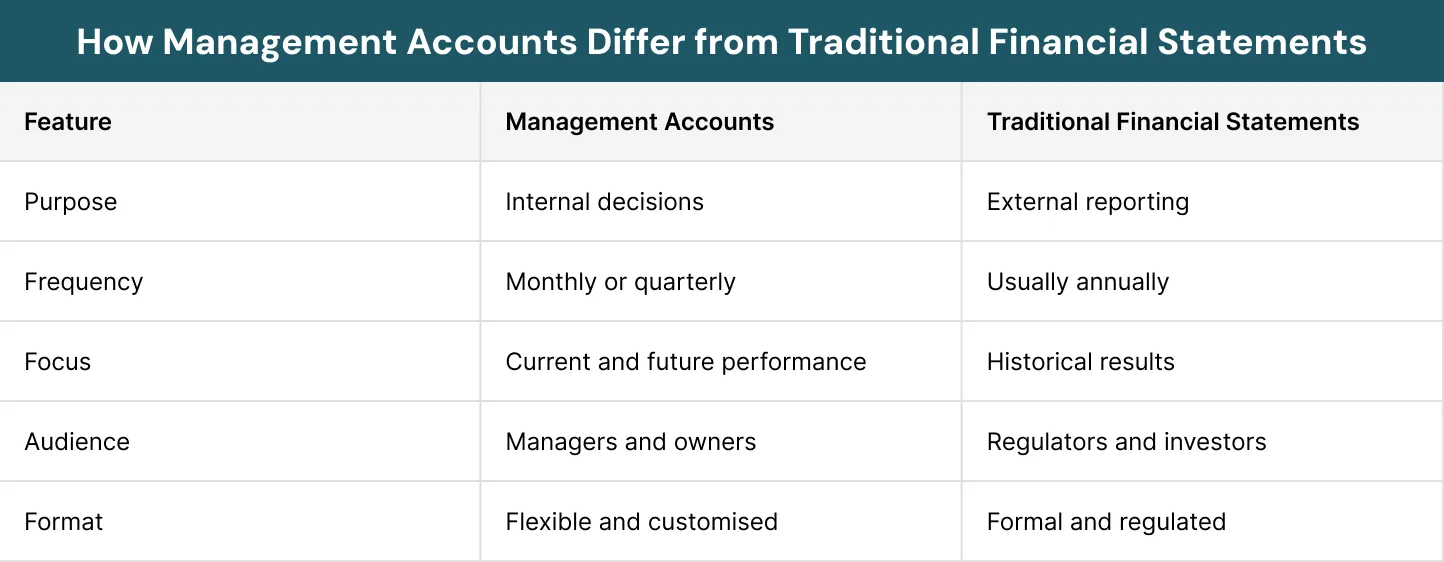
    Book an Appointment

    FAQs


    Does a small business need to pay corporation tax?

    As soon as companies start operating or receiving an income, they must submit a tax return to HMRC once a year. Corporation tax is charged on taxable profits; there are no tax-free allowances for companies, so a company with any amount of taxable profit has to pay.


    From 1 April 2023, the main rate of Corporation Tax increased from 19% to 25%.


    Corporation tax for small businesses in the UK is a tax on company profit. It is paid by limited companies after expenses are deducted. The rate depends on the profit level.

    You can pay corporation tax online to HMRC. Most businesses use bank transfer. Payment must be made within 9 months and 1 day after the accounting year ends.


    Yes, most small businesses now use software. HMRC no longer provides free filing tools. Software helps you calculate tax, file CT600, and avoid mistakes.


    You must pay within 9 months and 1 day after your accounting period ends. The tax return must be filed within 12 months.

    Share This Article!

    Recent Posts

  • How Management Reports Improve Business Decisions

    How Management Reports Improve Business Decisions

    management reporting for businesses

    Posted by:

    Admin

    Date:

    July 2, 2026
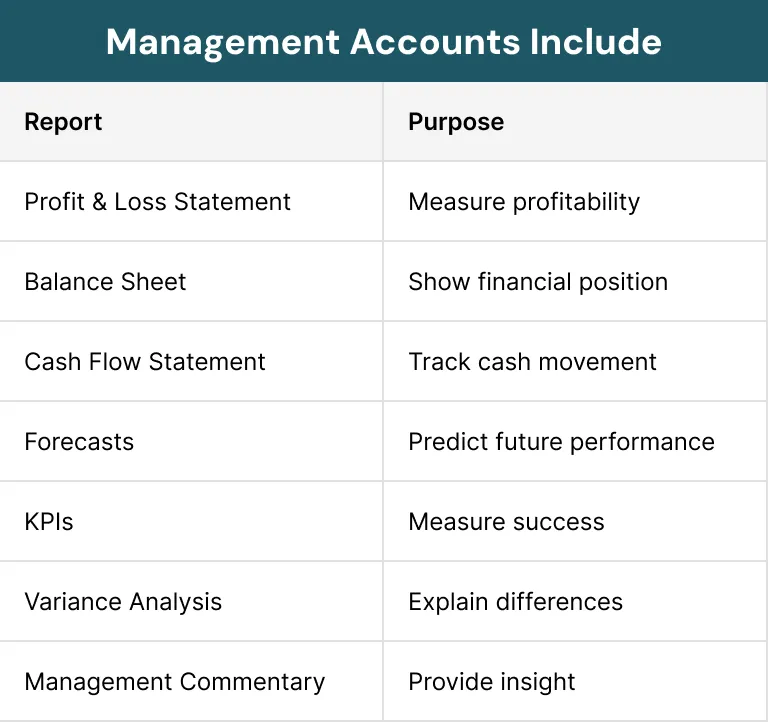
    Category:

    blogs

    Error: Contact form not found.

    How Management Reports Improve Business Decisions

    What sets apart rapidly expanding firms from slow ones? It’s not ideas but rather it’s speed of making decisions.

    In today’s busy market, relying on old Excel files is not enough anymore. Costs can go up quickly, clients can alter their minds and competitors can get ahead before a business becomes aware. This is the reason management reporting for businesses is so vital.

    A business management report is a tool that collects, checks and shows a company’s financial picture. It also presents the firm’s operational performance in a clear and structured way. It helps managers see what is going on in daily business operations. For example, a report can show falling sales, growing costs or shifts in user attitudes before they become serious problems.

    However, many firms still make key choices without all the data available. A 2026 UK study found that 71% of highly valued business decisions are made with limited or imperfect data.

    Full reporting helps managers detect trends, avoid risks and keep staff working together. On the other hand, false reports can cause missed chances, slower actions and costly errors.

    The importance of management reporting is far more than just figures. It gives business leaders clear facts so they can act faster and wiser.

    In this blog, you will learn how management reports make better business decisions. You will know how these reports help with planning, tracking performance and promoting ongoing growth.

    Key Takeaways

    • Management reporting for businesses gives leaders clear and up-to-date data, helping them make better decisions based on facts rather than guesswork
    • The importance of management reporting lies in its ability to track performance, spot risks early, and help businesses respond quickly to change
    • A business management report should include key financial data, KPIs, cash flow information, and performance trends to support day-to-day and long-term decisions
    • An effective business management report is clear, accurate, easy to read, and focused on the measures that matter most to business goals
    • Business reporting and performance management work together to improve planning, strengthen accountability, align teams, and support steady business growth

    What Is Management Reporting for Businesses?

    Management reporting for businesses is the way of recording, analysing and showing business data to help managers make better choices. It gives leaders helpful data about money, sales, work, clients, staff, projects and how the entire business is doing.

    It’s different from regular financial reports. Financial reports are usually made for people not linked with the business, like banks, investors or tax offices. They mostly focus on what took place in the past and follow strict rules.

    On the other hand, management reports are for staff within the business. They are more flexible, practical and reveal what leaders need to know right now.

    For example, a financial report might just state a yearly profit and loss. However, a management report can explain why profits changed, which prices are going up and which products are selling best.

    These reports also show which clients are buying less and what steps should be taken next. This makes management reporting for businesses very helpful for routine decisions and future strategy.
    Related: The impact of AI on financial reporting

    To supply data is not enough. The data have to be integrated with strategy; they have to test a company’s assumptions, and they must challenge a company’s current outlook.

    Peter Drucker, Management Consultant and Author

    The Value of Management Reporting

    The core mission of management reporting for businesses is to help managers make smarter decisions. It gives clear and organised data so decisions are based on facts, not opinions.

    It also helps every person in the company see the complete picture. The managers can monitor how each branch is doing and sales teams can track all the money coming in.

    Besides this, finance teams can watch cash flow and task teams can see how effective things are. Senior leaders also get the full view without waiting for updates from different people.

    All this points out the importance of management reporting. When each person runs from the same trusted data, there’s less doubt, less repeated work and teams can work together better.

    How Reports Make Things Clear

    Management reporting for businesses makes complex data easy to grasp. It breaks down big sets of numbers into simple charts, dashboards and crucial messages.

    Leaders usually don’t have time to look over hundreds of Excel rows. They need the main facts, trends and planned actions.

    Clear reports assist in answering key questions rapidly:

    • Are sales going up?
    • Are prices under control?
    • Is cash flow correct?
    • Are clients coming back?
    • Are projects on time?
    • Are teams meeting their aims?

    Proper reports remove the extra clutter and focus only on the data that matters. This helps leaders make quicker, more reliable decisions.

    How Does Management Reporting for Businesses Improve Decisions?

    Without reports, leaders might waste time guessing but with reports, they can fix the flaw quickly.

    If sales go down suddenly, a report can show whether it’s a problem with an item, a region, a client group or pricing.

    Management reporting for businesses also helps mostly by conducting trend analysis. One statistic alone does not tell the overall story. Monthly income is more valuable when compared to last month, last year, the financial plan or the forecast.

    Learn more: Business strategies

    1. Live Insights for Faster Decisions

    Reports that are updated often let firms act quickly. If costs rise, stock runs low, sales slow or cash flow declines, leaders can respond before it becomes a big concern. This includes:

    • A retail store can order extra popular products sooner
    • A service company can check rising project costs before losing profit
    • A marketing campaign can get cost changes before wasting money

    This is one of the most helpful perks of management reporting for businesses. In a crowded market, it helps managers to work more quickly.

    2. Trend Analysis for Better Planning

    Trend analysis reveals how things alter over time. A single report shows what was done this month, while a trend shows if the company is moving in the right direction.

    For example, revenue may go up but profit margins drop. That could mean larger discounts or rising delivery pricing. Without trend analysis, leaders might think all is fine but with trends, they can see unseen risks.

    This points out how the importance of management reporting goes beyond daily audits. It helps leaders figure out norms, causes and future direction.

    3. Improved Forecasting and Prediction

    Management reporting for businesses also helps plan for the future. Leaders are able to predict future events by using data from the past and present. It includes:

    • Reports can help forecast sales, cash flow, worker needs, stock, project costs and profit
    • Leaders can prepare for issues instead of taking action too late

    For example, seasonal based sales trends help organise stock and staff. Cash flow reports can show a shortfall next quarter, so leaders can delay expenses, gather payments or arrange funding early.

    Quick Insight!
    Businesses that review management reports regularly can spot problems earlier, react faster to market changes, and make decisions based on facts rather than assumptions.

    What Makes Management Reporting for Businesses Effective?

    Management reporting for businesses is only useful when reports are clear, correct and focused on what is most vital.

    A long report with too many data points can make decisions difficult. On the other hand, a short report with the proper details can help managers make decisions quicker.

    Effective reporting begins with business aims. Reports should keep track of the tasks that are most important to the company.

    For example:

    • If a company wants to develop, reports may track sales, new customers, repeat clients and market results
    • If a business wants to lower costs, reports may track expenses, profits, productivity and waste

    A business management report is also expected to be easy to read. Leaders should be able to pick up the main idea quickly. Also, they should not have to search through complex tables or tough words.

    1. Importance of Key Performance Indicators (KPIs)

    The importance of management reporting becomes obvious when firms use KPIs.

    KPIs are values that show if a company is moving toward its goals. They help break down major goals into results that can be assessed.

    Some common KPIs include the following:

    • Sales increase
    • Profit levels
    • Client loyalty
    • Staff performance
    • Inventory movement
    • Cash flow
    • Project success

    The best KPIs rely on the type of business and its targets. Management reporting for businesses works well when the right KPIs are selected.

    Having too many KPIs can mislead people and too few can hide important issues. The aim is to monitor the numbers that have the highest effect on success.

    2. Role of Visuals in Reporting

    Images and charts make reports simpler to understand. Charts, diagrams, graphs and rating sheets help leaders view data quickly.

    They also make it easier to compare:

    • Various dept
    • Different time periods
    • Products
    • Client groups

    For example, a line chart can represent a sales trend much better than a table full of figures. A graph can utilise red, amber, and green markers to show which areas must grab focus.

    Effective images are not just for visual appeal. They also help people grasp facts faster. This is very useful when leaders need to make quick decisions.

    3. Data Accuracy and Consistency

    Correct facts are essential. If the data is inaccurate, the decision may be wrong too.

    Lack of reliable data can lead to concerns such as the following:

    • Buying too much stock
    • Missing key costs
    • Producing unrealistic budgets
    • Neglecting serious risks

    Management reporting for businesses depends on reliable and uniform data. Firms should use reliable data providers and check their figures regularly.

    Everyone should know how numbers are obtained and where the data comes from. For example, if the sales team and finance team determine revenue in different ways, their reports may not align.

    This can create doubt and lower trust. When everyone uses the same rules and the same details, teams can make decisions with certainty.

    How Often Should Management Reporting for Businesses Be Done?

    Management reporting for businesses performs best when it happens consistently. The schedule should align with how often leaders need data to make decisions.

    Reports provide timely data so managers can see risks early, detect opportunities and act fast. There’s no standard plan but most firms use a blend of weekly, monthly, quarterly and annual reports.

    1. Weekly Reporting for Operational Visibility

    Weekly reports reveal temporary performance. They monitor sales, cash flow, project growth and client service. Weekly alerts help managers identify issues early and fix them before they progress.

    2. Monthly Reporting for Management Decisions

    Monthly reporting is widely used in management reporting for businesses. A monthly business management report offers a detailed view of finances and operations. For example, they show revenue, costs, profits, cash flow and KPIs.

    Monthly reports help admins see trends and make accurate decisions. They also keep staff on track and assist with staff meetings.

    3. Quarterly Reporting for Strategic Review

    The aim of quarterly reports is short-term success. They look for updates on annual targets, plans, market trends and company goals.

    These reports aid managers in detecting deeper trends that weekly or monthly reports might ignore.

    4. Annual Reporting for Future Planning

    Annual management reporting presents the big picture across the entire year. It helps assess tactics, resources and overall performance.

    Annual reports lead to future budgets and plans and point out lessons learned and areas to upgrade.

    How Often Should Management Reporting for Businesses Be Done

    Best Practice!
    Focus on a small number of meaningful KPIs rather than tracking everything. Clear, consistent reports are usually more useful than large reports filled with data that does not support decisions.

    How Does Management Reporting for Businesses Support Performance Tracking?

    Management reporting for businesses helps managers observe how well the company is doing. It tracks finance, operations, sales, customers and staff. Therefore, this gives a clear, ongoing view of growth.

    Performance analysis matters because minor problems can develop. A little rise in costs, a slight delay in client payments, or a small drop in sales may look harmless. However, if these trends stay the same, they can damage profit and cash flow.

    Regular updates work like an initial warning system. They help leaders detect problems early and fix them before they get more serious.

    1. Monitoring Financial Health

    Money is most important for any business. Reports keep track of revenue, costs, profit, cash flow, debt and available capital.

    A company might show a profit on documents but still be having trouble with cash. It might have high sales but small profit margins. A business management report that focuses on finance shows these issues clearly.

    This helps leaders control spending, maintain healthy cash flow and organise investments.

    2. Tracking Operational Efficiency

    Operational reports reveal how well assets are used. They track worker efficiency, project growth, delivery times, stock movement, service quality and staff performance.

    This makes it possible to find waste and obstacles that slow down business operations. For example, if a report indicates that one process is slow, managers can check the reason for it. It could be staffing, lack of training, system issues or supplier lags.

    More effective tasks lower costs and improve customer experience.

    3. Reviewing Sales and Customer Performance

    Sales and customer reports point out what brings in cash. They tell us which products sell most effectively and which channels work well. This also informs us which customers are most profitable and where leads are discarded.

    This helps managers enhance marketing and sales. For example:

    • If repeat clients make more profit than new customers, focus on keeping them
    • If a product sells effectively but has low profit, check pricing or costs

    Management reporting for businesses allows teams to focus on actions that really add value.

    How Does Management Reporting for Businesses Support Performance Tracking

    How Does Management Reporting for Businesses Improve Planning?

    Management reporting for businesses helps firms make more viable tactics for the future. Without reporting, companies may create cost plans and forecasts based on assumptions.

    With proper reporting, firms can prepare for growth and manage spending more effectively. This also keeps cash under control and helps them act faster when market conditions change.

    1. Budget Planning and Control

    Budgeting becomes much easier when a company often audits reports that compare planned results with real results. This contrast helps leaders decide whether the business is running as planned.

    If costs are higher than planned, they can quickly find the reason and take action. If earnings are less than desired, they can adjust their method, improve sales efforts or review their goals.

    If one department is spending less than its budget, then those assets may be used in other areas of the business.

    This process helps firms stay profitable, organised and avoid unpredictable scenarios. Instead of waiting until the end of the year to find issues, leaders can deal with them as they arise.

    2. Cash Flow Forecasting

    Cash flow analysis helps firms know when money is expected to come in and when it will be required to go out. This is key because a company can be effective and still face issues.

    Admin reports can show expected client bills, supplier receipts, staff salaries, loan due dates and tax payments. With this data, leaders can plan and make sure there is enough cash to cover crucial costs.

    The importance of management reporting is especially obvious when dealing with cash flow. This is because minor issues are much easier to resolve when they are detected early.

    3. Scenario Analysis for Future Readiness

    Situation analysis helps firms prepare for different scenarios that may arise in the future. Instead of planning for only one goal, leaders can assess several options and know how each one could affect the business.

    For example, they might be looking at what could develop if sales fall, costs go up or a major customer leaves. They might also analyse if demand is rising faster than expected.

    Management reports give the data to be able to test these different instances. This gives leaders more confidence because they can prepare for change before it happens. This also makes decisions with a clearer view of the risks and chances ahead.

    How Does Management Reporting for Businesses Improve Accountability?

    Management reporting for businesses helps all parties know how well they are doing. When people can clearly view their aims, results and progress, it becomes easier to take charge for their work.

    Quality reporting is not about judging people for errors. It is about helping team members learn, improve and make better choices.

    Reports help make sure decisions are properly put through. When actions, duties and due dates are noted, people are more likely to finish the work that has been decided.

    1. Department Level Duty

    Department level reports help each team stay focused on its own goals. The finance team can keep track of budgets and costs. The sales team can monitor earnings and sales progress.

    Service teams can assess efficiency, while customer service teams can track customer feedback and response times.

    This gives teams a greater feeling of ownership. Instead of waiting for the top leaders to point out flaws, they can see their own results and take action more quickly.

    The importance of management reporting becomes clear when teams can spot issues early. Also, when they make fixes before small errors become serious ones.

    2. Shared Visibility Across Teams

    Shared reports assist many teams in working together smoothly. When every person uses the same data, there is less error and fewer disputes about the business.

    For example, sales, finance and operations teams may all need to figure out customer needs. If the sales team expects greater demand but the office team is not prepared, delays and issues can erupt. Shared reports help everyone stay updated and plan with one another.

    This is why management reporting for businesses supports not only improved decisions but also deeper unity and regular interaction.

    3. Action Tracking and Follow Up

    Reports should perform better than simply show basic data. They should help people take the right steps.

    Effective reporting keeps details of earlier decisions, accepted actions and progress towards targets. This enables leaders to figure out whether effective strategies are being carried out. This also allows them to know whether those actions are giving rise to the expected results.

    If something is not working properly, changes can be made ASAP. This keeps the company moving in the correct path.

    A business management report that consists of action analysis becomes much more than a record of past success. It becomes a useful tool that helps teams stay organised, reliable and loyal to meeting business goals.

    Case Study: Lights4fun Using Data to Make Smarter Decisions

    Lights4fun is a UK digital shop selling art deco lights for homes and gardens. It was set up in 2003 and now earns over £30 million annually. It serves clients all over the UK, Europe and the US.

    As the business grew, it needed better ways to organise data, enhance reporting and support success goals.

    The Challenge

    Data was split across various systems and Excel sheets. Reports took several hours to develop and were usually outdated. Customer records were scattered, making it hard to get a full picture.

    A 2026 UK study found that 71% of valuable business decisions are made with incomplete or partial data. This shows why better reporting was needed.

    The Solution

    With the data refinery, Lights4fun created a reliable basis. Data related to operations, sales and marketing was unified and routinely revised.

    Perks included:

    • Saving 10 hours a week on written reports
    • A unified detail of every client
    • A graph showing live performance for all teams
    • Quicker decisions on predicting, marketing and product planning

    The Results

    After applying the strategies, the following result was achieved:

    • Obtained insight goals 12–18 months ahead of plan
    • One data scientist could deliver work similar to a full analytics team’s
    • Teams accessed correct data 24/7, improving accountability
    • Promptly reacted to market changes, defending both sales and margins

    Key Takeaway

    Lights4fun shows the importance of management reporting. A reliable business management report system can save time, reduce errors and help leaders make faster, smarter decisions.

    Final Thoughts

    Management reporting for businesses is not an option but rather its crucial for running a successful company. Clear and reliable reports help managers make better choices, track performance, forecast what might take place and stay accountable.

    Sterling Cooper understands that organised, relevant and useful business management reports give teams the resources they need to work smarter.

    Management reporting for businesses brings clarity, oversight and confidence. To boost your business decisions and grow with confidence, contact us today to learn how reliable reporting systems can help.

    Struggling to turn business data into confident decisions?

    Our team helps you create clear management reports that improve planning, performance, and profitability.
    We have helped businesses gain better financial visibility and make data-driven decisions with reliable reporting.
    Reach us today.

    FAQs


    What makes an effective business management report?


    An effective business management report provides clear, accurate, and relevant information that supports decision-making. It should focus on key performance indicators (KPIs), financial results, operational performance, and future risks rather than overwhelming readers with unnecessary data.


    Business reporting and performance management help organisations track progress against goals, monitor performance trends, and identify areas that need improvement. By using timely and reliable data, businesses can make informed decisions, improve efficiency, manage resources more effectively, and support long-term growth.

    GAAP reporting and management reporting are used for different purposes. GAAP (Generally Accepted Accounting Principles) reporting is a formal system used for external stakeholders like investors, banks, and regulators. It follows strict rules and is usually historical, meaning it shows what has already happened in the business.
    Management reporting, on the other hand, is used inside the business. It is flexible and focuses on current performance and future planning. It helps managers and leaders make decisions by showing real-time data, trends, and forecasts rather than just past results.


    To write a business management report, start by deciding its purpose and who will read it. Then choose the most important KPIs that match your business goals. Collect accurate and up-to-date data from reliable sources.
    Next, organise the information in a clear structure with sections like performance summary, financial results, and key insights. Use simple language and visuals like charts where helpful. End the report with clear conclusions and actions that support decision-making.


    Business management reports come in several types depending on what needs to be tracked. Common types include financial performance reports, which show profit, loss, and cash flow. Sales and revenue reports track income trends and customer performance.
    Operational reports focus on efficiency, productivity, and processes. KPI dashboards give a quick overview of key metrics. There are also budget vs actual reports, which compare planned figures with real results to help control spending and improve planning.

    Share This Article!

    Recent Posts

  • How to Prepare Your Business for an HMRC Compliance Check

    How to Prepare Your Business for an HMRC Compliance Check

    hmrc compliance check

    Posted by:

    Admin

    Date:

    June 30, 2026

    Category:

    blogs

    Error: Contact form not found.

    How to Prepare Your Business for an HMRC Compliance Check

    Do you know that HMRC carries out around 316,000 compliance checks every year in the UK? This shows that tax reviews are a common part of running a business and can affect companies of all sizes.

    As these checks happen regularly, it is important to understand what an HMRC compliance check is and how it works. HMRC carries out these checks to make sure tax returns are accurate and the correct amount of tax is paid.

    Therefore, maintaining strong business HMRC compliance through clear records and accurate accounts is essential. Whether you have recently set up a business with HMRC or have been trading for years, keeping your records organised can help you stay prepared for a compliance check. Even small issues can trigger a review, so proper preparation can help you manage the process with confidence.

    Key Takeaways

    • An HMRC compliance check reviews your business tax records.
    • Common triggers include late filing, random checks, and unusual transactions.
    • Clear records help you respond faster and avoid issues.
    • HMRC may request invoices, bank data, and tax returns.
    • You can appoint a tax agent for support.
    • Outcomes can include no action, penalties, or in rare cases, an investigation.
    • You can challenge HMRC decisions if you disagree.

    What Is an HMRC Compliance Check?

    HMRC compliance check is a formal review that ensures people and firms are paying the right amount of tax based on UK tax laws. It is carried out by HM Revenue & Customs. It also checks if the tax returns and tax reliefs have been accurately filed.

    Types of HMRC Compliance Checks

    Before you prepare for a compliance check, it is useful to understand what may trigger HMRC to start one.

    What Triggers an HMRC Compliance Check?

    An HMRC compliance check may be triggered when HMRC notices unusual tax activity or an area that needs further review. Sometimes, these checks are done as part of routine monitoring.

    The most common triggers of an HMRC compliance check include:

    1. Late Filing and Late Payments

    If tax filing or payments are not done in time, there is a high chance that HMRC will look into this matter. This means that if delays happen repeatedly, HMRC may evaluate the tax compliance of your business.

    2. Random Selection

    Sometimes, HMRC picks out companies on a random basis. This is done to make sure that HMRC is able to look into different situations and check whether companies are complying with their tax obligations.

    3. Unusually High International Transactions

    Larger or irregular foreign transactions can also trigger a review. HMRC may check these accounts to verify that foreign income, expenses and tax payments are reported correctly.

    4. Discrepancies in Tax Returns

    If HMRC finds incorrect or mismatched values in your tax return, it may start a compliance check. It usually happens when the income, expenses or records do not match properly.

    Common Reasons for Checks

    • Late tax filing
    • Missing or wrong records
    • Unusual financial activity
    • Random selection

    What Does HMRC Check During a Compliance Check?

    During a compliance check, HMRC reviews your records to confirm that tax returns have been completed correctly and match your actual financial activity. This includes checking whether income, expenses and tax calculations have been reported accurately.

    To verify this, HMRC compares your submitted returns with supporting documents such as invoices, payroll records and bank statements. This helps ensure consistency across all financial data and identifies any errors or missing information.

    To break this down further, HMRC focuses on the following key areas of your business records:

    1. Corporation Tax Records

    HMRC reviews your business profits and expenses to ensure Corporation Tax has been correctly calculated and all taxable income is included.

    2. VAT Returns

    They check VAT return submissions to confirm that VAT has been reported accurately and submitted within required deadlines.

    3. PAYE and Payroll Records

    HMRC also examines employee pay, tax deductions and National Insurance contributions to ensure payroll compliance.

    4. Business Expenses and Deductions

    They verify that all claimed expenses are legitimate, properly recorded and supported by evidence such as receipts or invoices.

    How to Prepare Your Business for an HMRC Compliance Check?

    To prepare for an HMRC compliance check, firstly, you need to analyse the HMRC letter to understand the scope of review and the types of tax involved. Then, you should gather all necessary financial documents, which may include your bank statement and invoices. It will also be useful to notify your accountant early so they can support you throughout the process.

    You can follow these steps to stay organised and compliant:

    1. Carefully Review the HMRC Notice

    Make sure you know the scope of review, particularly the specific taxes (such as VAT, Corporation Tax or PAYE) and the tax years being reviewed. Also, note down the deadlines and requests for extensions from HMRC if more time is needed.

    2. Gather and Organise Records

    Collect all documents that may be needed, such as sales and purchases receipts, expense records and bank statements. You should make sure that all of your documents meet legal requirements regarding how long documents must be kept, which is generally between 5 to 6 years. If you use digital accounting software, make sure all records are complete and easy to access.

    3. Conduct a Pre-Audit ( Self-Review)

    Make sure that your accounts match your tax filings and bank records. In case there is any mistake, it is advisable that you correct it as soon as possible. This will help you avoid penalties. Pay special attention to areas like dividends, director loans and IR35 arrangements when you are reviewing your records.

    4. Appoint Representation and Communicate

    Inform your accountant or tax adviser immediately so they can handle communication with HMRC if needed. You can authorise them to submit documents and respond to queries on your behalf. If required, you may also request reasonable adjustments from HMRC based on your circumstances.

    How to Stay Prepared

    • Keep clean financial records
    • Match accounts with bank data
    • Respond quickly to HMRC requests
    • Use a tax agent if needed

    How Does the HMRC Compliance Check Process Work?

    There are four common stages involved in the HMRC compliance check process. The stages start from the initial contact by HMRC and end with a final decision. In this process, you may be asked to provide documents, answer questions or provide tax details.

    The main stages involved in this process are explained below:

    1. Initial Notification

    Firstly, HMRC will send a letter to inform you about the compliance check. They will also send a list of the documents and information that they need from you.

    2. Information Gathering

    You then need to send the required documents to HMRC. These include personal or business bank statements, invoices, receipts, payroll and VAT workings, management accounts and tax calculations. Keeping your records well organised can help avoid delays and make the process easier. HMRC may arrange an interview or even contact you to discuss your records.

    3. Review and Findings

    HMRC examines your records to identify any errors or inconsistencies. If your records are correct, they will close the check. If issues are found, they may amend your return or issue a formal assessment.

    4. Penalties and Appeals

    After the review, HMRC will give you the results of the review. If there are no issues, the check is closed with no changes. If you overpaid, HMRC will issue a refund with interest. If you underpaid, you must pay the difference, along with interest and potentially penalties (especially if errors were deliberate or due to a lack of reasonable care).

    If you disagree with HMRC’s decision, you usually have the right to appeal within 30 days. You can request an appeal directly to an independent tax tribunal.

    What Information Might HMRC Request For Compliance Check?

    During an HMRC compliance check, HMRC may ask for different types of documents to verify that your tax returns and financial records are accurate. Keeping these documents organised and easily available can help you respond quickly and make the review process smoother.

    Some of the most common records HMRC may request for compliance include:

    1. Financial Records

    HMRC may review your accounting records, including income, expenses and tax calculations, to confirm that your business information has been reported correctly.

    2. Bank Statements

    Bank statements may be checked to compare transactions with your accounting records and ensure all income and payments are properly recorded.

    3. Invoices and Receipts

    HMRC may ask for invoices and receipts as evidence to support your sales, purchases and claimed business expenses.

    4. Payroll Records

    Payroll documents may be reviewed to confirm that employee wages, tax deductions and National Insurance contributions have been reported correctly.

    5. Contracts and Agreements

    HMRC may examine contracts with customers, suppliers or employees to verify transactions, payments and the nature of business arrangements.

    How Long Does an HMRC Compliance Check Take?

    In the UK, a standard process carried out by HMRC takes 4 to 16 weeks in straightforward cases. But in complex and difficult cases, the review period can go up to 3 to 18 months.

    The factors that influence the total period of the HMRC compliance check are:

    1. Initial Response Time

    HMRC usually gives 30 days to respond to the first information request. You can ask for an extension if you need extra time.

    2. Type of Enquiry

    An aspect enquiry can take between 3 and 6 months (covers one part of the tax return). While a general enquiry would take 9 to 16 months (covers the whole tax return).

    3. Resolution Path

    If there are no problems, the review process will be quick. If any problems are identified, you might be required to pay more taxes within 30 days. But if you have paid more than the amount due, HMRC will issue you a tax refund.

    What If You Disagree with an HMRC Compliance Check Decision?

    If you disagree with an HM Revenue & Customs (HMRC) compliance check decision, you can formally appeal in writing within 30 days of the date shown on your decision letter.

    You have three main options to resolve the dispute:

    1. Send New Information

    If you have additional evidence or documents that were missed, you can send them to the HMRC officer handling your check. They may review the information and reconsider their decision.

    2. Request an HMRC Statutory Review

    You can ask HMRC to assign a different officer who was not involved in your case. This officer will independently review the original decision. You can request this review yourself or accept it if HMRC offers it. The review is usually completed within 45 days. You may also use Alternative Dispute Resolution (ADR) to help resolve disagreements.

    3. Appeal to the Tax Tribunal

    If you disagree with the review outcome, or skip the review stage, you can appeal directly. Appeals are made to the First-tier Tribunal (Tax Chamber) under HM Courts & Tribunals Service (HMCTS). You must submit your appeal within 30 days of the HMRC decision or review outcome.

    Statutory records are the records needed to enable a person to make a complete and accurate return, declaration or claim and HMRC to check it.

     HM Revenue & Customs (HMRC), UK Government 

    HMRC Compliance Check Case Study

    The Ingenious and Icebreaker case shows how closely HMRC can review tax claims.

    HMRC found that some investors had claimed tax relief that was much higher than the real money they had invested. The schemes used complex financial arrangements linked to film investments. HMRC successfully challenged the schemes. Investors later faced large tax bills and legal costs.

    The key lesson is simple. HMRC does not only look at what is written in the accounts. It checks whether the transactions are real, whether the records are accurate and whether the tax claim matches the actual investment.

    Conclusion

    An HMRC compliance check can feel stressful, but it becomes easier when your records are clear and updated. Good planning helps you stay ready and avoid errors in tax reporting. Both HMRC compliance checks and business HMRC compliance cases are smoother when you keep simple, clean accounts.

    At Sterling Cooper Consultants, we help businesses stay ready for tax checks, manage records and handle HMRC queries in a simple and stress-free way. Reach out to us today if you want support with compliance, bookkeeping guidance and tax preparation.

    Staying ready for an HMRC compliance check is easier when your records are accurate and well organised.

    Good bookkeeping helps you respond quickly and avoid penalties or delays. If you need support with tax compliance or HMRC queries, contact us today.

    FAQs


    What is a HMRC compliance check?


    An HMRC compliance check is a formal review conducted by HM Revenue & Customs to ensure individuals and businesses pay the correct amount of tax and adhere to UK tax laws. It covers various taxes including Income Tax, Corporation Tax, VAT, and PAYE.


    HMRC initiates a business compliance check to ensure your business is paying the correct amount of tax and adhering to UK regulations. These checks are not always punitive. HMRC usually relies on risk-scoring software called “Connect” to identify inconsistencies that trigger an inquiry.


    A HMRC compliance check can be triggered by several factors such as late filing, late tax payments, inconsistent accounting records or unusually high international transactions. These issues may indicate a need for further review to ensure tax accuracy.


    The process begins with HMRC sending a formal notice explaining the check. The business is then asked to submit relevant documents and may be asked additional questions. HMRC can also hold meetings if needed. After reviewing everything, they provide a final outcome.


    The time taken for a compliance check depends on the complexity of the case. Straightforward cases with clear records may be completed within weeks, while more complex cases involving missing or unclear information can take several months.

    Share This Article!

    Recent Posts